Learn what every symbol on the card means.Full credits and sources at beakbrain.com/symbols
 ForestCavity nestSmall · 47 g


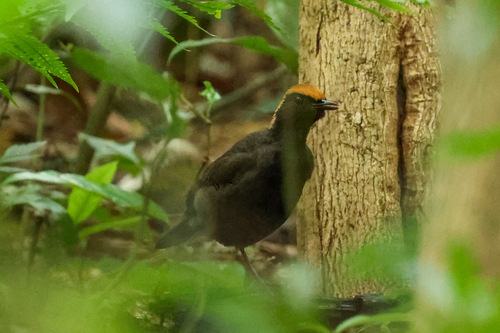
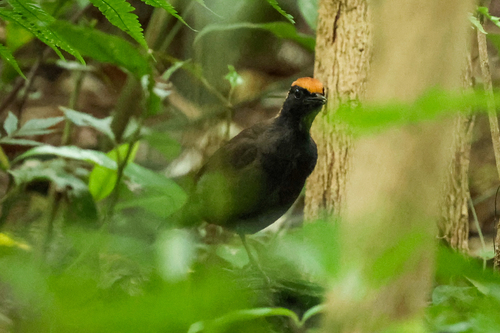
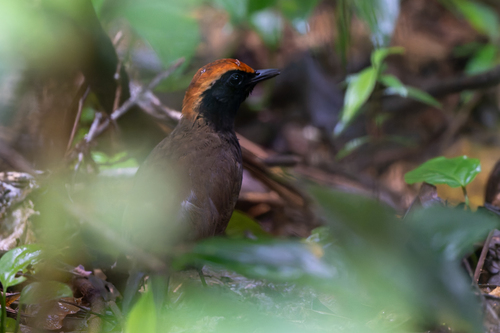
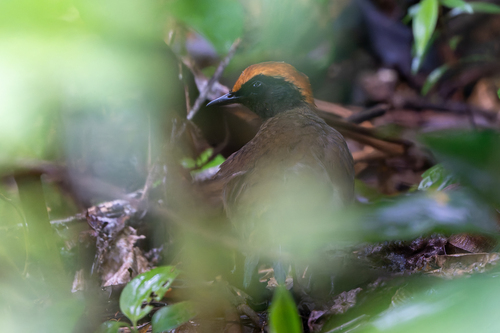

What the Rufous-capped Antthrush sounds like


ID tip
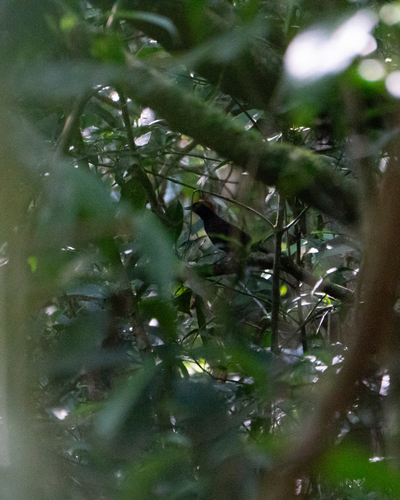
The Formicarius colma is generally a small bird, averaging around 18 cm with males weighing between 38 and 49 grams and females between 41 and 49 grams. Males are marked by a black forehead, rufous-colored (red-brown) crown and nape, with the crown including a variable amount of black feathers. Its back, rump, and wings are olive-brown color with a dusky brown tail and black on the neck, throat, and sides of the head. The upper breast is a dark black that merges into a dark gray on the lower breast while the belly and flanks are a paler gray with (occasionally) a brown wash.
Text from Wikipedia, licensed CC BY-SA 4.0.
When to see the Rufous-capped Antthrush
One bar for each month, and every month is filled: this bird is recorded here in all twelve. The wide bar is October, the month with the most records.
Where to see the Rufous-capped Antthrush
The map shades 9 countries with regular records. Everything unshaded has no records. Countries are listed below the map.
About the Rufous-capped Antthrush
The rufous-capped antthrush is a small species of bird in the family Formicariidae located in the order Passeriformes. It is considered to be uncommon but widespread, found in Bolivia, Brazil, Colombia, Ecuador, French Guiana, Guyana, Peru, Suriname, and Venezuela. The rufous-capped antthrush is typically found inhabiting the shady floor of tall, humid forests on solid ground, and is occasionally spotted in transitional forests (várzea) and savanna forests (Suriname).
Text adapted from Wikipedia, licensed CC BY-SA 4.0.
Easily confused with
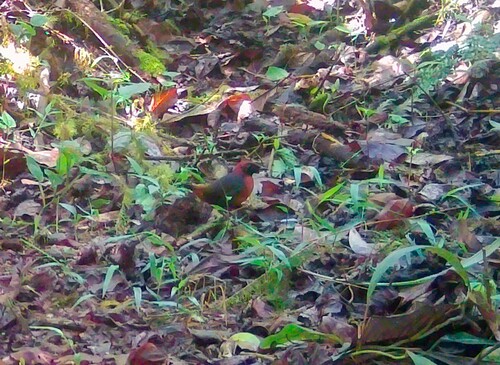 Rufous-breasted AntthrushFormicarius rufipectusThe rufous-breasted antthrush is 18 to 19 cm (7.1 to 7.5 in) long.
Black-headed AntthrushFormicarius nigricapillusThe black-headed antthrush is about 18 cm (7.1 in) long; four individuals weighed 58 to 68 g (2.0 to 2.4 oz).
Rufous-breasted AntthrushFormicarius rufipectusThe rufous-breasted antthrush is 18 to 19 cm (7.1 to 7.5 in) long.
Black-headed AntthrushFormicarius nigricapillusThe black-headed antthrush is about 18 cm (7.1 in) long; four individuals weighed 58 to 68 g (2.0 to 2.4 oz).
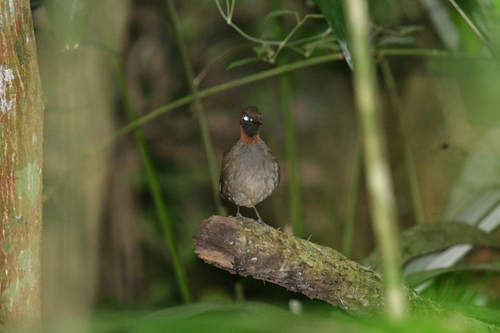 Mayan AntthrushFormicarius moniligerThe Mayan antthrush is 15 to 19 cm (5.9 to 7.5 in) long and weighs about 56 to 64 g (2.0 to 2.3 oz).
Side by side: Black-faced Antthrush vs Rufous-capped Antthrush · Mayan Antthrush vs Rufous-capped Antthrush · Rufous-breasted Antthrush vs Rufous-capped Antthrush
Learn the Rufous-capped Antthrush in the BeakBrain App
Photo and call practice. Coming soon to iPhone and Android.
Play today's Daily BirdEvery photo and recording on this page is credited to its author under the licence shown. Spotted a problem with this page, or have a better photo? Contribute.