Learn what every symbol on the card means.Full credits and sources at beakbrain.com/symbols
 GrasslandCup nestLarge · 452 g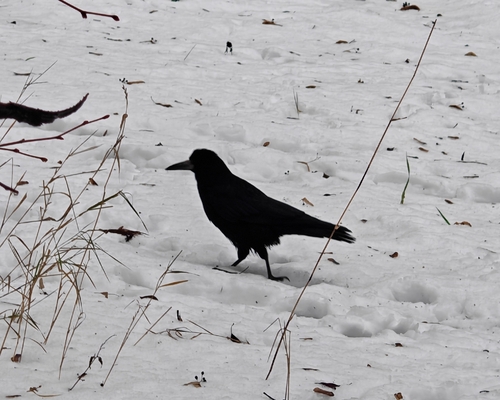
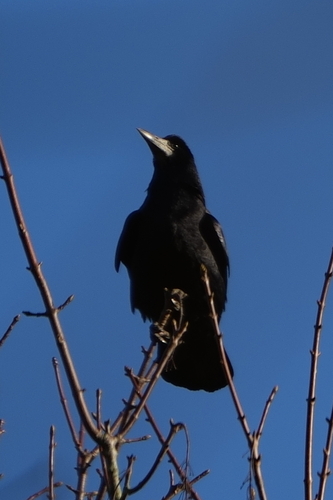
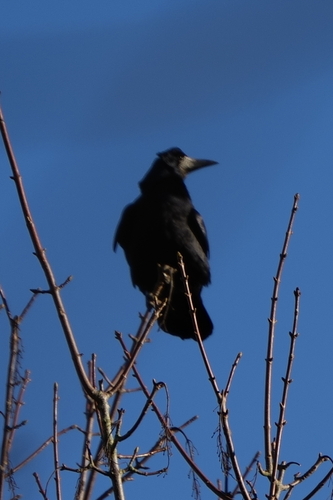
What the Rook sounds like


ID tip
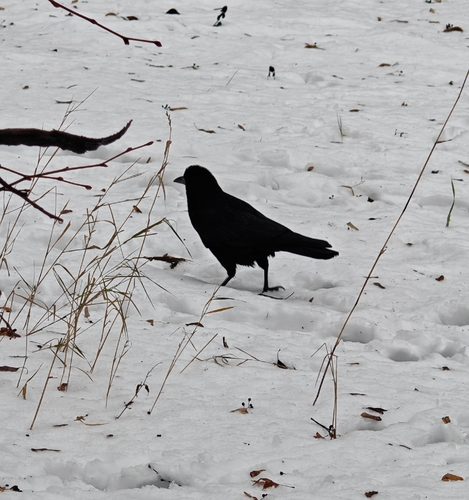
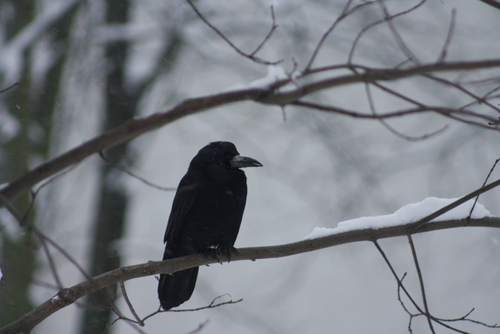
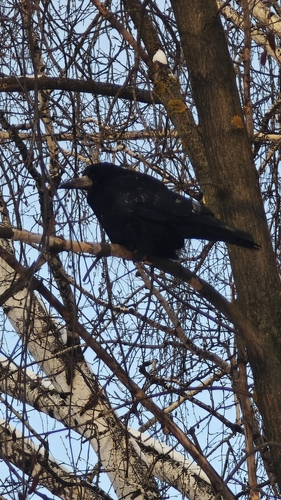
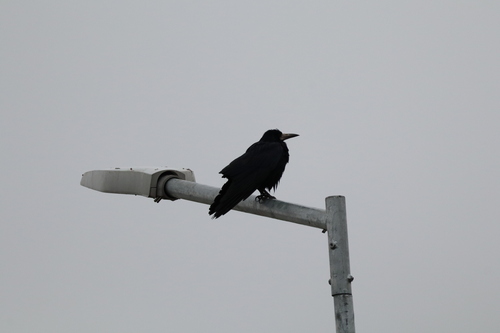
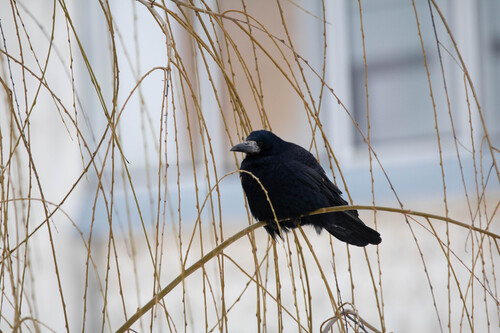
The rook is a fairly large bird, at 280 to 340 g (9.9 to 12.0 oz) adult weight, 44 to 46 cm (17 to 18 in) in length and 81 to 99 cm (32 to 39 in) wingspan. It has black feathers that often show a blue or bluish-purple sheen in bright sunlight. The feathers on the head, neck and shoulders are particularly dense and silky. The legs and feet are generally black, the bill grey-black and the iris dark brown. In adults, a bare area of whitish skin in front of the eye and around the base of the bill is distinctive, and enables the rook to be distinguished from other members of the crow family. Voice: The call is usually described as caw or kaah, and is somewhat similar to that of the carrion crow, but less raucous. It is variable in pitch and has several variants, used in different situations. The call is given both in flight and while perched, at which time the bird fans its tail and bows while making each caw.
Text from Wikipedia, licensed CC BY-SA 4.0.
When to see the Rook
One bar for each month, and every month is filled: this bird is recorded here in all twelve. The wide bar is May, the month with the most records.
Where to see the Rook
The map shades 65 countries with regular records, and 3 more in a lighter tone where the bird turns up only as a stray. Everything unshaded has no records. Countries are listed below the map.
About the Rook
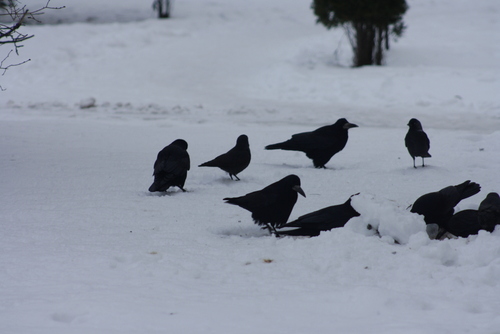
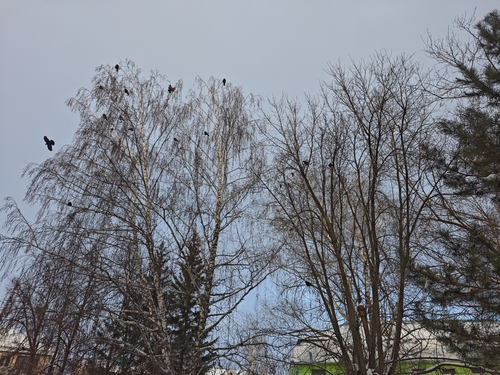
The rook is a member of the family Corvidae in the passerine order of birds. It is found in the Palearctic, its range extending from Scandinavia and western Europe to eastern Siberia. It is a large, gregarious, black-feathered bird, distinguished from similar species by the whitish featherless area on the face. Rooks nest collectively in the tops of tall trees, often close to farms or villages; the groups of nests are known as rookeries.
Text adapted from Wikipedia, licensed CC BY-SA 4.0.
Easily confused with
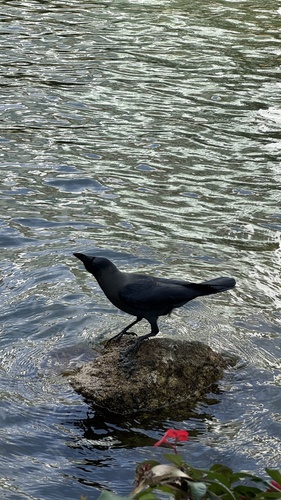 House CrowCorvus splendensVoice: The voice of the house crow is harsh and usually represented by the onomatopoeia "kaaw-kaaw".
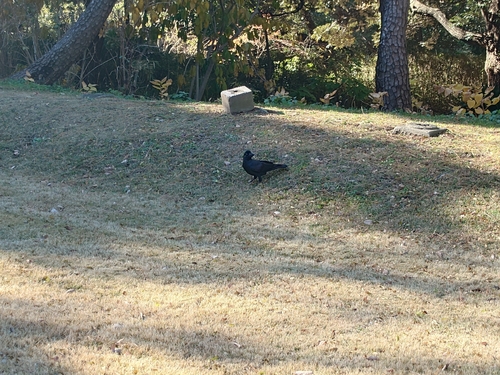 Large-billed CrowCorvus macrorhynchosThe large-billed crow is relatively large all-black corvid.
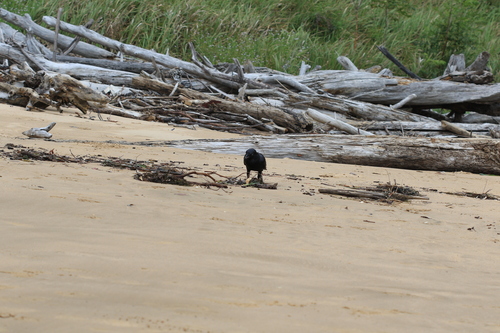 Australian RavenCorvus coronoidesMeasuring 46–53 cm (18–21 in) in length with a 100 cm (39 in) wingspan and weighing around the 650 g (1+7⁄16 lb), the Australian raven is Australia's largest species of corvid.
Side by side: Large-billed Crow vs Rook · House Crow vs Rook · Australian Raven vs Rook
Learn the Rook in the BeakBrain App
Photo and call practice. Coming soon to iPhone and Android.
Play today's Daily BirdEvery photo and recording on this page is credited to its author under the licence shown. Spotted a problem with this page, or have a better photo? Contribute.