Learn what every symbol on the card means.Full credits and sources at beakbrain.com/symbols
 GrasslandCup nestSmall · 32 g



What the Richard's Pipit sounds like


ID tip
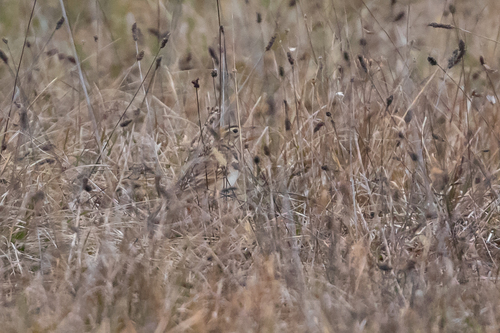
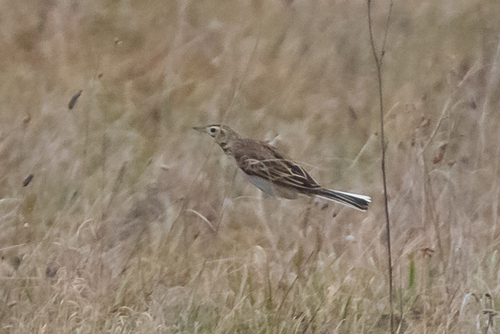
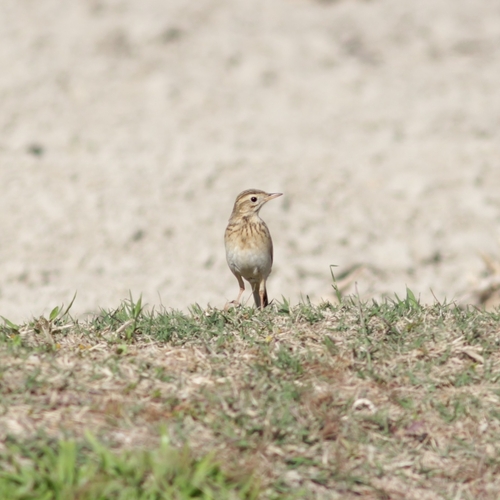
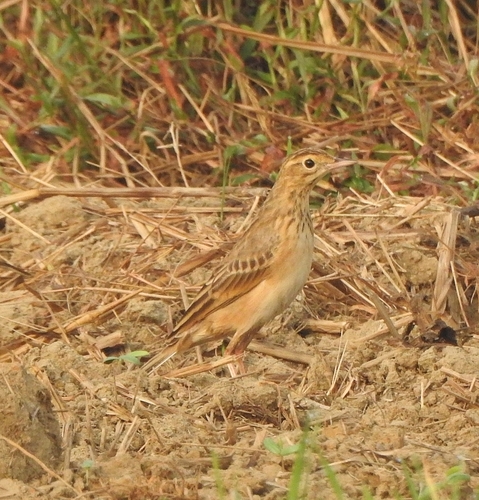
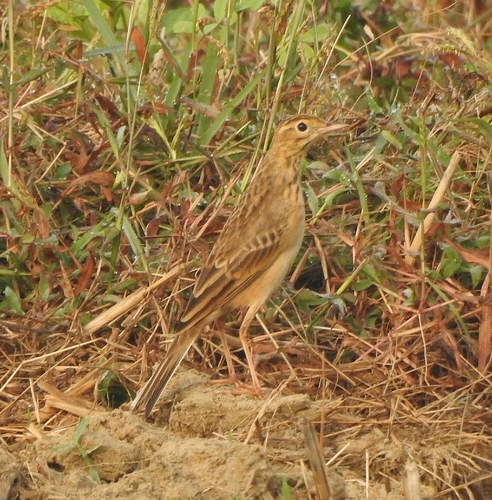
This is a large pipit, 17–20 cm in length, with a weight of 25–36 g and a wingspan of 29 to 33 cm. It is a slender bird which often stands very upright. It has long yellow-brown legs, a long tail with white outer-feathers and a long dark bill with a yellowish base to the lower mandible. The hindclaw is long and fairly straight. It is an undistinguished-looking species on the ground, mainly brown above and pale below. There are dark streaks on the upperparts and breast while the belly and flanks are plain.
Text from Wikipedia, licensed CC BY-SA 4.0.
When to see the Richard's Pipit
One bar for each month. Filled bars are the 9 months with records; pale bars are months with none. The wide bar is October, the month with the most records.
Where to see the Richard's Pipit
The map shades 58 countries with regular records, and 6 more in a lighter tone where the bird turns up only as a stray. Everything unshaded has no records. Countries are listed below the map.
Recorded as a rare visitor in Finland, Morocco, Palestinian Territories, Estonia, Jersey, Romania.
About the Richard's Pipit
Richard's pipit is a medium-sized passerine bird which breeds in open grasslands in the East Palearctic. It is a long-distance migrant moving to open lowlands in the Indian subcontinent and Southeast Asia. It is a rare but regular vagrant to western Europe.
Text adapted from Wikipedia, licensed CC BY-SA 4.0.
Easily confused with
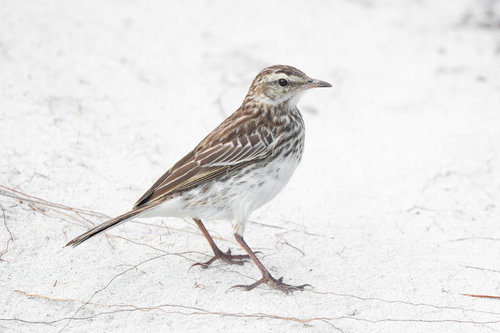 New Zealand PipitAnthus novaeseelandiaeIt is a slender bird, 16 to 19 cm long, and weighs about 40 grams.
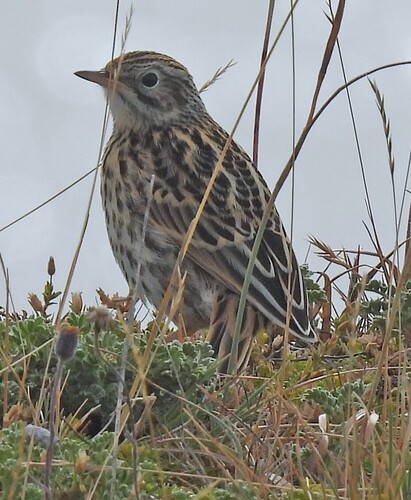 Correndera PipitAnthus correnderaThe correndera pipit is 14 to 16 cm (5.5 to 6.3 in) long and weighs about 15 to 26 g (0.53 to 0.92 oz).
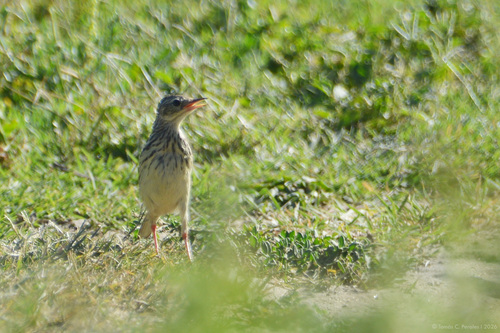 Yellowish PipitAnthus chiiThe yellowish pipit is one of the smallest members of genus Anthus, and is unusually long-legged and short-tailed.
Side by side: New Zealand Pipit vs Richard's Pipit · Richard's Pipit vs Yellowish Pipit
Learn the Richard's Pipit in the BeakBrain App
Photo and call practice. Coming soon to iPhone and Android.
Play today's Daily BirdEvery photo and recording on this page is credited to its author under the licence shown. Spotted a problem with this page, or have a better photo? Contribute.