Learn what every symbol on the card means.Full credits and sources at beakbrain.com/symbols
 ForestDomed nestTiny · 10 g


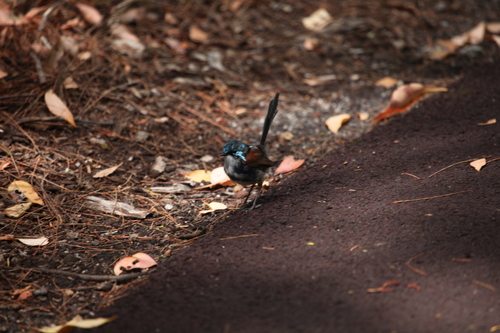


ID tip
The red-winged fairywren is 15 cm (6 in) long and weighs 8–11 g (0.28–0.39 oz), making it the largest of the fairywrens. The average tail length is 7.5 cm (3.0 in), among the longest in the genus. Averaging 10 mm (0.4 in) in males and 9.3 mm (0.4 in) in females, the bill is relatively long, narrow and pointed, and wider at the base. Wider than it is deep, the bill is similar in shape to those of other birds that feed by probing for or by picking insects off of their environs. Voice: Vocal communication among red-winged fairywrens is used primarily for communication between birds in a social group and for advertising and defending a territory. They are able to distinguish different individuals on the basis of song alone, which is integral to the identification of group members and strangers.
Text from Wikipedia, licensed CC BY-SA 4.0.
When to see the Red-winged Fairywren
One bar for each month, and every month is filled: this bird is recorded here in all twelve. The wide bar is October, the month with the most records.
Where to see the Red-winged Fairywren
The map shades 1 country with regular records. Everything unshaded has no records. Countries are listed below the map.
About the Red-winged Fairywren
The red-winged fairywren is a species of passerine bird in the Australasian wren family, Maluridae. It is non-migratory and endemic to the southwestern corner of Western Australia. Exhibiting a high degree of sexual dimorphism, the male adopts a brilliantly coloured breeding plumage, with an iridescent silvery-blue crown, ear coverts and upper back, red shoulders, contrasting with a black throat, grey-brown tail and wings and pale underparts. Non-breeding males, females and juveniles have predominantly grey-brown plumage, though males may bear isolated blue and black feathers. No separate subspecies are recognised.
Text adapted from Wikipedia, licensed CC BY-SA 4.0.
Easily confused with
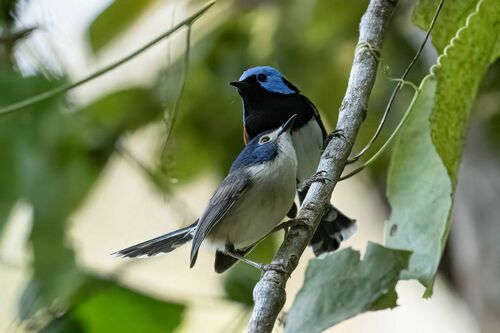 Lovely FairywrenMalurus amabilisLike other fairywrens, the lovely fairywren is notable for its marked sexual dimorphism, males adopting a highly visible breeding plumage of brilliant iridescent blue and chestnut contrasting with black and grey-brown.
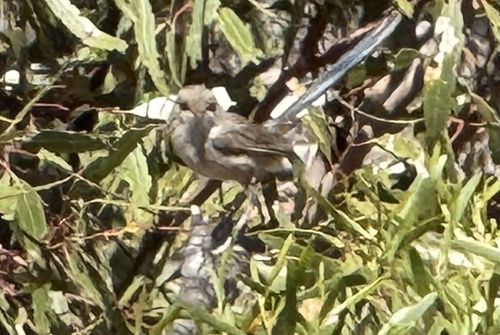 Blue-breasted FairywrenMalurus pulcherrimusThe contact call is a soft, short reed-like trill.
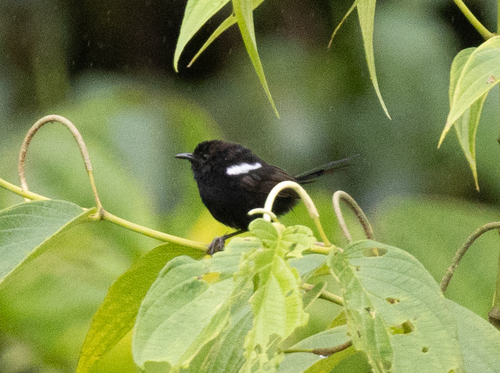 White-shouldered FairywrenMalurus alboscapulatusThe adult male is all shiny black except for their white shoulders (scapulars), but unlike the better-known Australian fairywrens there is no eclipse male plumage.
Side by side: Red-winged Fairywren vs Splendid Fairywren · Purple-backed Fairywren vs Red-winged Fairywren · Red-winged Fairywren vs White-winged Fairywren · Lovely Fairywren vs Red-winged Fairywren
Learn the Red-winged Fairywren in the BeakBrain App
Photo and call practice. Coming soon to iPhone and Android.
Play today's Daily BirdEvery photo and recording on this page is credited to its author under the licence shown. Spotted a problem with this page, or have a better photo? Contribute.