Learn what every symbol on the card means.Full credits and sources at beakbrain.com/symbols
 ForestCup nestMedium · 106 g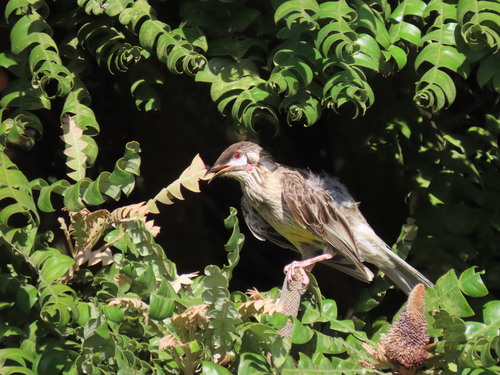
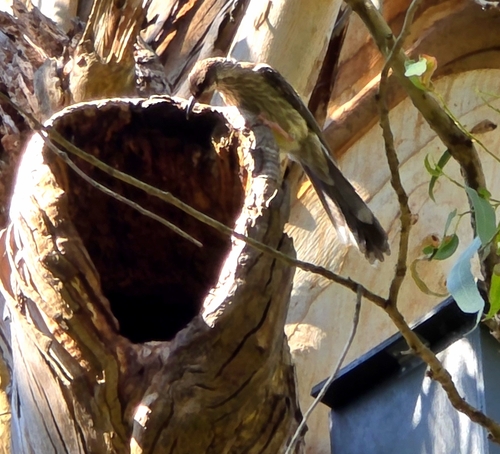
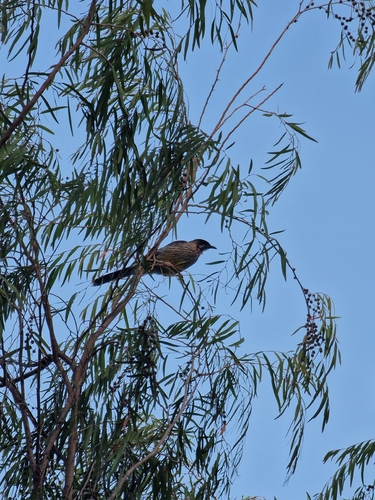
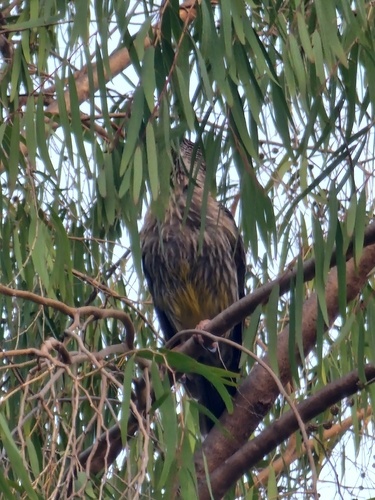


What the Red Wattlebird sounds like


ID tip
The sexes of the red wattlebird are similar in size and plumage, the length of the adult male ranging from 33 to 37 centimetres (13 to 15 in) and the adult female from 34 to 37 centimetres (13 to 15 in). With an average weight of 100–120 grams (3.5–4.2 oz), the red wattlebird is one of the largest nectar-feeding birds in the world, and the second largest species of honeyeater native to Australia, eclipsed only by the yellow wattlebird. Voice: Red wattlebirds are noisy animals, producing a range of raucous calls. Pairs of birds appear to duet, particularly at food sources, with the male producing a loud cackle and the female a whistling call. The male's cackle is loudest between 1 and 3 kHz frequency. A guttural-sounding call, it has been variously described as having a squawking, coughing or hiccuping sound.
Text from Wikipedia, licensed CC BY-SA 4.0.
When to see the Red Wattlebird
One bar for each month, and every month is filled: this bird is recorded here in all twelve. The wide bar is October, the month with the most records.
Where to see the Red Wattlebird
The map shades 1 country with regular records. Everything unshaded has no records. Countries are listed below the map.
About the Red Wattlebird
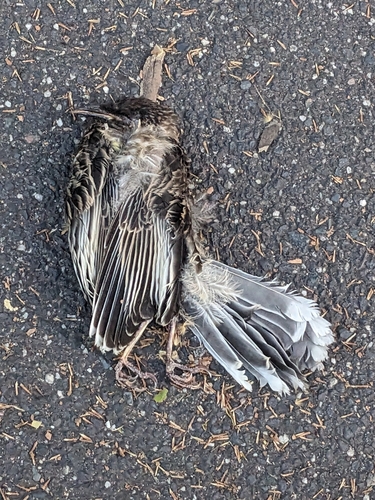
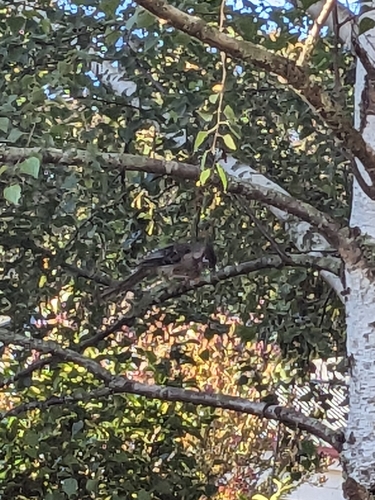
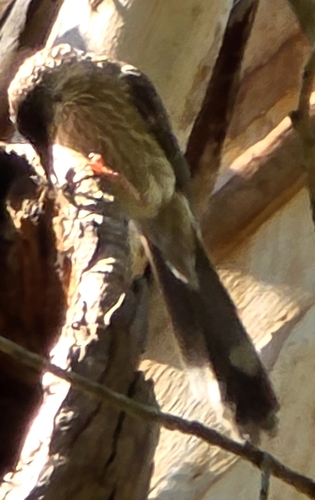
The red wattlebird is a passerine bird native to southern Australia. At 33–37 cm in length, it is the second largest species of Australian honeyeater, after the yellow wattlebird. It has mainly grey-brown plumage, with red eyes, distinctive pinkish-red wattles on either side of the neck, white streaks on the chest and a large bright yellow patch on the lower belly. The sexes are similar in plumage. Juveniles have less prominent wattles and browner eyes. John White described the red wattlebird in 1790. Three subspecies are recognized.
Text adapted from Wikipedia, licensed CC BY-SA 4.0.
Easily confused with
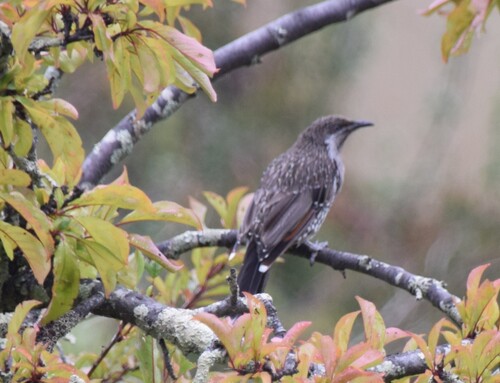 Little WattlebirdAnthochaera chrysopteraThe little wattlebird is a medium to large honeyeater, but the smallest wattlebird.
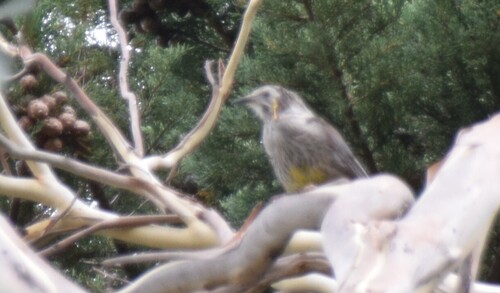 Yellow WattlebirdAnthochaera paradoxaThe yellow wattlebird is the largest of the honeyeaters, and is endemic to Tasmania.
 Regent HoneyeaterAnthochaera phrygiaThe neck and head are glossy black.
Side by side: Little Wattlebird vs Red Wattlebird · Red Wattlebird vs Yellow Wattlebird · Red Wattlebird vs Regent Honeyeater
Learn the Red Wattlebird in the BeakBrain App
Photo and call practice. Coming soon to iPhone and Android.
Play today's Daily BirdEvery photo and recording on this page is credited to its author under the licence shown. Spotted a problem with this page, or have a better photo? Contribute.