Learn what every symbol on the card means.Full credits and sources at beakbrain.com/symbols
 ForestDomed nestMedium · 270 g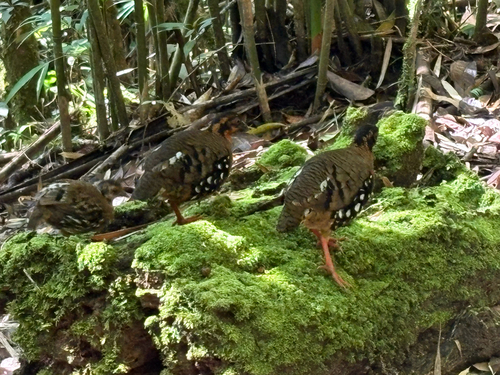
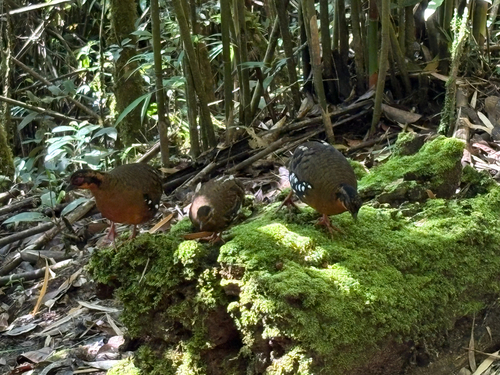
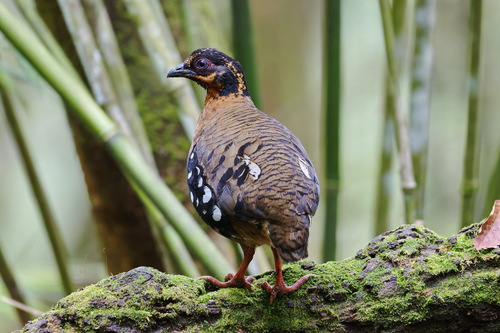
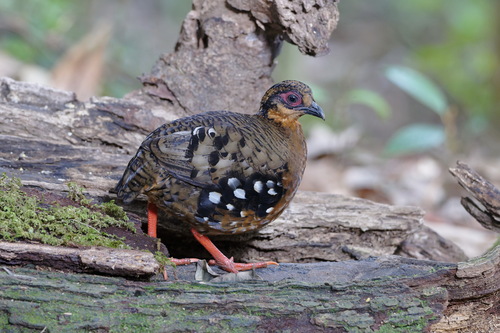
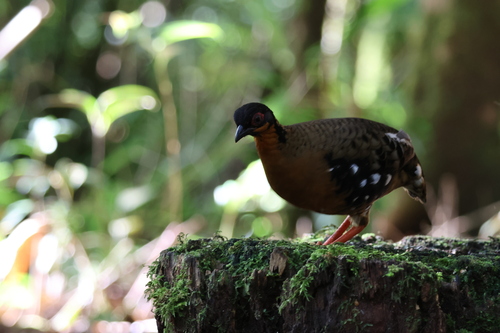
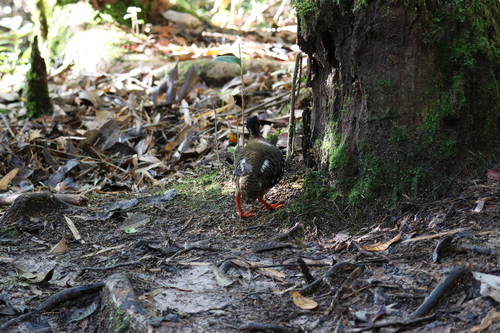


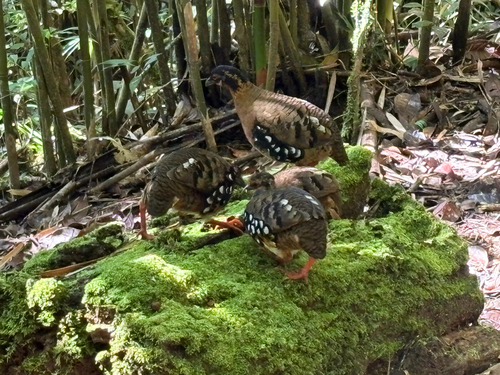
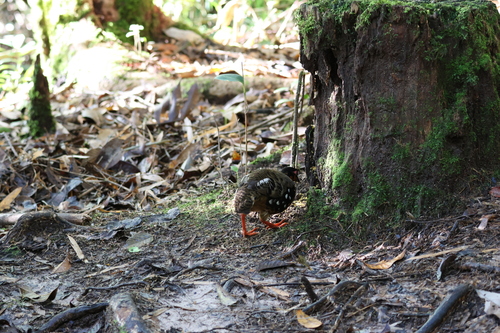
ID tip
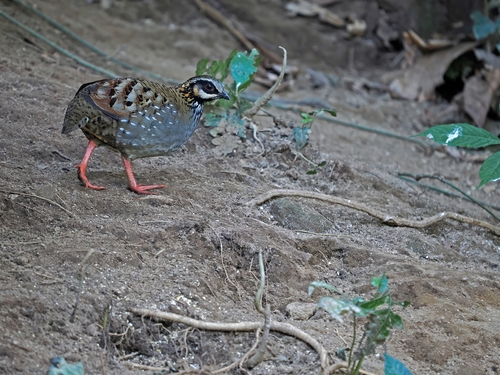
The red-breasted partridge is about 27 cm (11 in) long and weighs about 270 g (9.5 oz). The crown and nape are blackish, with brown spots. There is a grey or rufous supercilium, and a blackish-brown band goes through the eye. The cheeks and throat are rufous. The breast is bright chestnut, sometimes browner, and the belly is whitish. The flanks are black and white. The upperparts are brown, with blackish bars. The eyes are grey, the beak is black, and the legs are pink. There is red bare skin around the throat, usually covered by sparse feathers.
Text from Wikipedia, licensed CC BY-SA 4.0.
When to see the Red-breasted Partridge
One bar for each month. Filled bars are the 9 months with records; pale bars are months with none. The wide bar is March, the month with the most records.
Where to see the Red-breasted Partridge
The map shades 2 countries with regular records. Everything unshaded has no records. Countries are listed below the map.
About the Red-breasted Partridge
The red-breasted partridge, also known as the Bornean hill-partridge, is a species of bird in the family Phasianidae. It is endemic to hill and montane forest in Borneo, preferring bamboos and thickets. The International Union for Conservation of Nature (IUCN) has assessed it as a least-concern species.
Text adapted from Wikipedia, licensed CC BY-SA 4.0.
Easily confused with
 Bar-backed PartridgeArborophila brunneopectusThe bar-backed partridge is typically 280 mm (11 in) long in total, with an average wingspan of 144 mm (5.7 in) for males and 134 mm (5.3 in) for females of the species.
 White-cheeked PartridgeArborophila atrogularisThe white-cheeked partridge is a species of partridge in the family Phasianidae, native to Asia.
 Chestnut-breasted PartridgeArborophila mandelliiThe chestnut-breasted partridge is a partridge species endemic to the eastern Himalayas north of the Brahmaputra, and occurs in Bhutan, Darjeeling, Sikkim, Arunachal Pradesh and south-eastern Tibet at elevations from 350 to 2,500 m.
Learn the Red-breasted Partridge in the BeakBrain App
Photo and call practice. Coming soon to iPhone and Android.
Play today's Daily BirdEvery photo and recording on this page is credited to its author under the licence shown. Spotted a problem with this page, or have a better photo? Contribute.