Learn what every symbol on the card means.Full credits and sources at beakbrain.com/symbols
 ForestPlatform nestMedium · 268 g
When to see the Chestnut-breasted Partridge
One bar for each month. Filled bars are the 7 months with records; pale bars are months with none. The wide bar is April, the month with the most records.
Where to see the Chestnut-breasted Partridge
The map shades 3 countries with regular records. Everything unshaded has no records. Countries are listed below the map.
About the Chestnut-breasted Partridge
The chestnut-breasted partridge is a partridge species endemic to the eastern Himalayas north of the Brahmaputra, and occurs in Bhutan, Darjeeling, Sikkim, Arunachal Pradesh and south-eastern Tibet at elevations from 350 to 2,500 m. It is listed as near threatened on the IUCN Red List, as the estimated population comprises less than 10,000 individuals. It is threatened by forest degradation and by hunting. It is known from at least three protected areas, including Singalila National Park and Namdapha National Park. The scientific name commemorates the Italian naturalist Louis Mandelli.
Text adapted from Wikipedia, licensed CC BY-SA 4.0.
Easily confused with
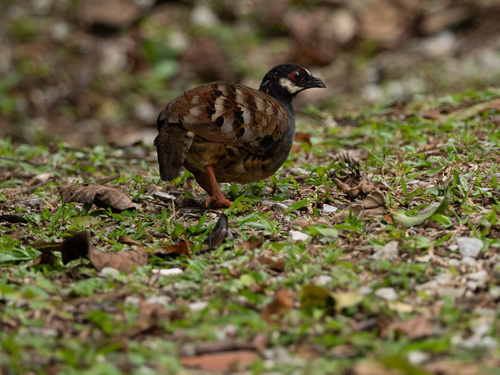 Malayan PartridgeArborophila campbelliThis bird is characterized by its mottled olive brown coloration and gray breast.
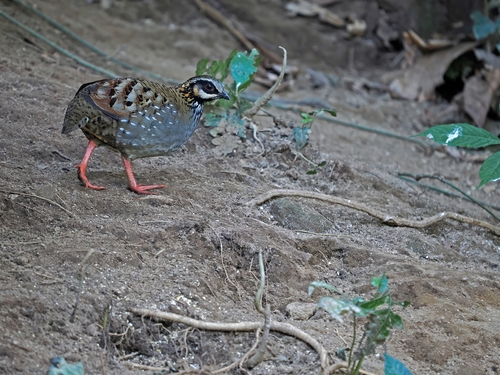 White-cheeked PartridgeArborophila atrogularisThe white-cheeked partridge is a species of partridge in the family Phasianidae, native to Asia.
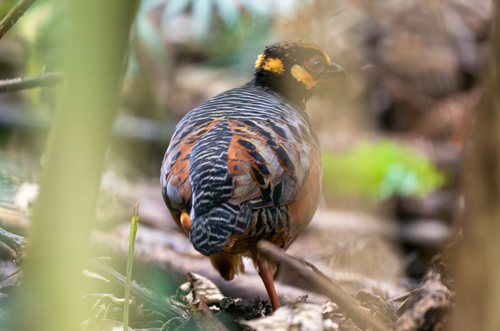 Chestnut-bellied PartridgeArborophila javanicaThe chestnut-bellied partridge also known as chestnut-bellied hill-partridge or Javan hill-partridge is a small, up to 28 cm long, partridge with a rufous crown and nape, red legs, grey breast, brown wings, red facial skin, and a black mask, throat and bill.
Learn the Chestnut-breasted Partridge in the BeakBrain App
Photo and call practice. Coming soon to iPhone and Android.
Play today's Daily BirdEvery photo and recording on this page is credited to its author under the licence shown. Spotted a problem with this page, or have a better photo? Contribute.