Learn what every symbol on the card means.Full credits and sources at beakbrain.com/symbols
 GrasslandScrapeSmall · 39 g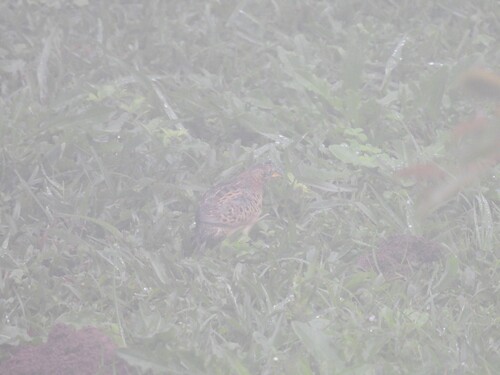

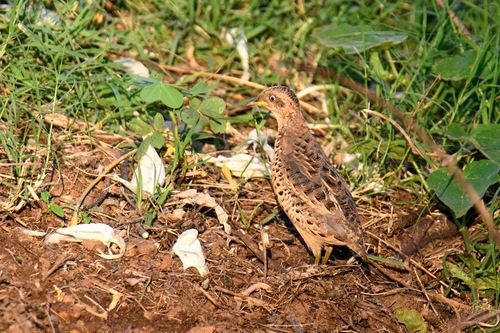
ID tip
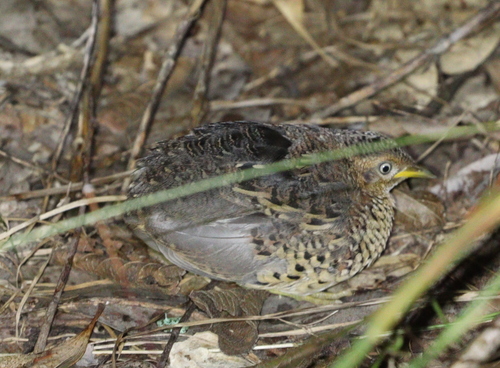
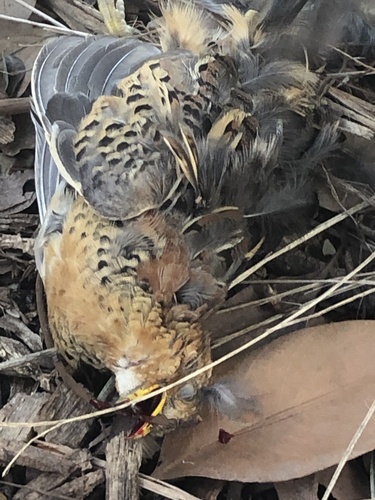
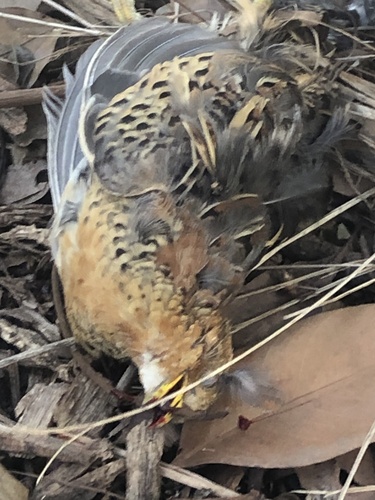
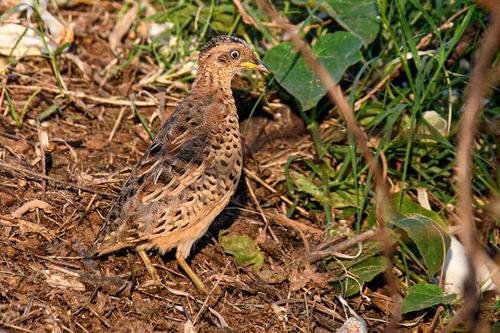
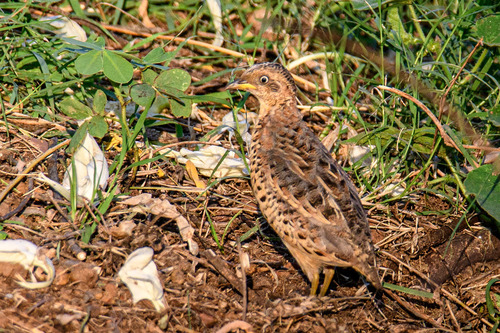
The red-backed buttonquail is a small stocky bird with round-tipped wings and a short tail. The length varies between 12 and 16 cm (4.7 and 6.3 in). The female is larger than the male and weighs between 32 and 51 g (1.1 and 1.8 oz) to the male's 23 to 39 g (0.8 to 1.4 oz). The subspecies T. m. melanotus, found in northern Australia, has a pale yellow beak, yellowish irises and yellowish legs and feet. The front and top of the head are blackish scalloped with grey, and the side of the head, the neck and throat are brownish-buff, with a reddish-brown partial collar.
Text from Wikipedia, licensed CC BY-SA 4.0.
When to see the Red-backed Buttonquail
One bar for each month, and every month is filled: this bird is recorded here in all twelve. The wide bar is January, the month with the most records.
Where to see the Red-backed Buttonquail
The map shades 5 countries with regular records. Everything unshaded has no records. Countries are listed below the map.
About the Red-backed Buttonquail
The red-backed buttonquail is a species of bird in the family Turnicidae. It is found in Australia, Indonesia, Papua New Guinea, the Philippines and the Solomon Islands. Other names by which it is known in different parts of its range include black-backed, black-spotted and orange-breasted buttonquail. There are fourteen recognised subspecies.
Text adapted from Wikipedia, licensed CC BY-SA 4.0.
Easily confused with
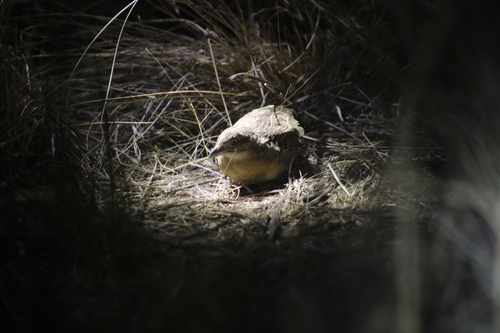 Red-chested ButtonquailTurnix pyrrhothoraxAdult red-chested buttonquails are 12–16 cm long with males weighing 27-46 g and females 31-83 g.
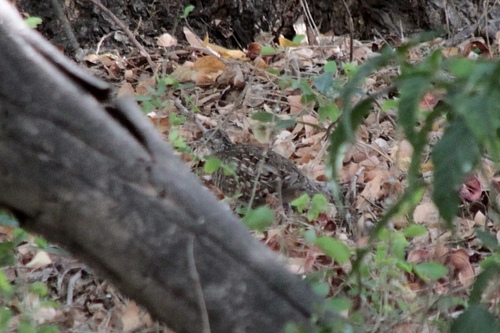 Madagascar ButtonquailTurnix nigricollisThe Madagascar buttonquail is a stocky bird with a small head and short legs and tail.
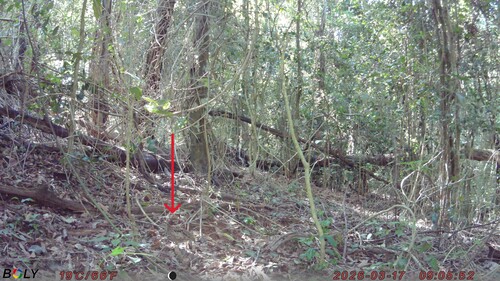 Black-breasted ButtonquailTurnix melanogasterThe black-breasted buttonquail is a plump quail-shaped bird with predominantly marbled black, rufous and pale brown plumage, marked prominently with white spots and stripes, white eyes, a grey bill and yellowish feet.
Learn the Red-backed Buttonquail in the BeakBrain App
Photo and call practice. Coming soon to iPhone and Android.
Play today's Daily BirdEvery photo and recording on this page is credited to its author under the licence shown. Spotted a problem with this page, or have a better photo? Contribute.