Learn what every symbol on the card means.Full credits and sources at beakbrain.com/symbols
 ForestScrapeMedium · 87 g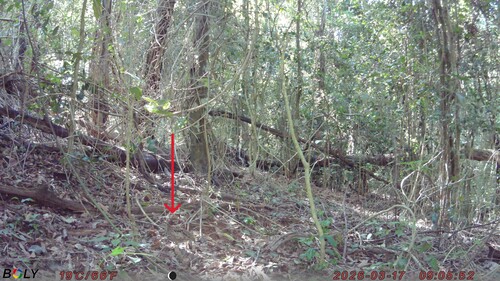
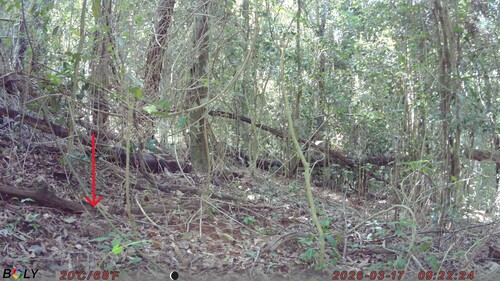
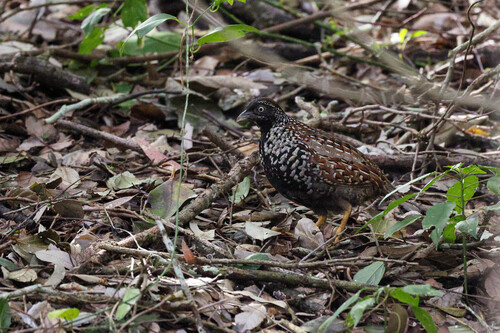
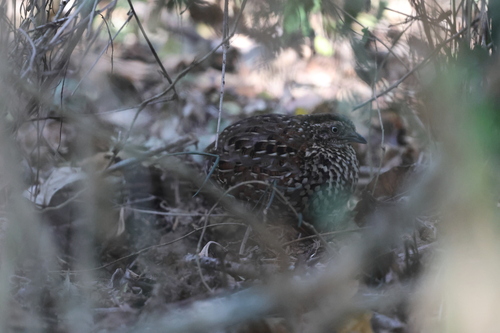
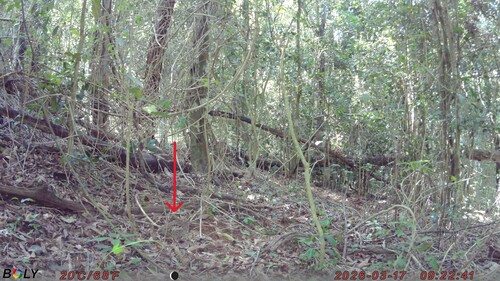
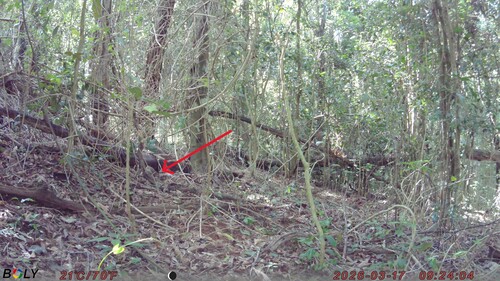
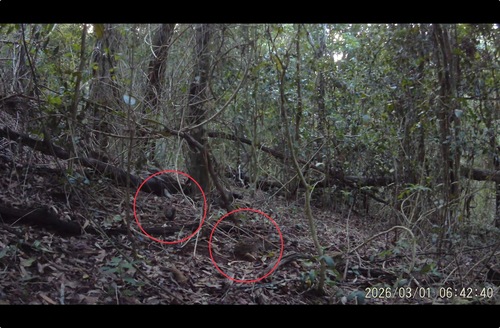
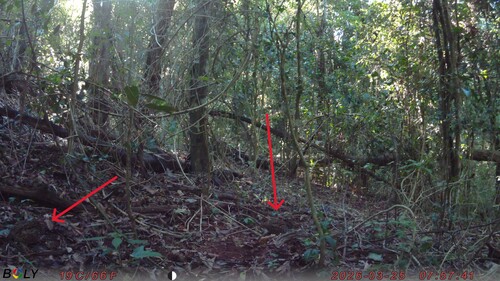
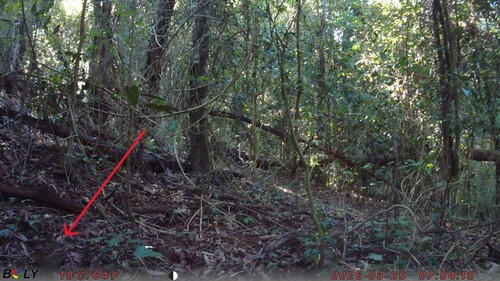
ID tip
The black-breasted buttonquail is a plump quail-shaped bird with predominantly marbled black, rufous and pale brown plumage, marked prominently with white spots and stripes, white eyes, a grey bill and yellowish feet. The short tail has twelve rectrices and the wings are short with round tips. The length ranges from 17 to 19 cm (6.5 to 7.5 in), with females tending to be larger and heavier, weighing 80–119 g (2.8–4.2 oz), compared to males, which weigh 50–87 g (1.8–3.1 oz). Like other buttonquails, the female is more distinctively coloured than the male.
Text from Wikipedia, licensed CC BY-SA 4.0.
When to see the Black-breasted Buttonquail
One bar for each month, and every month is filled: this bird is recorded here in all twelve. The wide bar is May, the month with the most records.
Where to see the Black-breasted Buttonquail
The map shades 1 country with regular records. Everything unshaded has no records. Countries are listed below the map.
About the Black-breasted Buttonquail
The black-breasted buttonquail is a rare buttonquail endemic to eastern Australia. As with other buttonquails, it is unrelated to the true quails. The black-breasted buttonquail is a plump quail-shaped bird 17–19 cm (6.7–7.5 in) in length with predominantly marbled black, rufous, and pale brown plumage, marked prominently with white spots and stripes, and white eyes. Like other buttonquails, the female is larger and more boldly coloured than the male, with a distinctive black head and neck sprinkled with fine white markings. The usual sex roles are reversed, as the female mates with multiple male partners and leaves them to incubate the eggs.
Text adapted from Wikipedia, licensed CC BY-SA 4.0.
Easily confused with
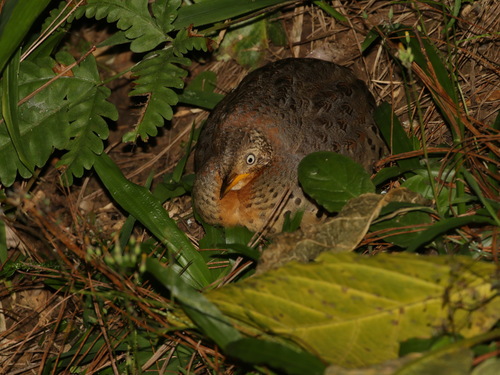 Yellow-legged ButtonquailTurnix tankiThe yellow-legged buttonquail is a small quail growing to a length of 15 to 18 cm (6 to 7 in), the females being slightly larger and more brightly coloured than the males.
 Chestnut-backed ButtonquailTurnix castanotusThe chestnut-backed buttonquail is a species of bird in the family Turnicidae.
 Black-rumped ButtonquailTurnix nanusThis species has a brown back, rufous chest, and pale belly, brown irises and a black rump.
Learn the Black-breasted Buttonquail in the BeakBrain App
Photo and call practice. Coming soon to iPhone and Android.
Play today's Daily BirdEvery photo and recording on this page is credited to its author under the licence shown. Spotted a problem with this page, or have a better photo? Contribute.