Learn what every symbol on the card means.Full credits and sources at beakbrain.com/symbols
 ShrublandDomed nestTiny · 8 g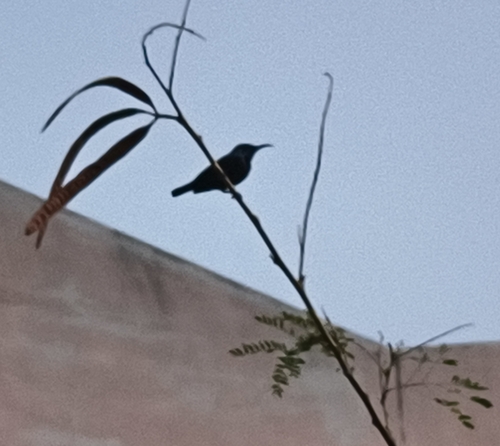


ID tip
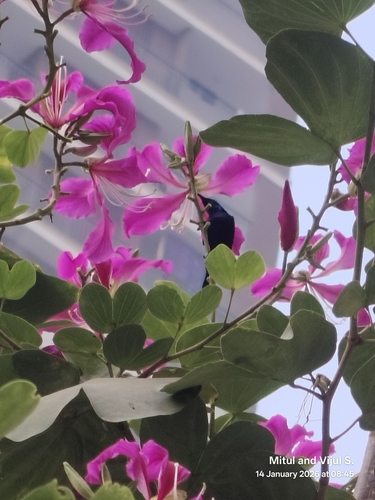
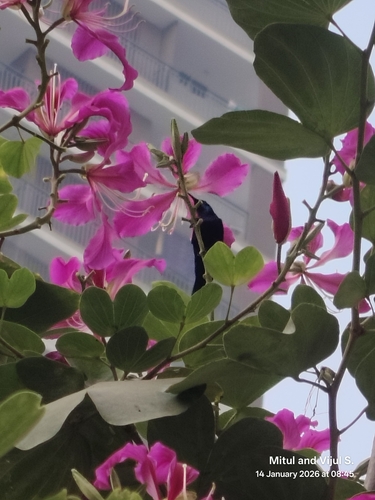
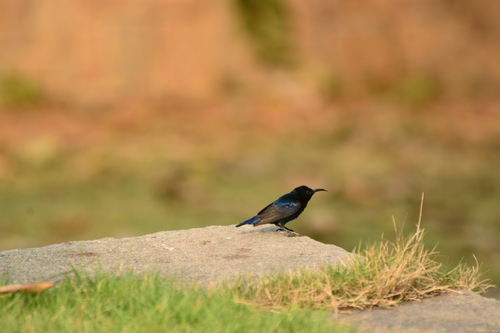
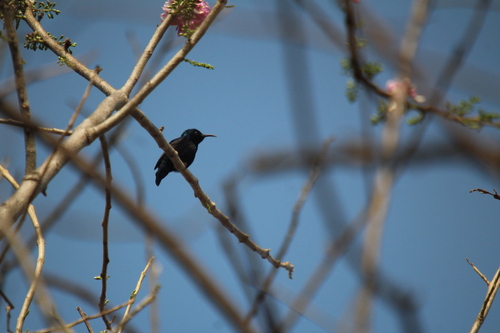
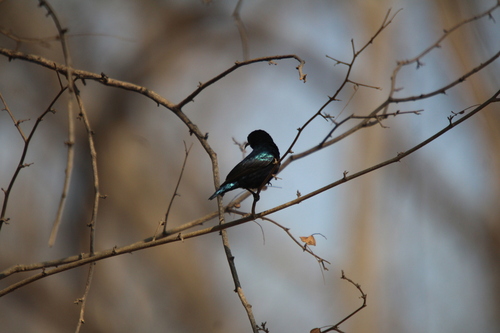
The purple sunbird has a relatively short bill, a dark and short square ended tail with distinctive sexual dimorphism. Less than 10 cm (3.9 in) long they have a down-curved bill with brush-tipped tubular tongues that aid in nectar feeding. The male is glossy metallic bluish to purplish black on the upper parts with the wings appearing dark brown. The breeding male also has underparts of the same purplish black, but non-breeding males may show a central streak of black on yellow underparts.
Text from Wikipedia, licensed CC BY-SA 4.0.
When to see the Purple Sunbird
One bar for each month, and every month is filled: this bird is recorded here in all twelve. The wide bar is February, the month with the most records.
Where to see the Purple Sunbird
The map shades 17 countries with regular records. Everything unshaded has no records. Countries are listed below the map.
About the Purple Sunbird
The purple sunbird is a small bird in the sunbird family. It occurs in parts of the Arabian peninsula and South and Southeast Asia. It has a fast and direct flight and can take nectar by hovering like a hummingbird but often perches at the base of flowers. It feeds mainly on nectar and insects, especially when feeding young. The males can appear all black in harsh sunlight but the purple iridescence is visible on closer observation or under good light conditions. Females are olive above and yellowish below.
Text adapted from Wikipedia, licensed CC BY-SA 4.0.
Easily confused with
 White-bellied SunbirdCinnyris talatalaThe white-bellied sunbird, also known as the white-breasted sunbird, is a species of bird in the family Nectariniidae.
White-bellied SunbirdCinnyris talatalaThe white-bellied sunbird, also known as the white-breasted sunbird, is a species of bird in the family Nectariniidae.
White-bellied SunbirdCinnyris talatalaThe white-bellied sunbird, also known as the white-breasted sunbird, is a species of bird in the family Nectariniidae.
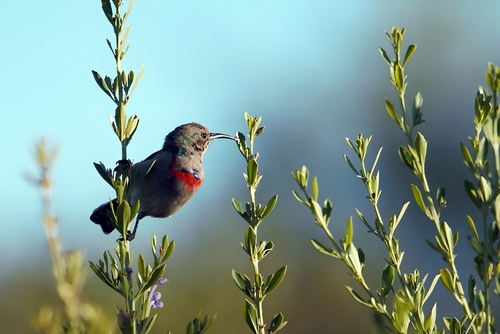 Southern Double-collared SunbirdCinnyris chalybeusThe southern double-collared sunbird is 12 cm long.
Side by side: Purple Sunbird vs Southern Double-collared Sunbird
Learn the Purple Sunbird in the BeakBrain App
Photo and call practice. Coming soon to iPhone and Android.
Play today's Daily BirdEvery photo and recording on this page is credited to its author under the licence shown. Spotted a problem with this page, or have a better photo? Contribute.