Learn what every symbol on the card means.Full credits and sources at beakbrain.com/symbols
 WoodlandScrapeSmall · 36 g


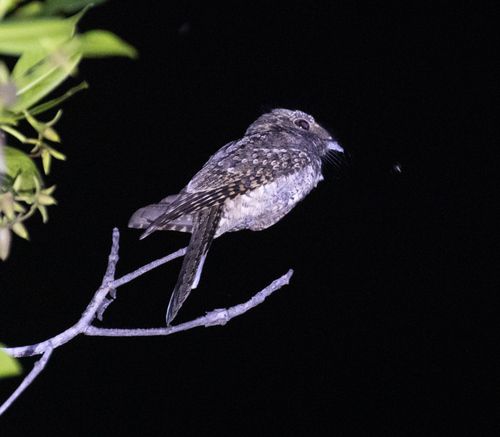
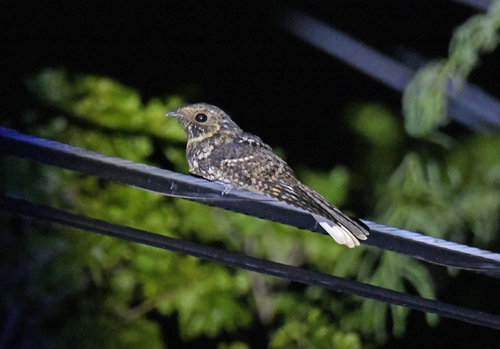
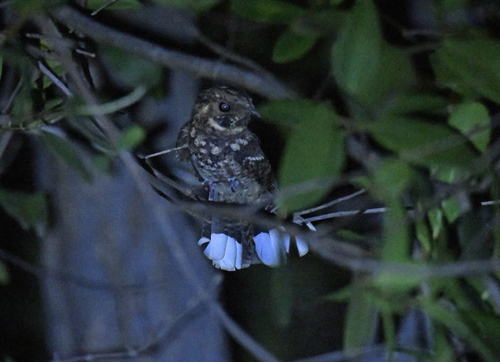

ID tip
Puerto Rican nightjars, whose song is composed of rapid "whip" notes, are small birds about 22–23 cm in length, weighing 39–41 g. Similar to the Antillean nighthawk, the species has a mottled, black, brown and gray colored plumage which serves as camouflage while the bird is perched on the ground. Males have a black throat with a white thin horizontal line. There are white spots on the lower part of the tail which are visible in flight. Females are of a buff rather than white coloration. Puerto Rican nightjars have large, dark black eyes, a short gray bill, and gray tarsi.
Text from Wikipedia, licensed CC BY-SA 4.0.
When to see the Puerto Rican Nightjar
One bar for each month. Filled bars are the 9 months with records; pale bars are months with none. The wide bar is March, the month with the most records.
Where to see the Puerto Rican Nightjar
The map shades 1 country with regular records. Everything unshaded has no records. Countries are listed below the map.
About the Puerto Rican Nightjar
The Puerto Rican nightjar, Puerto Rican whip-poor-will or guabairo is a bird in the nightjar family found in the coastal dry scrub forests in localized areas of southwestern Puerto Rico. It was described in 1916 from bones found in a cave in north central Puerto Rico and a single skin specimen from 1888, and was considered extinct until observed in the wild in 1961. The current population is estimated as 1,400-2,000 mature birds. The species is currently classified as Endangered due to pressures from habitat loss.
Text adapted from Wikipedia, licensed CC BY-SA 4.0.
Easily confused with
 Cuban NightjarAntrostomus cubanensisThe Cuban nightjar's subspecies A. c. cubanensis is 25 to 29.5 cm (9.8 to 12 in) long.
 Yucatan NightjarAntrostomus badiusThe Yucatan nightjar is 24 to 25.5 cm (9.4 to 10 in) long.
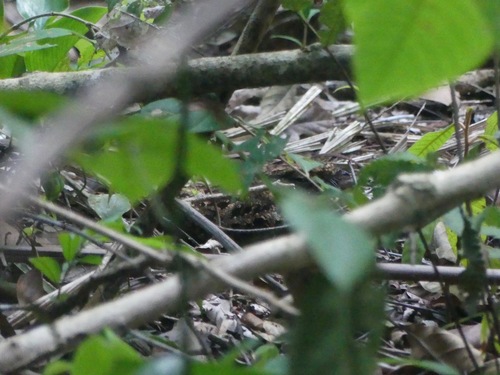 Silky-tailed NightjarAntrostomus sericocaudatusThe adult male silky-tailed nightjar has light grey-brown, vermiculated plumage with a strong blackish streak on the top of the head and the nape.
Learn the Puerto Rican Nightjar in the BeakBrain App
Photo and call practice. Coming soon to iPhone and Android.
Play today's Daily BirdEvery photo and recording on this page is credited to its author under the licence shown. Spotted a problem with this page, or have a better photo? Contribute.