Learn what every symbol on the card means.Full credits and sources at beakbrain.com/symbols
 GrasslandPlatform nestHuge · 1.5 kg

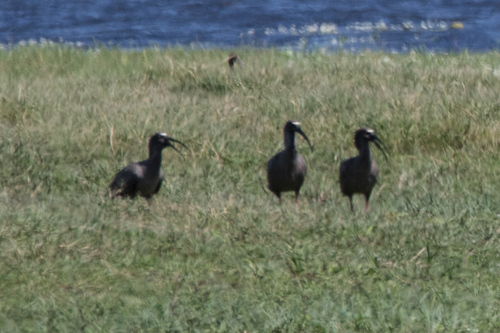
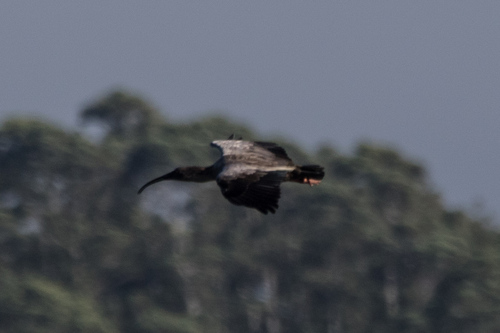
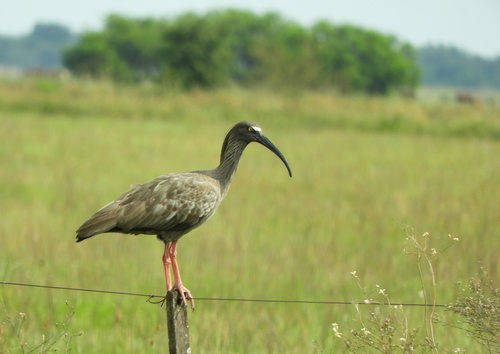
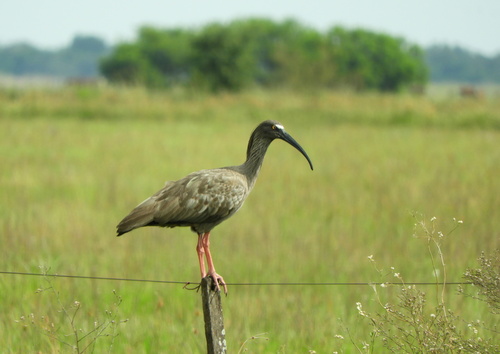
ID tip
This large ibis measures 71–77 cm in length, with a wing length of 397-450mm in males and 360-406mm in females. The culmen length is 145-167mm in males, and 126-147mm in females. The sexes are similar in appearance, but the female is slightly smaller. The plumbeous ibis is easily recognisable through a distinctive shaggy crest comprising long grey plumes that extend from the back of head 10 cm down the nape. A prominent, narrow, white feathered band also extends around the forehead, which has earned this species the German common name Stirnbandibis (headband ibis). Voice: The loud vocalisations uttered by this species are diverse. The basic call is a high-pitched, rapid pi-pi-pi-pi which has a somewhat metallic timbre and can be uttered when the bird stands on the ground during daytime. This call has been said to resemble the sound of a banjo with brass strings so big that it could be heard a mile and a half away.
Text from Wikipedia, licensed CC BY-SA 4.0.
When to see the Plumbeous Ibis
One bar for each month. Filled bars are the 9 months with records; pale bars are months with none. The wide bar is October, the month with the most records.
Where to see the Plumbeous Ibis
The map shades 5 countries with regular records. Everything unshaded has no records. Countries are listed below the map.
About the Plumbeous Ibis
The plumbeous ibis, also formerly called the blue ibis, is a large distinctive ibis species endemic to parts of central South America.
Text adapted from Wikipedia, licensed CC BY-SA 4.0.
Easily confused with
 Andean IbisTheristicus branickiiIt has a total length of approximately 75 centimetres (30 in).
Black-faced IbisTheristicus melanopisIt has a total length of approximately 75 centimetres (30 in).
Andean IbisTheristicus branickiiIt has a total length of approximately 75 centimetres (30 in).
Black-faced IbisTheristicus melanopisIt has a total length of approximately 75 centimetres (30 in).
 Buff-necked IbisTheristicus caudatusIt has a total length of approximately 75 centimetres (30 in).
Side by side: Buff-necked Ibis vs Plumbeous Ibis · Black-faced Ibis vs Plumbeous Ibis
Learn the Plumbeous Ibis in the BeakBrain App
Photo and call practice. Coming soon to iPhone and Android.
Play today's Daily BirdEvery photo and recording on this page is credited to its author under the licence shown. Spotted a problem with this page, or have a better photo? Contribute.