Learn what every symbol on the card means.Full credits and sources at beakbrain.com/symbols
 ForestCup nestTiny · 10 g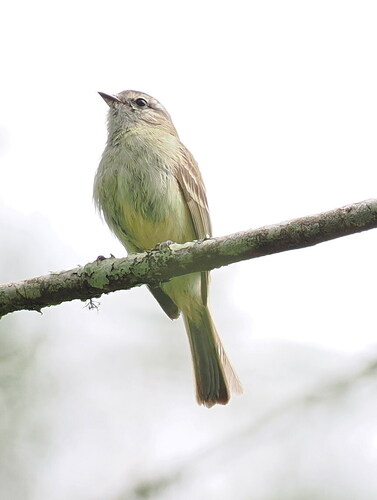
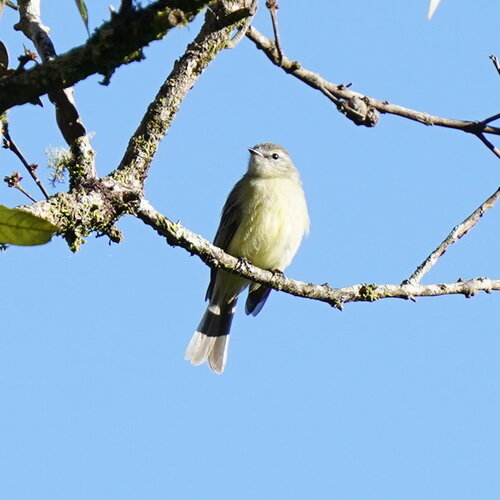
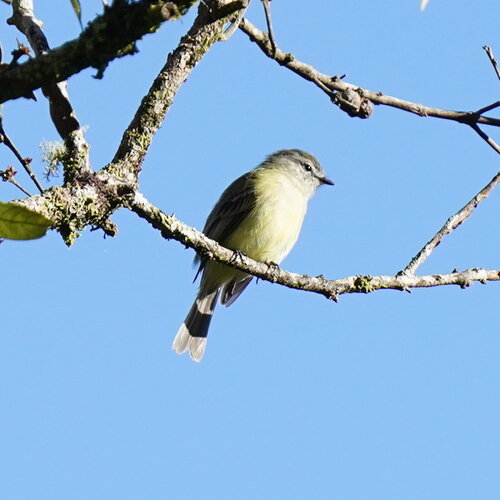
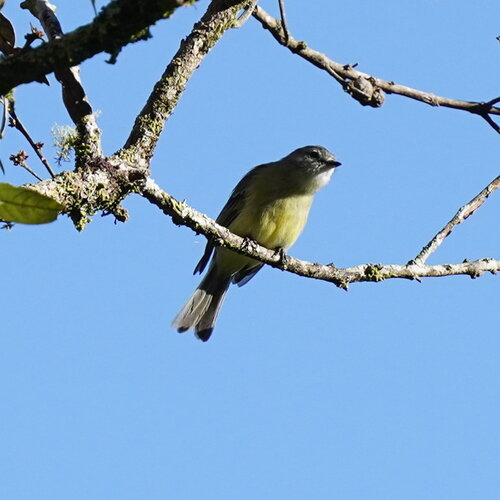
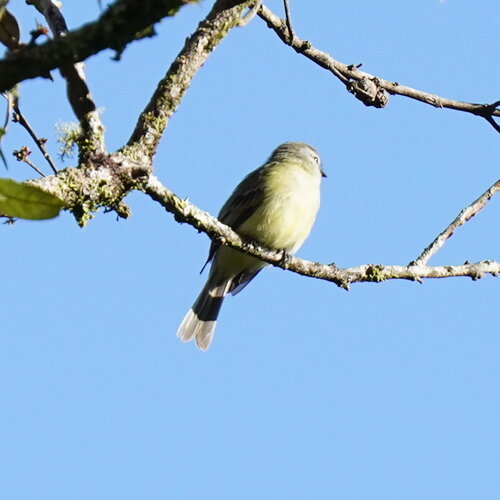
ID tip
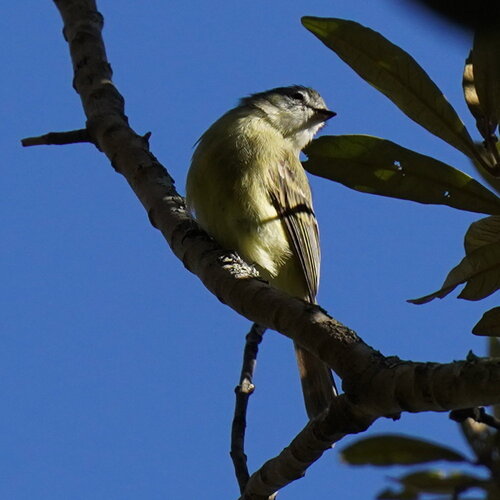
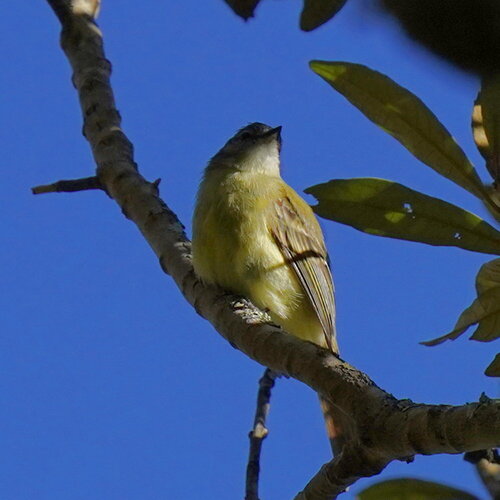
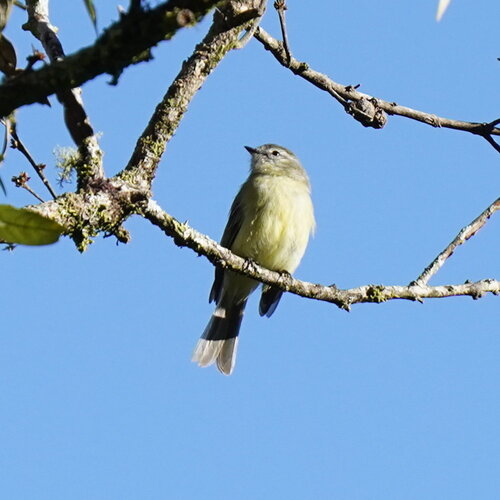
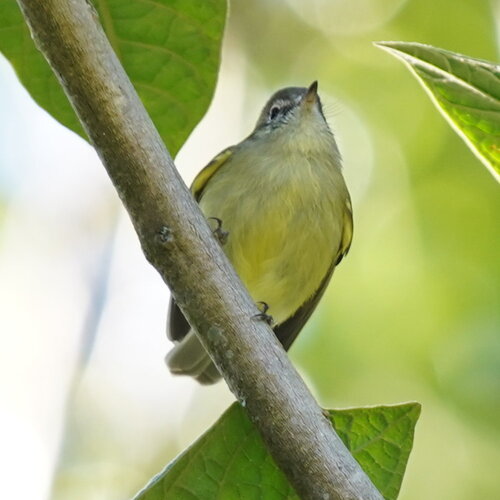
The planalto tyrannulet is 11 to 11.5 cm (4.3 to 4.5 in) long. The sexes have the same plumage. Adults of the nominate subspecies have dull grayish-olive to brownish-olive crowns, napes, backs, and rumps, with the crown being the grayest part. Their lores, supercilium, partial eyering, and lower face are whitish with a dark stripe through their eye. Their wings are dusky with pale olive to whitish edges to the flight feathers and the ends of the coverts; the latter show as two pale bars on the closed wing. Their tail is dusky. Voice: The planalto tyrannulet's song differs geographically. In the southeastern part of its range it sings "a slow series of 3-4 slightly descending, plaintive 'puh-puh--' minor-key notes". Elsewhere it sings a "slightly higher-pitched and more distinctly descending series of 3 more major-keyed notes".
Text from Wikipedia, licensed CC BY-SA 4.0.
When to see the Planalto Tyrannulet
One bar for each month, and every month is filled: this bird is recorded here in all twelve. The wide bar is October, the month with the most records.
Where to see the Planalto Tyrannulet
The map shades 3 countries with regular records, and 1 more in a lighter tone where the bird turns up only as a stray. Everything unshaded has no records. Countries are listed below the map.
Recorded as a rare visitor in Paraguay.
About the Planalto Tyrannulet
The planalto tyrannulet is a species of bird in subfamily Elaeniinae of family Tyrannidae, the tyrant flycatchers. It is found in Argentina, Bolivia, Brazil, and Paraguay.
Text adapted from Wikipedia, licensed CC BY-SA 4.0.
Easily confused with
 Sooty-headed TyrannuletPhyllomyias griseicepsThe sooty-headed tyrannulet is about 10 cm (3.9 in) long and weighs about 8 g (0.28 oz).
 Grey-capped TyrannuletPhyllomyias griseocapillaThe grey-capped tyrannulet is about 11 cm (4.3 in) long.
 Sclater's TyrannuletPhyllomyias sclateriSclater's tyrannulet is 11.5 to 12.5 cm (4.5 to 4.9 in) long.
Side by side: Planalto Tyrannulet vs Sooty-headed Tyrannulet · Grey-capped Tyrannulet vs Planalto Tyrannulet · Planalto Tyrannulet vs Sclater's Tyrannulet
Learn the Planalto Tyrannulet in the BeakBrain App
Photo and call practice. Coming soon to iPhone and Android.
Play today's Daily BirdEvery photo and recording on this page is credited to its author under the licence shown. Spotted a problem with this page, or have a better photo? Contribute.