Learn what every symbol on the card means.Full credits and sources at beakbrain.com/symbols
 ForestCup nestTiny · 10 g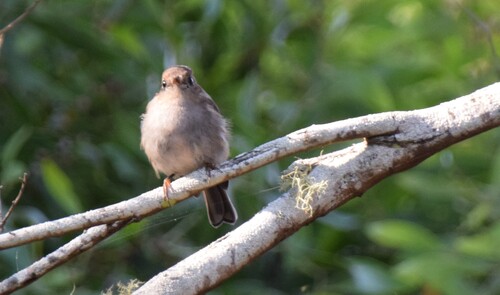
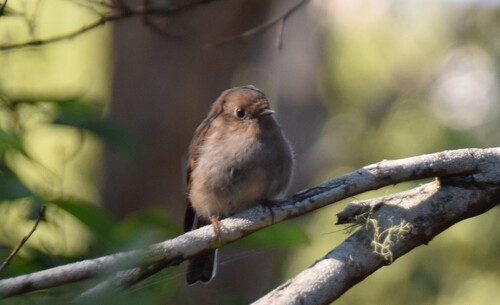
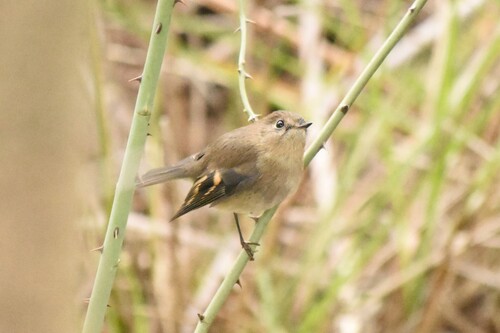
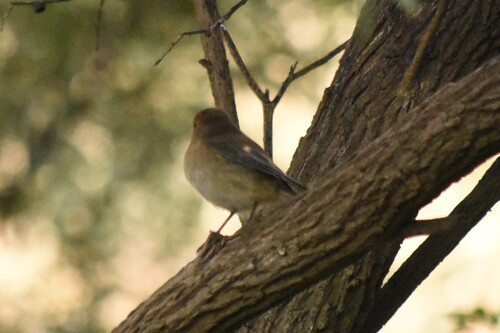
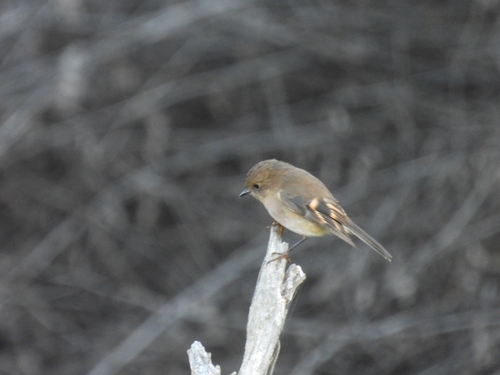
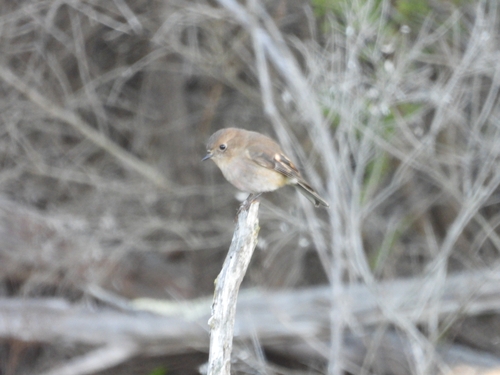
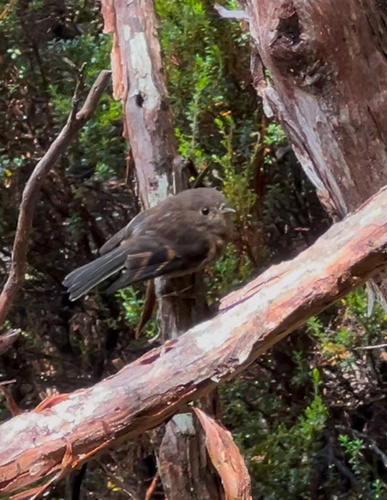


ID tip
The pink robin is 13.5 cm (5.5 in) long and displays sexual dimorphism – the males and females have plumage which differ markedly. The male has a dark blackish-grey head, throat, back, wings and tail, a pink breast and belly fading to white on the lower abdomen, and a white forehead. The female is dark grey-brown above, with two buff-coloured wing-bars and pinkish-tinged underparts. The bill and feet are black, and the eyes are dark brown.
Text from Wikipedia, licensed CC BY-SA 4.0.
When to see the Pink Robin
One bar for each month, and every month is filled: this bird is recorded here in all twelve. The wide bar is April, the month with the most records.
Where to see the Pink Robin
The map shades 1 country with regular records. Everything unshaded has no records. Countries are listed below the map.
About the Pink Robin
The pink robin is a small passerine bird native to southeastern Australia. Its natural habitats are cool temperate forests of far southeastern Australia. Like many brightly coloured robins of the family Petroicidae, it is sexually dimorphic. Measuring 13.5 cm (5.3 in) in length, the robin has a small, thin, black bill, and dark brown eyes and legs. The male has a distinctive white forehead spot and pink breast, with grey-black upperparts, wings and tail. The belly is white. The female has grey-brown plumage.
Text adapted from Wikipedia, licensed CC BY-SA 4.0.
Easily confused with
 Norfolk RobinPetroica multicolorThe Norfolk robin is similar to the Pacific robin, as well as to the scarlet robin.
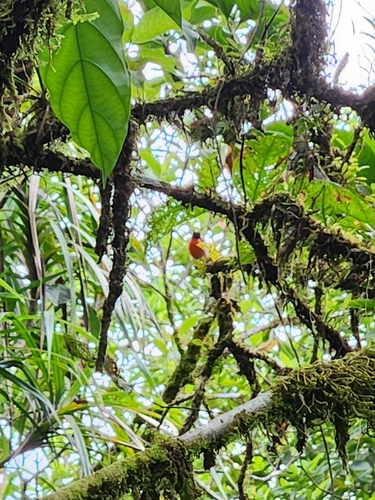 Pacific RobinPetroica pusillaThe Pacific robin is a small passerine, 11.5–13.5 cm long and weighing 9–11 g.
 Black RobinPetroica traversiThe black robin is a small, sparrow-sized bird measuring 10–15 centimetres (3.9–5.9 in).
Side by side: Norfolk Robin vs Pink Robin
Learn the Pink Robin in the BeakBrain App
Photo and call practice. Coming soon to iPhone and Android.
Play today's Daily BirdEvery photo and recording on this page is credited to its author under the licence shown. Spotted a problem with this page, or have a better photo? Contribute.