Learn what every symbol on the card means.Full credits and sources at beakbrain.com/symbols
 RiverineScrapeMedium · 76 g



ID tip
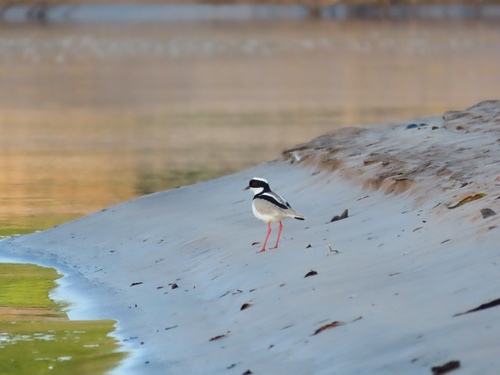
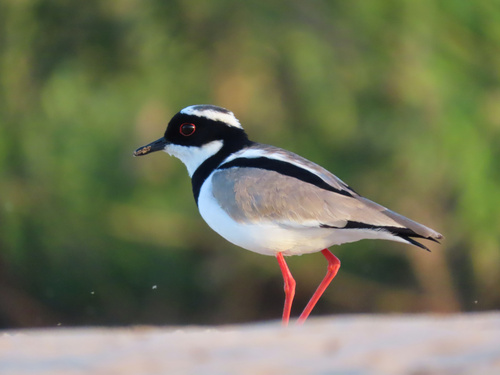
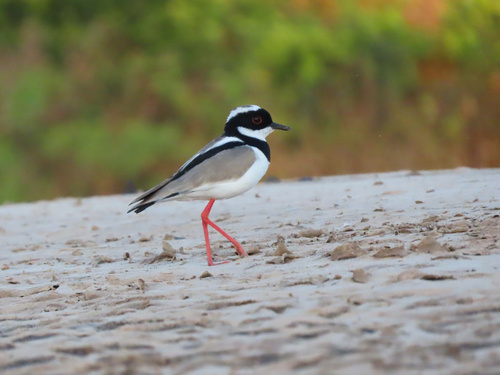
The pied plover is a strongly marked bird with a black and white pattern, buff on its back and wings, and white on its abdomen. Its eyes are encircled with bright red eye-rings. It has a prominent black V on its upper back and has long, red legs. It is a medium-sized bird like most of the species in the family Charadriidae, measuring around 22 centimeters. There is no sexual dimorphism in this species; both males and females look the same. Juveniles look similar, with the exception of them being more buff and the presence of buff eye-rings instead of red ones.
Text from Wikipedia, licensed CC BY-SA 4.0.
When to see the Pied Plover
One bar for each month. Filled bars are the 11 months with records; pale bars are months with none. The wide bar is October, the month with the most records.
Where to see the Pied Plover
The map shades 11 countries with regular records. Everything unshaded has no records. Countries are listed below the map.
About the Pied Plover
The pied plover, also known as the pied lapwing, is a species of bird in the family Charadriidae. It is a bird of least concern according to the IUCN and can be found in northern South America. The species name cayanus refers to Cayenne, the capital of French Guiana, where the pied plover can be found.
Text adapted from Wikipedia, licensed CC BY-SA 4.0.
Easily confused with
 White-tailed LapwingVanellus leucurusThe white-tailed lapwing or white-tailed plover is a wader in the lapwing genus.
 Hooded PloverThinornis cucullatusThe hooded plover is medium in size for a plover, stocky, and pale in colour.
 Banded LapwingVanellus tricolorThe banded lapwing is a medium-sized shorebird with short dark purplish legs and a dull red tibia.
Side by side: Hooded Plover vs Pied Plover · Banded Lapwing vs Pied Plover
Learn the Pied Plover in the BeakBrain App
Photo and call practice. Coming soon to iPhone and Android.
Play today's Daily BirdEvery photo and recording on this page is credited to its author under the licence shown. Spotted a problem with this page, or have a better photo? Contribute.