Learn what every symbol on the card means.Full credits and sources at beakbrain.com/symbols
 GrasslandScrapeMedium · 184 g


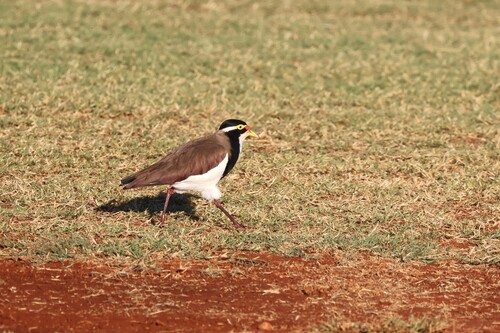
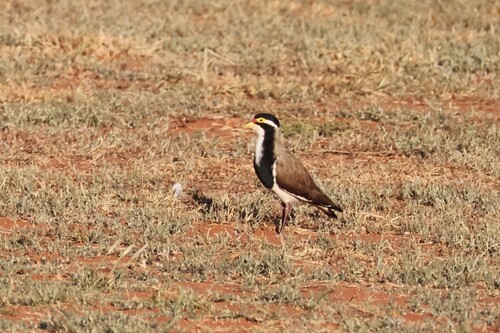
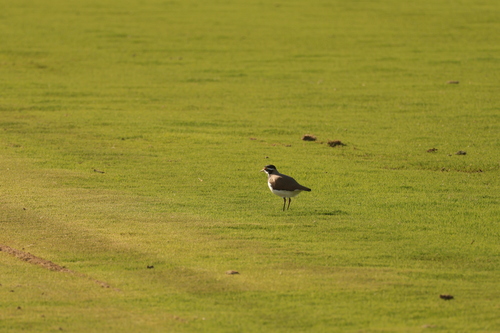
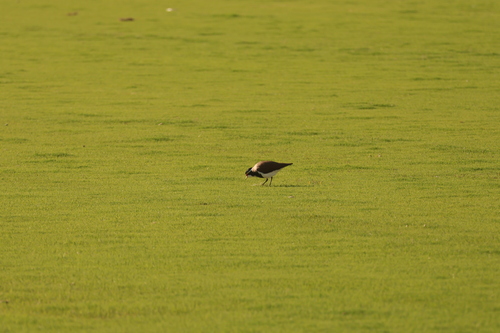
ID tip
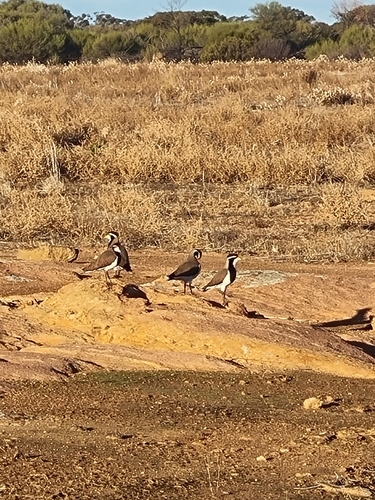
The banded lapwing is a medium-sized shorebird with short dark purplish legs and a dull red tibia. They range from 25 cm to 29 cm in length and weigh on average 190 grams. They have an upright stance and a slow walk, breaking into a faster trot when alarmed. The bill is a pale yellow with a black tip and a small red wattle lies at the base. The red wattle and wing spurs are more prominent in males than females. Banded lapwings are characterised by a black cap, a white throat and underparts, white eye stripes and a black breast band extending up each side of its neck to its face.
Text from Wikipedia, licensed CC BY-SA 4.0.
When to see the Banded Lapwing
One bar for each month, and every month is filled: this bird is recorded here in all twelve. The wide bar is September, the month with the most records.
Where to see the Banded Lapwing
The map shades 1 country with regular records. Everything unshaded has no records. Countries are listed below the map.
About the Banded Lapwing
The banded lapwing is a small to medium-sized shorebird, found in small parties or large flocks on bare ground in open grasslands, agricultural land and open savannah. It is native to Australia and in the past considered as a game bird for hunting. Population estimate is 25 000 - 1 000 000. Other names include banded, black-breasted, brown flock and plain plover.
Text adapted from Wikipedia, licensed CC BY-SA 4.0.
Easily confused with
 White-crowned LapwingVanellus albicepsThis lapwing is unmistakable.
 White-tailed LapwingVanellus leucurusThe white-tailed lapwing or white-tailed plover is a wader in the lapwing genus.
 Long-toed LapwingVanellus crassirostrisThe long-toed lapwing measures 31 cm (12 in) in length with a body mass of 162–225 g (5.7–7.9 oz).
Side by side: Andean Lapwing vs Banded Lapwing · Banded Lapwing vs Pied Plover · Banded Lapwing vs White-crowned Lapwing · Banded Lapwing vs Rufous-chested Dotterel · Banded Lapwing vs Long-toed Lapwing
Learn the Banded Lapwing in the BeakBrain App
Photo and call practice. Coming soon to iPhone and Android.
Play today's Daily BirdEvery photo and recording on this page is credited to its author under the licence shown. Spotted a problem with this page, or have a better photo? Contribute.