Learn what every symbol on the card means.Full credits and sources at beakbrain.com/symbols
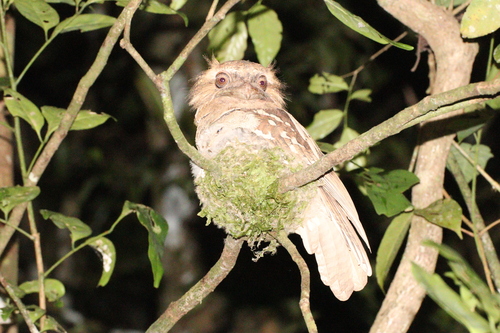
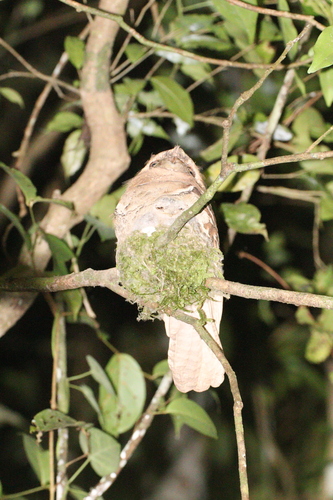
 ForestCup nestMedium · 87 g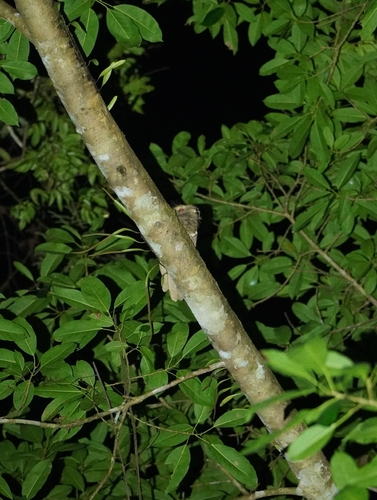
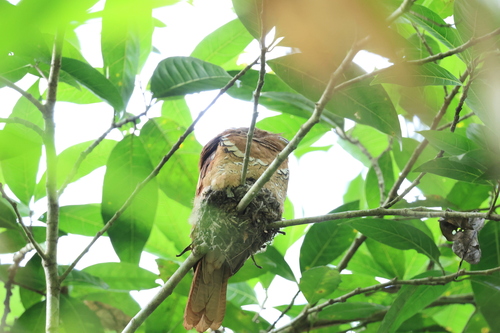
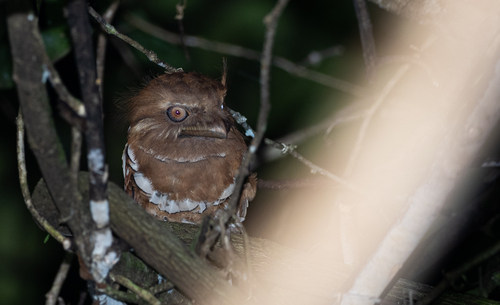
ID tip
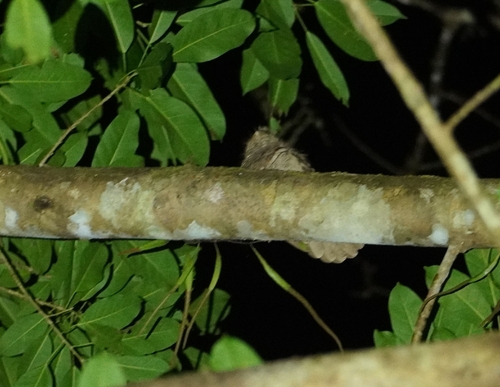
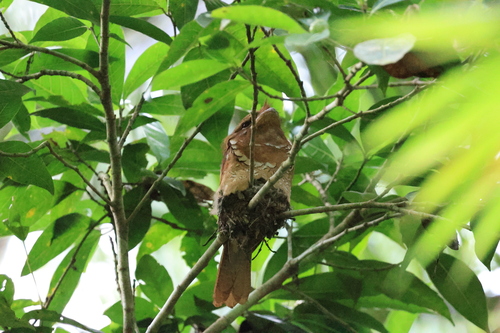
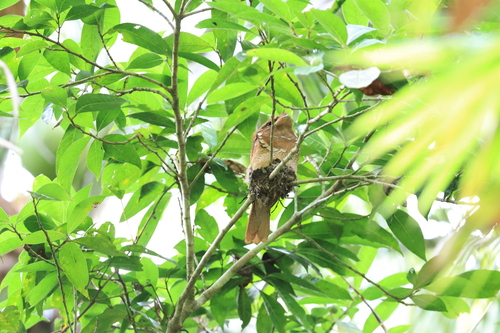
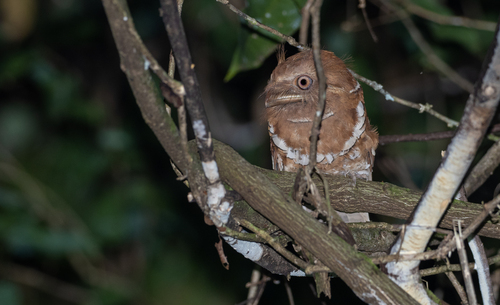
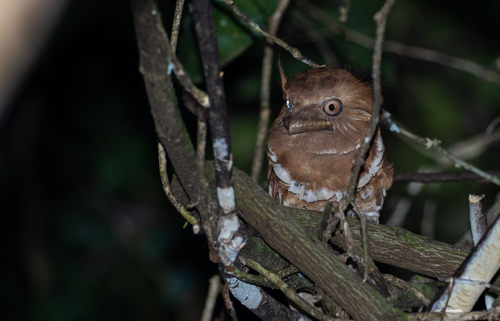
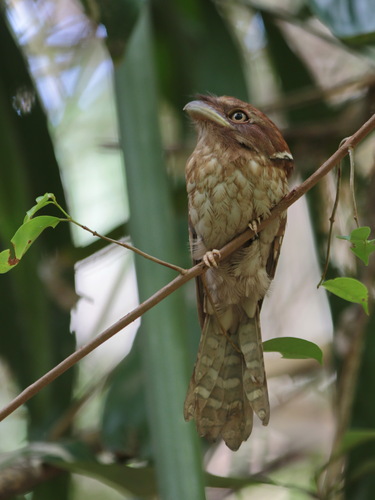
Like all frogmouths, the Philippine frogmouth has large eyes for better night vision, a large flat bill for capturing insects, and cryptic plumage which allows them to be camouflaged while perched during the day. They are found in the Philippines, and can be confused with the Philippine Nightjar, which despite its similar shape has very different plumage. The Philippine frogmouth is a medium frogmouth, being 24–26cm long, with two color morphs (and intermediate phases); one is a chestnut rufous with deep rufous ground color, the other a lighter brown with buff and black barring. Voice: Male calls are a series of low, deep woah, wash, Guam, or g-aw noises, or a short even trill. Female calls are louder, a short mewl that descends in pitch. Both sexes have a harsh growling call they repeat several times per minute, and a harsh staccato-like scream that is believed to be an alarm call.
Text from Wikipedia, licensed CC BY-SA 4.0.
When to see the Philippine Frogmouth
One bar for each month. Filled bars are the 9 months with records; pale bars are months with none. The wide bar is February, the month with the most records.
Where to see the Philippine Frogmouth
The map shades 1 country with regular records. Everything unshaded has no records. Countries are listed below the map.
About the Philippine Frogmouth
The Philippine frogmouth is a nocturnal bird that can be found throughout the Philippine archipelago. It is common in lowland forests and maturing second growth. There is little information about the bird. It feeds on grasshoppers, cicadas, crickets and beetles.
Text adapted from Wikipedia, licensed CC BY-SA 4.0.
Easily confused with
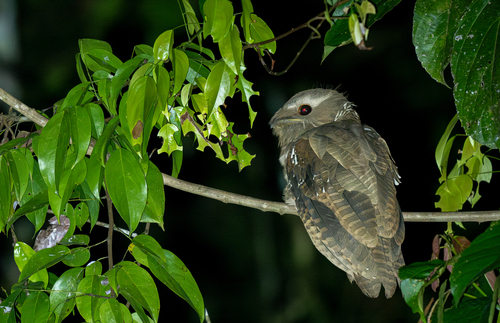 Large FrogmouthBatrachostomus auritusThe large frogmouth is considerably larger than other members of its genus and grows to a length of about 42 cm (17 in).
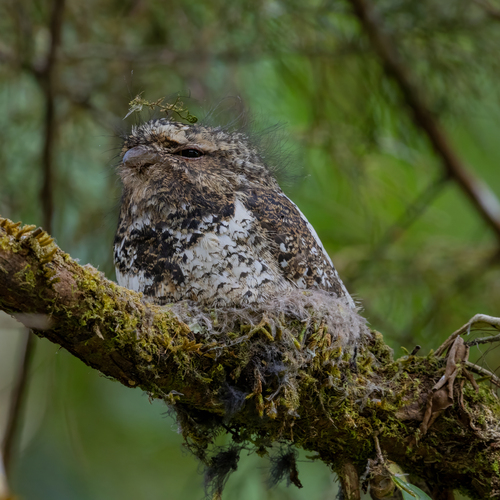 Hodgson's FrogmouthBatrachostomus hodgsoniHodgson's frogmouth is one of the smaller members of the family Podargidae.
 Gould's FrogmouthBatrachostomus stellatusGould's frogmouth is a medium-sized bird that will approximately weight 47 to 48.5 g and measure 21 to 25 cm.
Learn the Philippine Frogmouth in the BeakBrain App
Photo and call practice. Coming soon to iPhone and Android.
Play today's Daily BirdEvery photo and recording on this page is credited to its author under the licence shown. Spotted a problem with this page, or have a better photo? Contribute.