Learn what every symbol on the card means.Full credits and sources at beakbrain.com/symbols
 ForestPlatform nestMedium · 206 g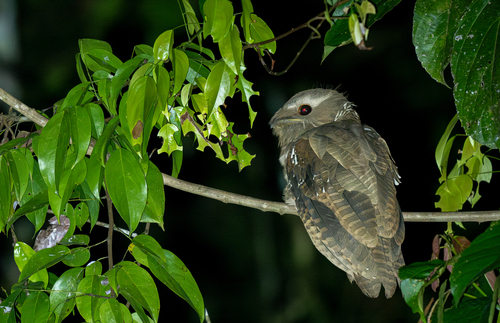

ID tip
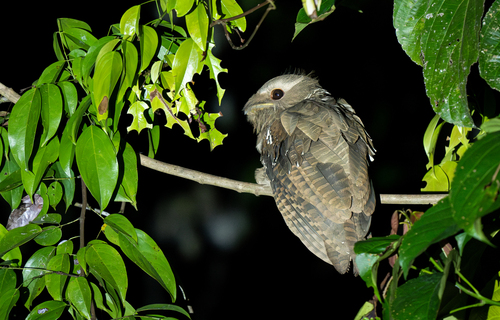
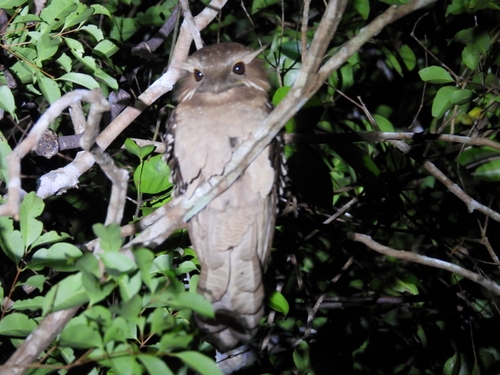
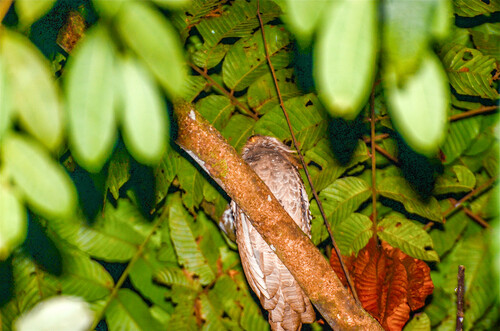
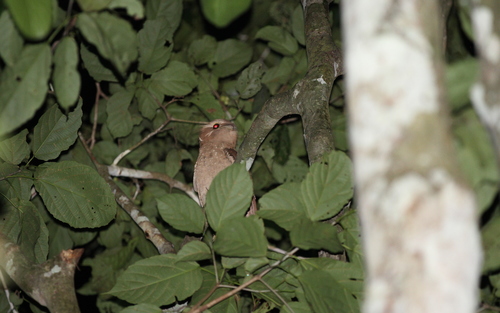
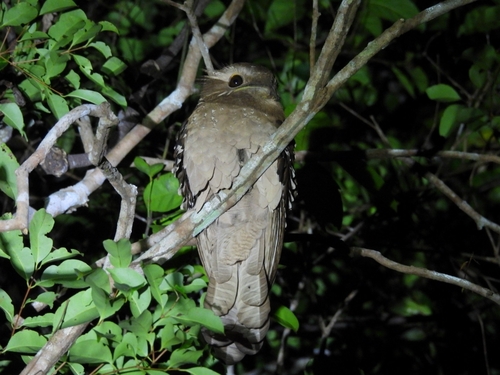
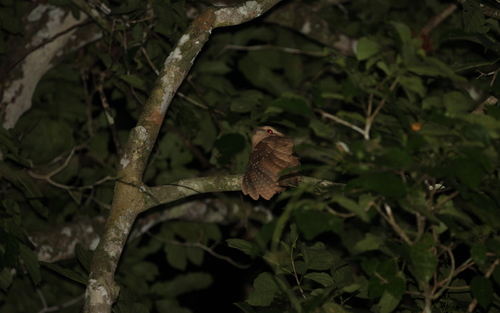
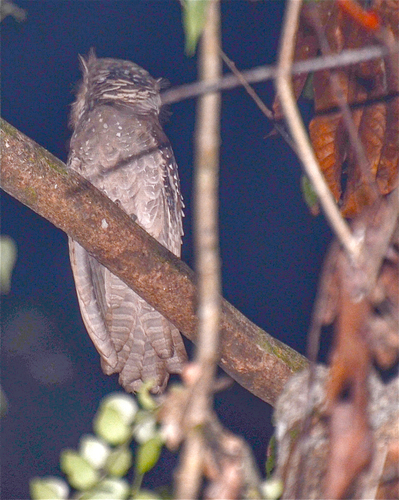
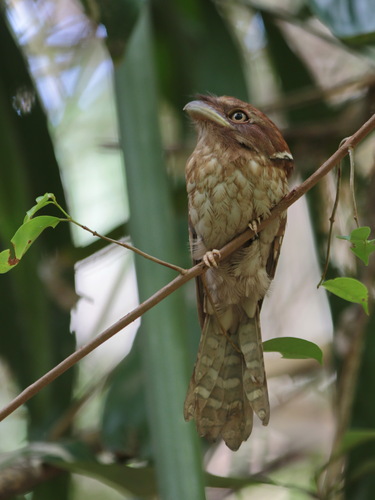
The large frogmouth is considerably larger than other members of its genus and grows to a length of about 42 cm (17 in). The sexes are similar and the colouring is rather variable, the upper parts being mainly chestnut and blackish-brown, barred and spotted with white and buff. The underparts are dull brown or pale rufous, the belly being paler than the breast. The beak is horn-coloured with a darker tip, the gape being yellow, the irises are some shade of light or dark brown, and the legs are a dull yellow.
Text from Wikipedia, licensed CC BY-SA 4.0.
When to see the Large Frogmouth
One bar for each month. Filled bars are the 10 months with records; pale bars are months with none. The wide bar is July, the month with the most records.
Where to see the Large Frogmouth
The map shades 3 countries with regular records. Everything unshaded has no records. Countries are listed below the map.
About the Large Frogmouth
The large frogmouth is a species of bird in the family Podargidae. It is found in Brunei, Indonesia, Malaysia, and Thailand, in subtropical or tropical moist lowland forest. Logging of its habitat poses a risk to its survival, and the International Union for Conservation of Nature has listed it as a vulnerable species.
Text adapted from Wikipedia, licensed CC BY-SA 4.0.
Easily confused with
 Gould's FrogmouthBatrachostomus stellatusGould's frogmouth is a medium-sized bird that will approximately weight 47 to 48.5 g and measure 21 to 25 cm.
 Philippine FrogmouthBatrachostomus septimusLike all frogmouths, the Philippine frogmouth has large eyes for better night vision, a large flat bill for capturing insects, and cryptic plumage which allows them to be camouflaged while perched during the day.
 Javan FrogmouthBatrachostomus javensisThe species grows to a length of about 22 cm (9 in).
Learn the Large Frogmouth in the BeakBrain App
Photo and call practice. Coming soon to iPhone and Android.
Play today's Daily BirdEvery photo and recording on this page is credited to its author under the licence shown. Spotted a problem with this page, or have a better photo? Contribute.