Learn what every symbol on the card means.Full credits and sources at beakbrain.com/symbols
 WoodlandScrapeMedium · 72 g
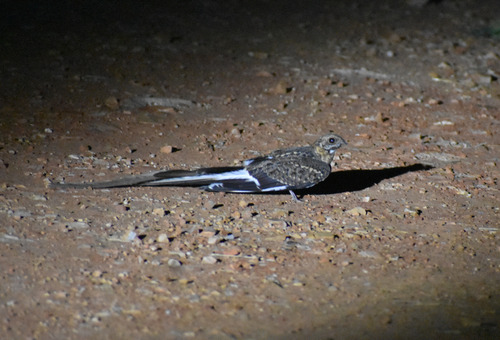
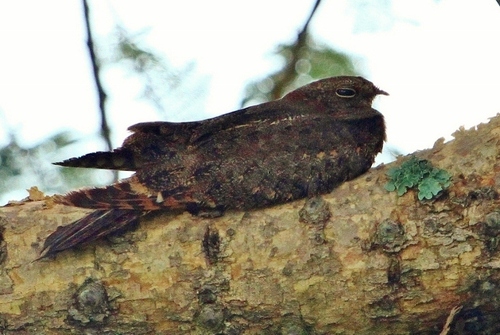
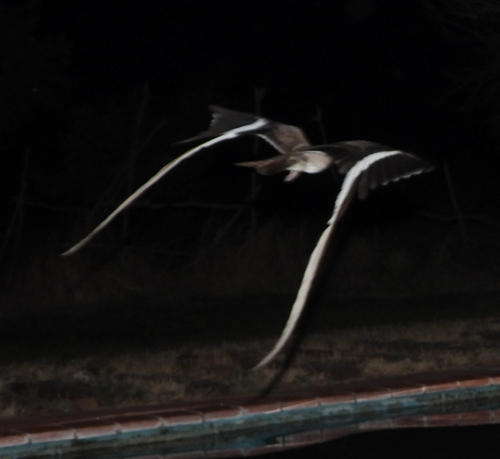

ID tip
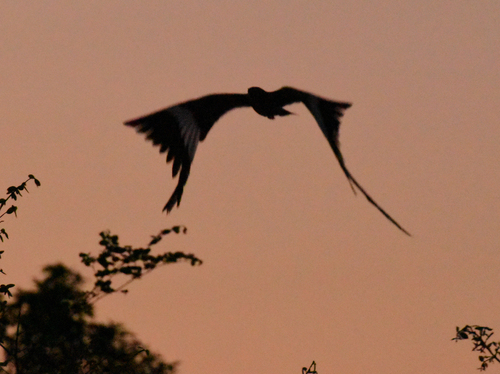
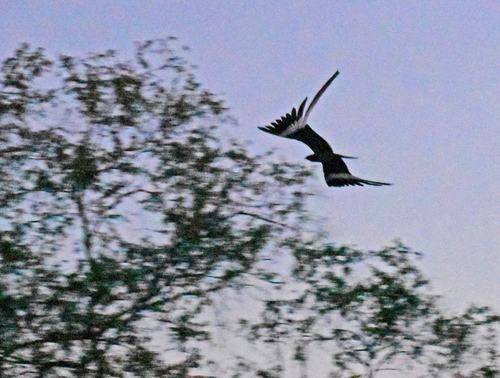
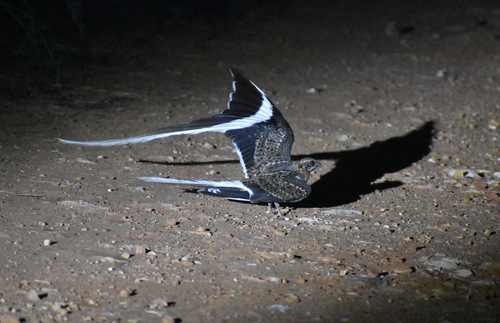
The male of the species is characteristic in having a broad white band over the otherwise black primaries. In addition the males acquire a striking 2nd primary feather during the breeding season. These pennant feathers grow to greater lengths in successive years, up to twice the body length. They are dropped or broken off quickly upon completion of breeding. With the distal (9th) and proximal (1st - 3rd) primaries being longest, the wings of male birds are distinctly angular.
Text from Wikipedia, licensed CC BY-SA 4.0.
When to see the Pennant-winged Nightjar
One bar for each month. Filled bars are the 9 months with records; pale bars are months with none. The wide bar is November, the month with the most records.
Where to see the Pennant-winged Nightjar
The map shades 18 countries with regular records, and 1 more in a lighter tone where the bird turns up only as a stray. Everything unshaded has no records. Countries are listed below the map.
Recorded as a rare visitor in South Sudan.
About the Pennant-winged Nightjar
The pennant-winged nightjar is a species of nightjar that occurs from Nigeria to northern South Africa. It is an intra-African migrant and displays remarkable sexual dimorphism in the breeding season.
Text adapted from Wikipedia, licensed CC BY-SA 4.0.
Easily confused with
 Swamp NightjarCaprimulgus natalensisThe swamp nightjar or Natal nightjar is a crepuscular and nocturnal bird in the nightjar family found in Africa.
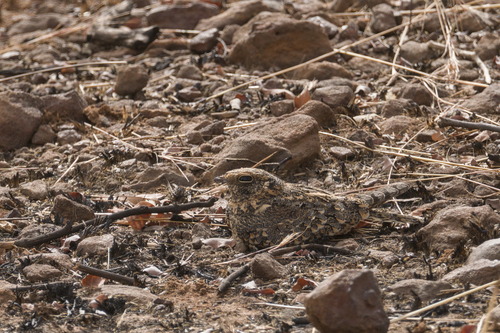 Standard-winged NightjarCaprimulgus longipennisWhen roosting on the ground during the day, this medium-sized (20–23 centimetres (7.9–9.1 in) long) nightjar is mainly variegated grey, with a browner collar.
 Philippine NightjarCaprimulgus manillensisThe Philippine nightjar is a species of nightjar in the family Caprimulgidae.
Learn the Pennant-winged Nightjar in the BeakBrain App
Photo and call practice. Coming soon to iPhone and Android.
Play today's Daily BirdEvery photo and recording on this page is credited to its author under the licence shown. Spotted a problem with this page, or have a better photo? Contribute.