Learn what every symbol on the card means.Full credits and sources at beakbrain.com/symbols
 ForestDomed nestSmall · 25 g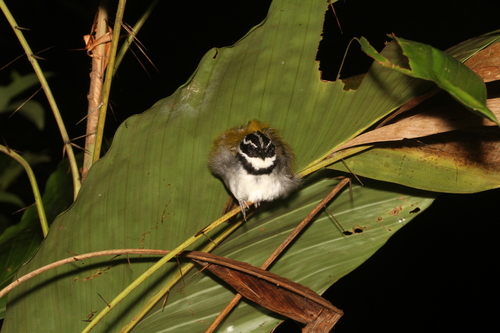


ID tip
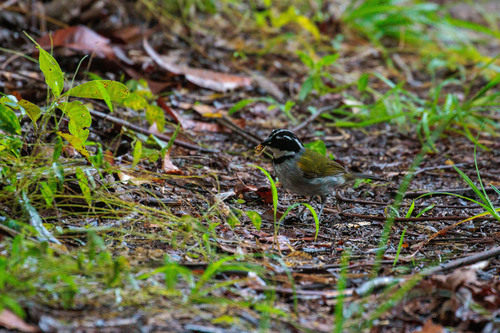
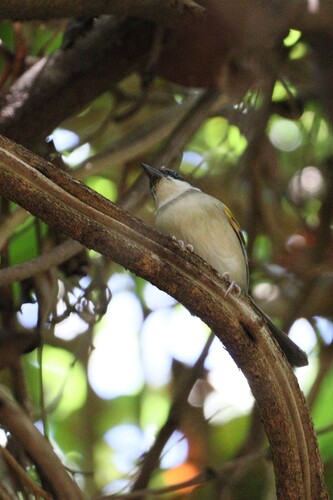
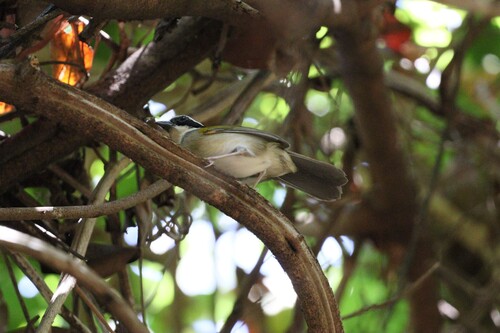
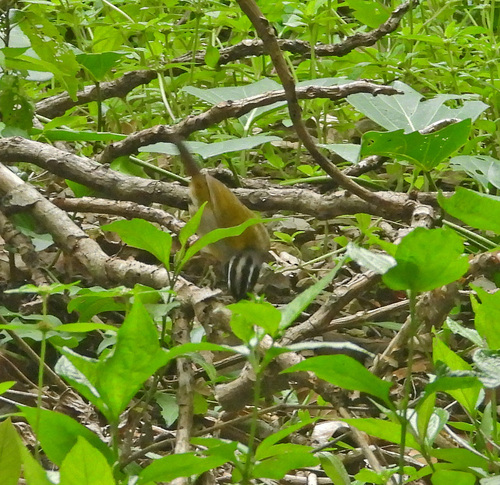
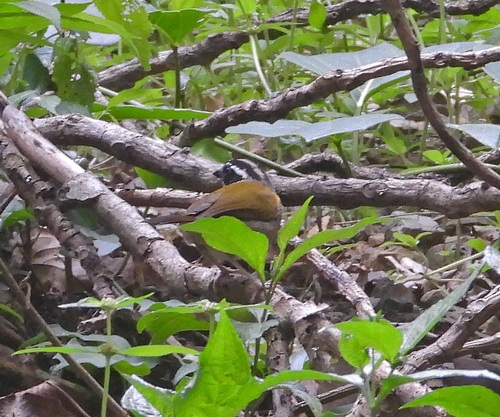
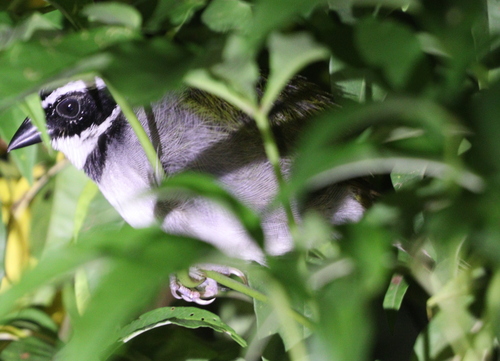
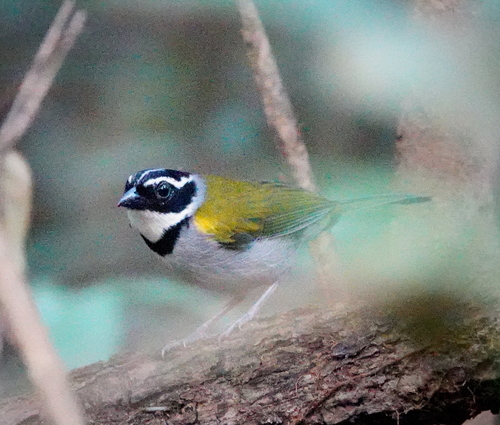
The pectoral sparrow is sexually dimorphic, and, as the name implies, sparrow-sized, at 15 cm (5.9 in) in length and 24 g (0.85 oz) in weight. Its upperparts are pale green, becoming yellow near the bend of the wing. The head is black, with white on its throat and as stripes on its crown. Its underparts are white in males and creamy in females, with males also having a broad black band going across its breast (a pectoral band). The beak is also black, roughly 14–15 mm (0.55–0.59 in) long for both males and females. Tails are 58–60 and 64–67 mm (2.3–2.4 and 2.5–2. Voice: The song of the pectoral sparrow is a high-pitched buzz, consisting of very short tzik notes (initial tzik note may be slightly faster, and lower in pitch.) and usually followed by 2-4 longer, almost identical tzzzzzz notes. The entire song lasts for 2–3 seconds, at a pitch of 8 kilohertz.
Text from Wikipedia, licensed CC BY-SA 4.0.
When to see the Pectoral Sparrow
One bar for each month, and every month is filled: this bird is recorded here in all twelve. The wide bar is October, the month with the most records.
Where to see the Pectoral Sparrow
The map shades 8 countries with regular records. Everything unshaded has no records. Countries are listed below the map.
About the Pectoral Sparrow
The pectoral sparrow is a small species of New World sparrow first described in 1779 by Georges-Louis Leclerc. It has two subspecies. Like other sparrows in its family Arremon, it has pale green-to-olive wings, a distinctive black band going across its breast, however in subspecies nigrirostris it is not continuous and instead breaks in the center. It is found throughout southeastern South America, in subtropical or tropical moist lowland forests. The phenology of its breeding is unknown, however it has been observed nest building as early as August and as late as December.
Text adapted from Wikipedia, licensed CC BY-SA 4.0.
Easily confused with
 Saffron-billed SparrowArremon flavirostrisThe saffron-billed sparrow's name comes from its "striking orange bill".
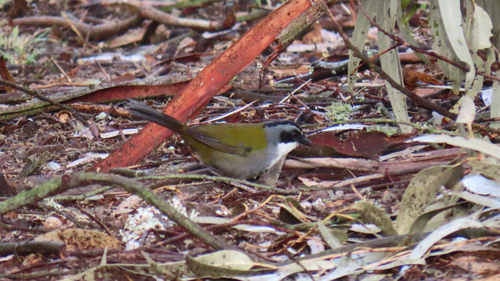 Grey-browed BrushfinchArremon assimilisThe grey-browed brushfinch is 19 to 20 cm (7.5 to 7.9 in) long.
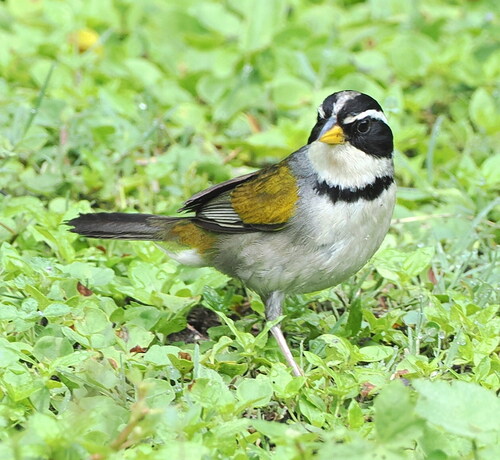 Moss-backed SparrowArremon dorbigniiThe adult male moss-backed sparrow's head is mostly black, with a white supercilium from the lores to the back of the head and a narrow gray streak on the crown.
Side by side: Orange-billed Sparrow vs Pectoral Sparrow · Chestnut-capped Brushfinch vs Pectoral Sparrow · Grey-browed Brushfinch vs Pectoral Sparrow · Large-footed Finch vs Pectoral Sparrow · Pectoral Sparrow vs Saffron-billed Sparrow · Moss-backed Sparrow vs Pectoral Sparrow
Learn the Pectoral Sparrow in the BeakBrain App
Photo and call practice. Coming soon to iPhone and Android.
Play today's Daily BirdEvery photo and recording on this page is credited to its author under the licence shown. Spotted a problem with this page, or have a better photo? Contribute.