Learn what every symbol on the card means.Full credits and sources at beakbrain.com/symbols
 ForestPlatform nestHuge · 1.6 kg


ID tip
This is a nearly unmistakable bird as an adult. At 1.3–1.7 kg (2.9–3.7 lb) in weight, 60 cm (2.0 ft) in length and with a wingspan of 1.50 m (4.9 ft), this is the smallest Old World vulture. Its plumage is all white except for black areas in its wings and tail. It has a red patch around each eye. The juvenile, which takes 3–4 years to mature, is brown with yellow eye-patches. In flight, this species resembles an eagle more than a typical vulture, and it can sustain flapping flight, so it does not depend on thermals.
Text from Wikipedia, licensed CC BY-SA 4.0.
When to see the Palm-nut Vulture
One bar for each month, and every month is filled: this bird is recorded here in all twelve. The wide bar is November, the month with the most records.
Where to see the Palm-nut Vulture
The map shades 29 countries with regular records, and 1 more in a lighter tone where the bird turns up only as a stray. Everything unshaded has no records. Countries are listed below the map.
Recorded as a rare visitor in Mali.
About the Palm-nut Vulture
The palm-nut vulture or vulturine fish eagle, is a large bird of prey in the family Accipitridae. It is the only member of the genus Gypohierax.
Text adapted from Wikipedia, licensed CC BY-SA 4.0.
Easily confused with
 Pacific BazaAviceda subcristataThe Pacific baza is a slender, medium-sized bird, with a slim head and neck.
 Ornate Hawk-EagleSpizaetus ornatusThis is a medium to large-sized species of raptor, but small for an eagle.
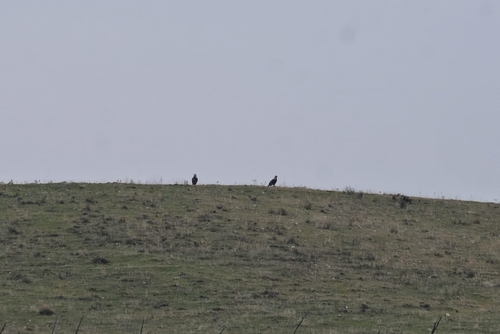 Spanish Imperial EagleAquila adalbertiThis is a large raptor and quite large eagle, broadly similar in size to its cousin, the eastern imperial eagle, which is found in a considerably different distributional range.
Side by side: Pacific Baza vs Palm-nut Vulture · Ornate Hawk-Eagle vs Palm-nut Vulture · Palm-nut Vulture vs Spanish Imperial Eagle
Learn the Palm-nut Vulture in the BeakBrain App
Photo and call practice. Coming soon to iPhone and Android.
Play today's Daily BirdEvery photo and recording on this page is credited to its author under the licence shown. Spotted a problem with this page, or have a better photo? Contribute.