Learn what every symbol on the card means.Full credits and sources at beakbrain.com/symbols
 ForestCup nestMedium · 72 g


What the Pale Thrush sounds like

ID tip
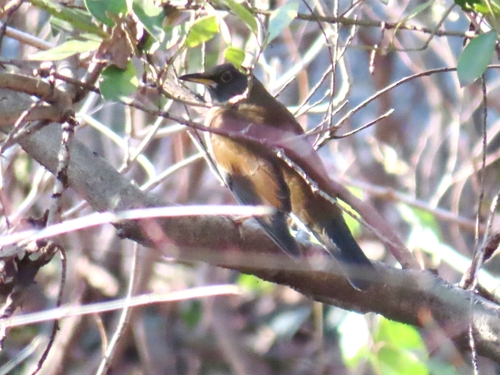
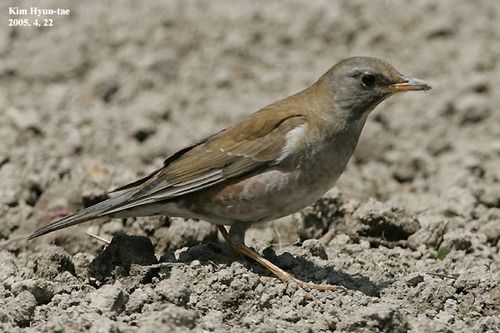
It is 23 cm long. The feet are pale pinkish-brown and the bill is grey above and yellow below. The male is brown above with a blue-grey head and throat. The underparts are pale brown, darker on the flanks and whitish on the belly and undertail-coverts. The flight feathers of the wing are dark grey and the underwing-coverts are grey or white. The tail is dark grey with white tips to the outer feathers. The female is similar to the male but duller with a browner head and pale throat. It has harsh chuck-chuck and see-ip calls and a bubbling alarm call.
Text from Wikipedia, licensed CC BY-SA 4.0.
When to see the Pale Thrush
One bar for each month. Filled bars are the 6 months with records; pale bars are months with none. The wide bar is December, the month with the most records.
Where to see the Pale Thrush
The map shades 10 countries with regular records. Everything unshaded has no records. Countries are listed below the map.
About the Pale Thrush
The pale thrush is a passerine bird of the eastern Palearctic belonging to the genus Turdus in the thrush family Turdidae. It is closely related to the eye-browed thrush and grey-backed thrush.
Text adapted from Wikipedia, licensed CC BY-SA 4.0.
Easily confused with
 Olive ThrushTurdus olivaceusIt can reach a length of 24 cm (9.4 in) and a weight of at least 101 g (3.6 oz).
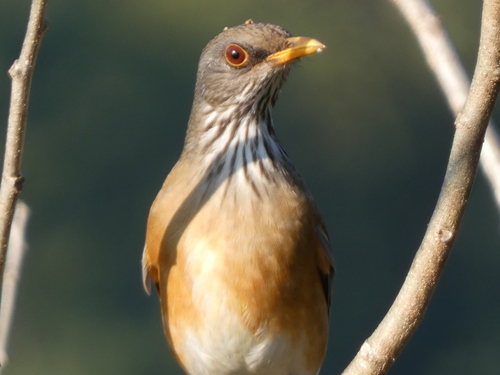 Rufous-backed ThrushTurdus rufopalliatusThe rufous-backed thrush is similar in size and shape to the American robin (T. migratorius).
 Chinese BlackbirdTurdus mandarinusThe Chinese blackbird is a member of the thrush family Turdidae.
Side by side: Pale Thrush vs Rufous-backed Thrush · Olive Thrush vs Pale Thrush
Learn the Pale Thrush in the BeakBrain App
Photo and call practice. Coming soon to iPhone and Android.
Play today's Daily BirdEvery photo and recording on this page is credited to its author under the licence shown. Spotted a problem with this page, or have a better photo? Contribute.