Learn what every symbol on the card means.Full credits and sources at beakbrain.com/symbols
 ForestPlatform nestLarge · 394 g


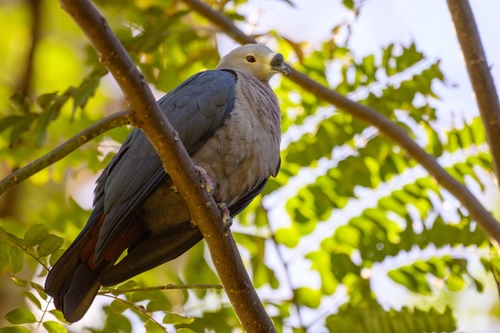
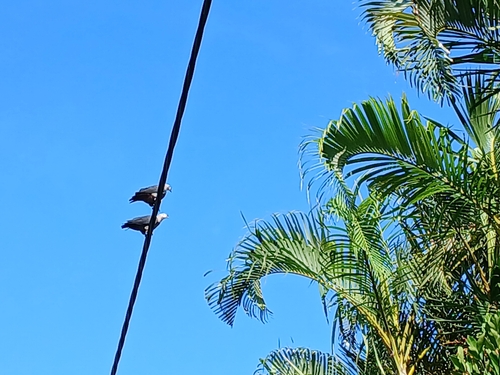
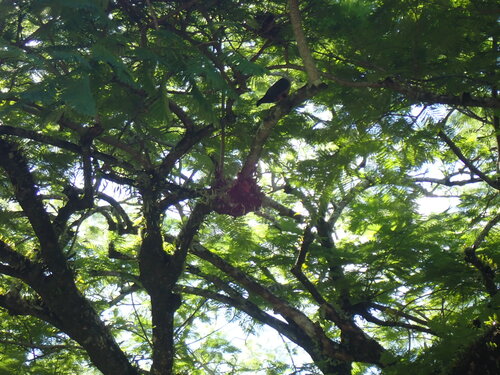
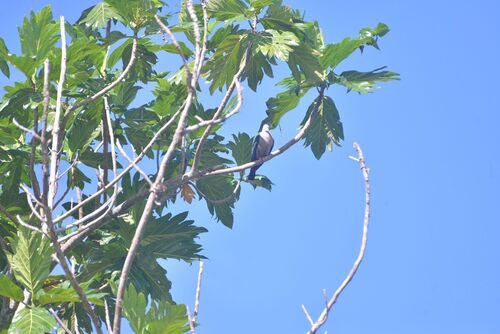
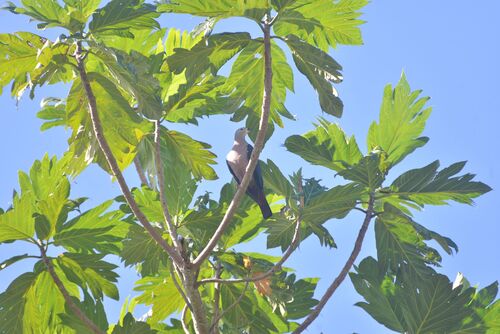
ID tip
The Pacific imperial pigeon is 36–41 cm (14–16 in) in overall length and weighs 370–420 g (13–15 oz). The back, tail and wings are blackish-green, the head and neck are light grey. The breast is grey with a pinkish tinge. The undertail coverts are brown. The bill is black with a knob on the upper mantle. The iris is red. The female is slightly smaller. The juvenile lacks the knob on the bill, is duller and lacks the pink on the breast.
Text from Wikipedia, licensed CC BY-SA 4.0.
When to see the Pacific Imperial Pigeon
One bar for each month, and every month is filled: this bird is recorded here in all twelve. The wide bar is August, the month with the most records.
Where to see the Pacific Imperial Pigeon
The map shades 12 countries with regular records. Everything unshaded has no records. Countries are listed below the map.
About the Pacific Imperial Pigeon
The Pacific imperial pigeon, Pacific pigeon, Pacific fruit pigeon or lupe is a widespread pigeon species in the family Columbidae. It is found in American Samoa, the Cook Islands, the smaller islands of eastern Fiji, Kiribati, Niue, the smaller satellite islands of Papua New Guinea, Samoa, Solomon Islands, Tokelau, Tonga, Tuvalu, Vanuatu, and Wallis and Futuna Islands.
Text adapted from Wikipedia, licensed CC BY-SA 4.0.
Easily confused with
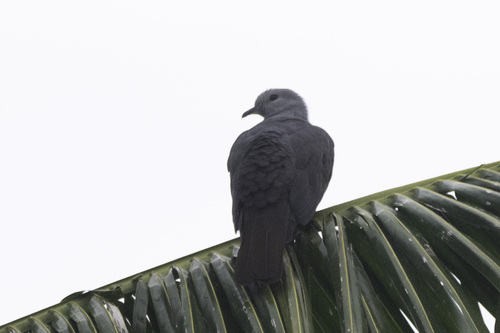 Barking Imperial PigeonDucula latransThe barking imperial pigeon is frugivorous, feeding on large fruits of the trees Cananga, Didymocheton, and Myristica (nutmegs).
Micronesian Imperial PigeonDucula oceanicaThe Micronesian imperial pigeon is about 36 cm (14 in) long and weighs 340–406 g (12.0–14.3 oz).
Barking Imperial PigeonDucula latransThe barking imperial pigeon is frugivorous, feeding on large fruits of the trees Cananga, Didymocheton, and Myristica (nutmegs).
Micronesian Imperial PigeonDucula oceanicaThe Micronesian imperial pigeon is about 36 cm (14 in) long and weighs 340–406 g (12.0–14.3 oz).
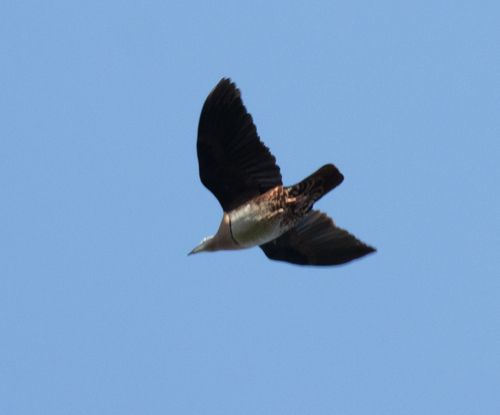 Zoe's Imperial PigeonDucula zoeaeZoe's imperial pigeon or Zoe imperial pigeon, also known as the banded imperial pigeon, is a species of bird in the family Columbidae.
Learn the Pacific Imperial Pigeon in the BeakBrain App
Photo and call practice. Coming soon to iPhone and Android.
Play today's Daily BirdEvery photo and recording on this page is credited to its author under the licence shown. Spotted a problem with this page, or have a better photo? Contribute.