Learn what every symbol on the card means.Full credits and sources at beakbrain.com/symbols
 ForestPlatform nestLarge · 365 g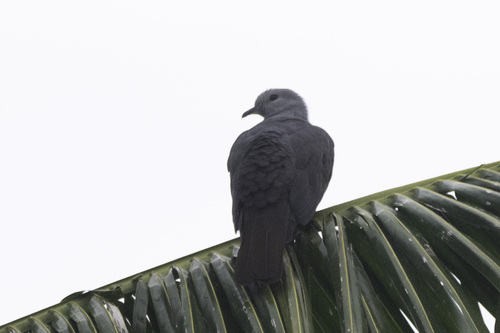
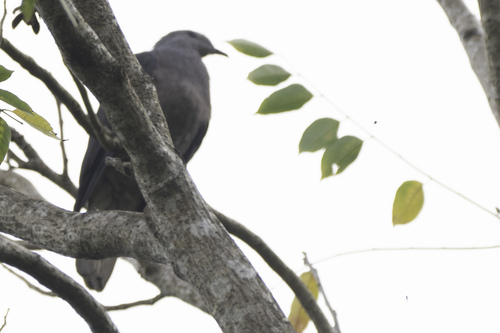
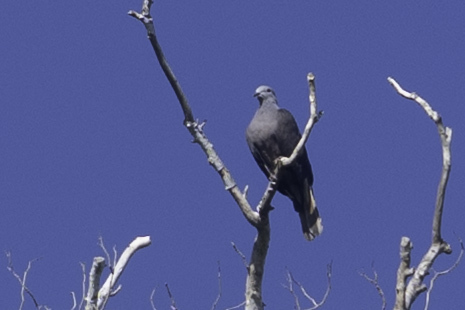
ID tip
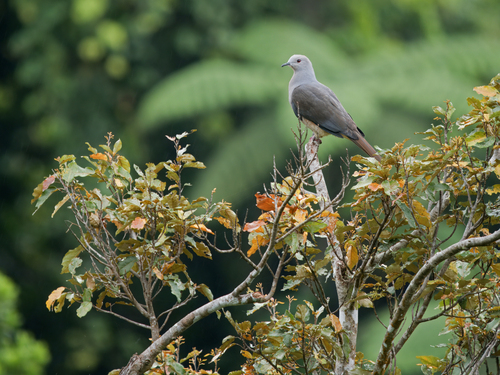
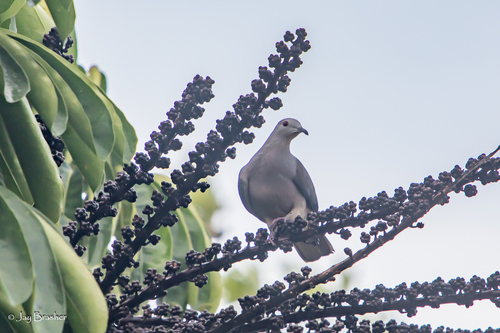
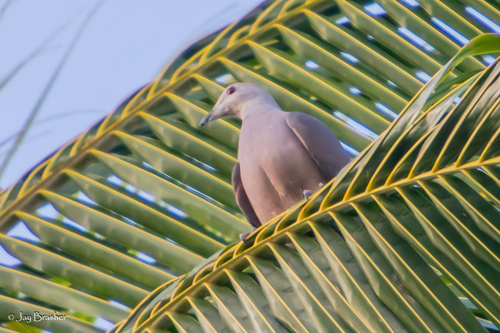
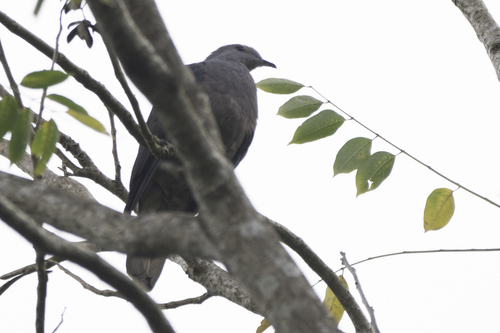
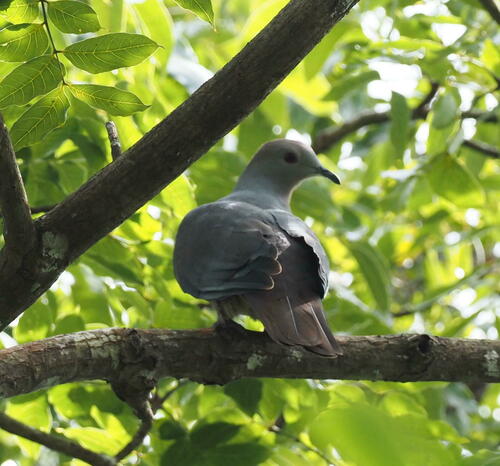
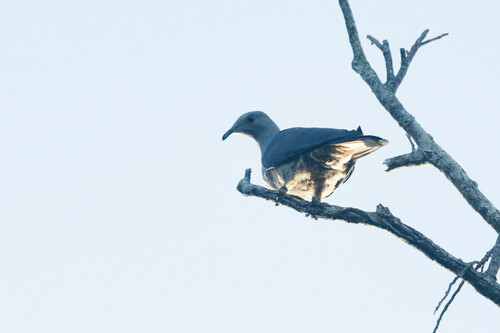
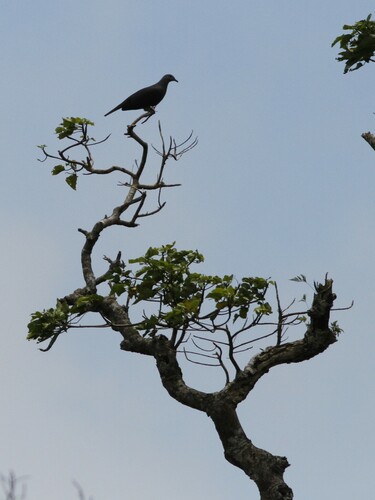
The barking imperial pigeon is frugivorous, feeding on large fruits of the trees Cananga, Didymocheton, and Myristica (nutmegs). It feeds alone or in pairs, occasionally occurring in small flocks on fruiting trees. The breeding season of this species is from May to January, with a single egg being laid on an insubstantial twig nest. These birds are typically 40-44cm. The upper parts of this bird are grey. The upper wings and upper tail are a darker shade of brown. It has a black bill and the eyes are purple and red.
Text from Wikipedia, licensed CC BY-SA 4.0.
When to see the Barking Imperial Pigeon
One bar for each month. Filled bars are the 11 months with records; pale bars are months with none. The wide bar is September, the month with the most records.
Where to see the Barking Imperial Pigeon
The map shades 1 country with regular records. Everything unshaded has no records. Countries are listed below the map.
About the Barking Imperial Pigeon
The barking imperial pigeon, also known as Peale's imperial pigeon, is a species of bird in the pigeon family Columbidae. It is endemic to Fiji, where it occurs on most of the medium and large islands.
Text adapted from Wikipedia, licensed CC BY-SA 4.0.
Easily confused with
 Pacific Imperial PigeonDucula pacificaThe Pacific imperial pigeon is 36–41 cm (14–16 in) in overall length and weighs 370–420 g (13–15 oz).
Micronesian Imperial PigeonDucula oceanicaThe Micronesian imperial pigeon is about 36 cm (14 in) long and weighs 340–406 g (12.0–14.3 oz).
Pacific Imperial PigeonDucula pacificaThe Pacific imperial pigeon is 36–41 cm (14–16 in) in overall length and weighs 370–420 g (13–15 oz).
Micronesian Imperial PigeonDucula oceanicaThe Micronesian imperial pigeon is about 36 cm (14 in) long and weighs 340–406 g (12.0–14.3 oz).
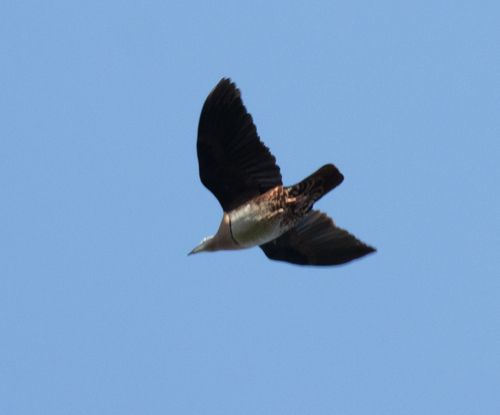 Zoe's Imperial PigeonDucula zoeaeZoe's imperial pigeon or Zoe imperial pigeon, also known as the banded imperial pigeon, is a species of bird in the family Columbidae.
Learn the Barking Imperial Pigeon in the BeakBrain App
Photo and call practice. Coming soon to iPhone and Android.
Play today's Daily BirdEvery photo and recording on this page is credited to its author under the licence shown. Spotted a problem with this page, or have a better photo? Contribute.