Learn what every symbol on the card means.Full credits and sources at beakbrain.com/symbols
 ShrublandCup nestMedium · 84 g
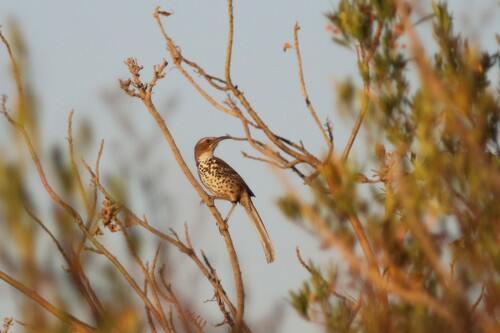
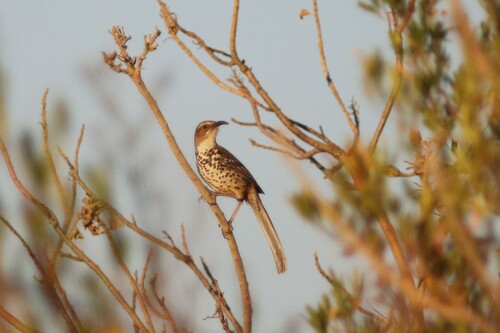
ID tip
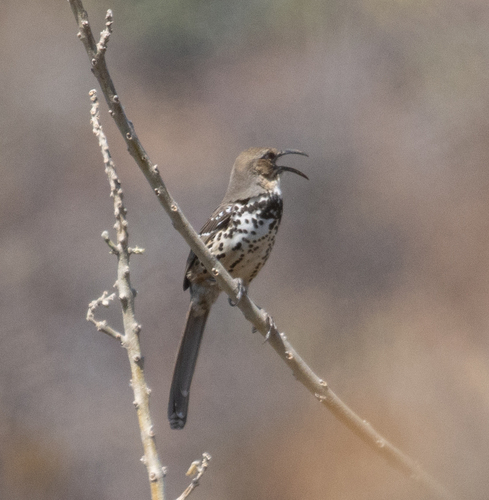
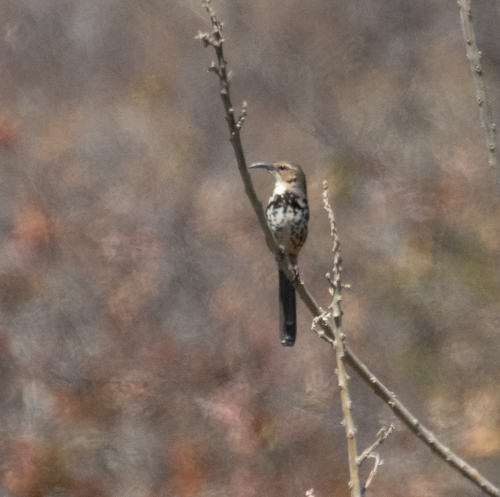
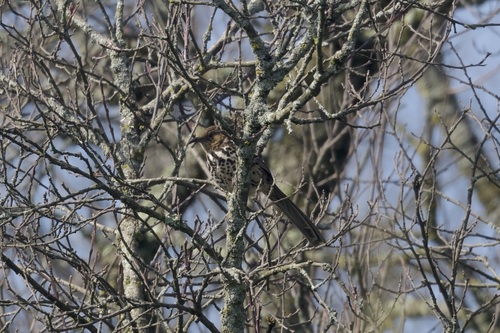
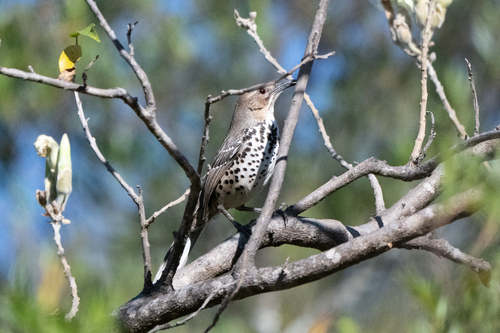
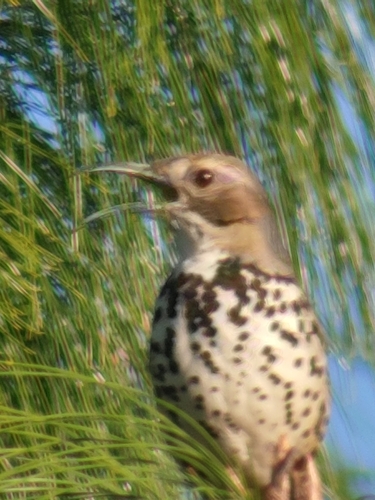
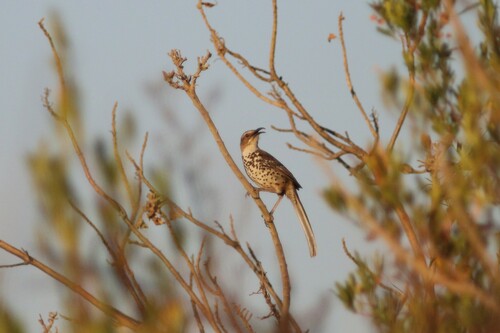
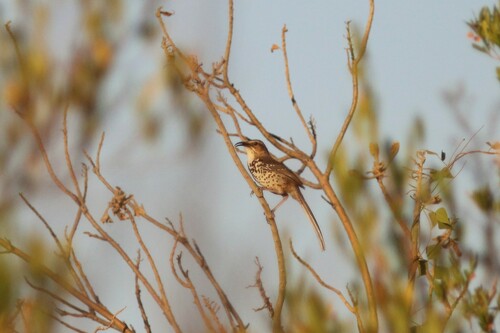
The ocellated thrasher is 26.5 to 29.5 cm (10.4 to 11.6 in) long; 14 specimens weighed 77.3 to 95.8 g (2.73 to 3.38 oz). Adults' upperparts are dark brown and have a slight olive wash. They have a dull white to buff supercilium and brown cheeks. The folded wings show two white bars and the outer tail feathers have narrow white tips. The underparts are whitish darkening to buff on the belly and brown on the flanks. The breast, sides, and flanks have bold black spots. Voice: The ocellated thrasher's song is "a varied, rich warbling in which phrases are repeated two or three times", often sung from atop a bush or tree. Its calls include "a hard, slightly smacking to gruff chehk or tchehk".
Text from Wikipedia, licensed CC BY-SA 4.0.
When to see the Ocellated Thrasher
One bar for each month. Filled bars are the 11 months with records; pale bars are months with none. The wide bar is March, the month with the most records.
Where to see the Ocellated Thrasher
The map shades 1 country with regular records. Everything unshaded has no records. Countries are listed below the map.
About the Ocellated Thrasher
The ocellated thrasher is a species of bird in the family Mimidae. It is endemic to Mexico.
Text adapted from Wikipedia, licensed CC BY-SA 4.0.
Easily confused with
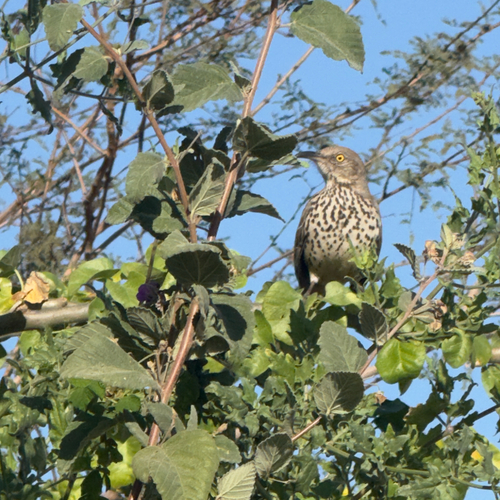 Grey ThrasherToxostoma cinereumThe gray thrasher is 21.4 to 25.0 cm (8.4 to 9.8 in) long.
 LeConte's ThrasherToxostoma leconteiLeConte's thrasher weighs from 55 to 75 g (1.9 to 2.6 oz) and are 24.5–29 cm (9.6–11.4 in), and there is no sexual dimorphism within the species.
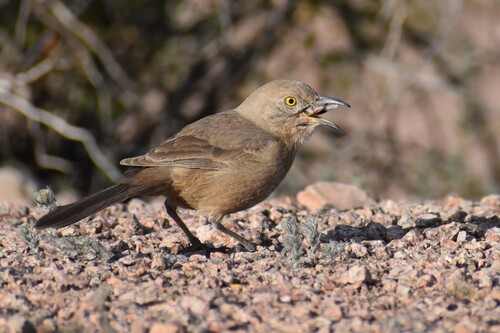 Bendire's ThrasherToxostoma bendireiBecause of its similar coloration and structure to the curve-billed thrasher, the two birds are very easy to mistake for one another.
Learn the Ocellated Thrasher in the BeakBrain App
Photo and call practice. Coming soon to iPhone and Android.
Play today's Daily BirdEvery photo and recording on this page is credited to its author under the licence shown. Spotted a problem with this page, or have a better photo? Contribute.