Learn what every symbol on the card means.Full credits and sources at beakbrain.com/symbols
 ForestCup nestSmall · 17 g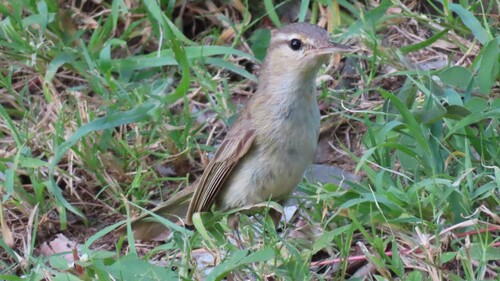
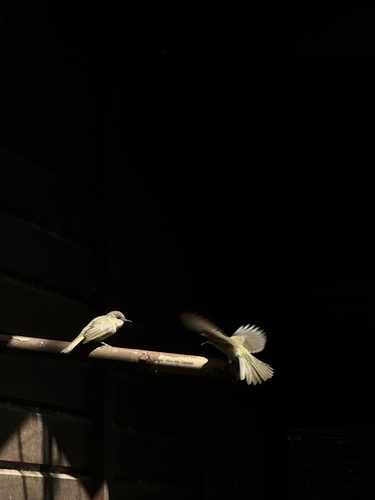
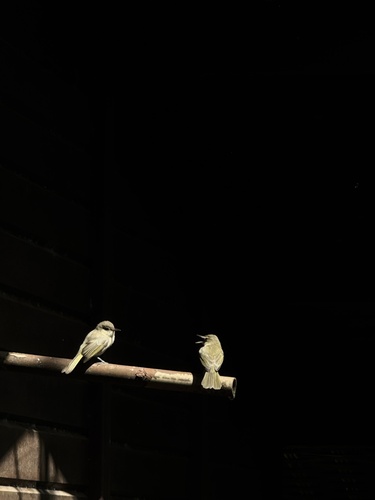
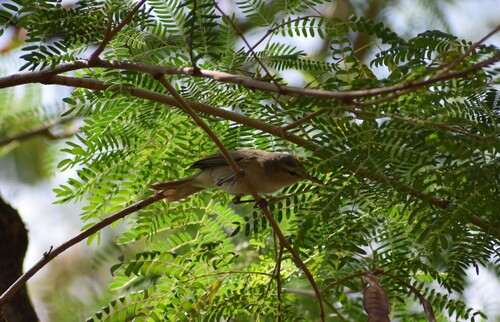
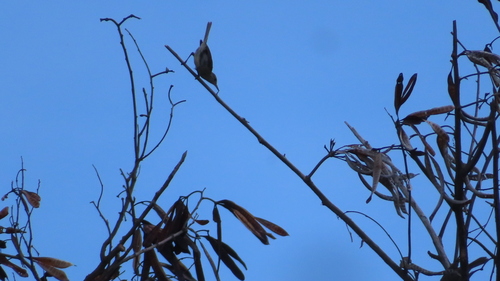
ID tip
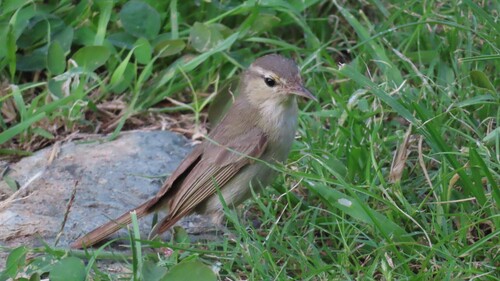
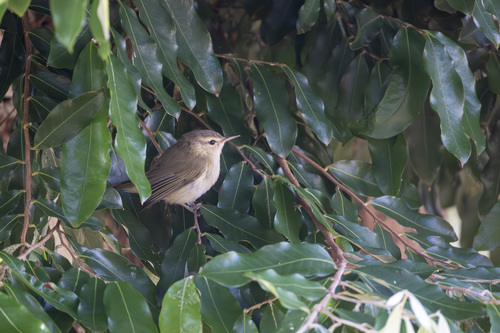
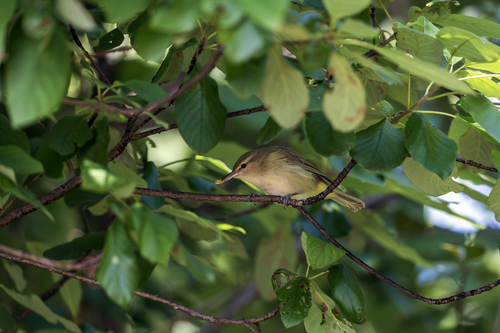
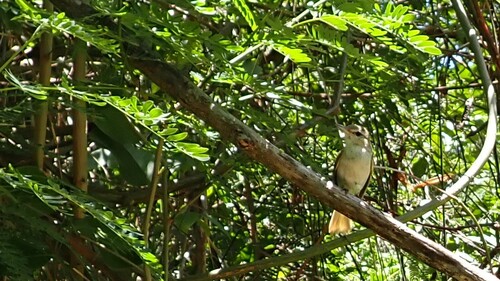
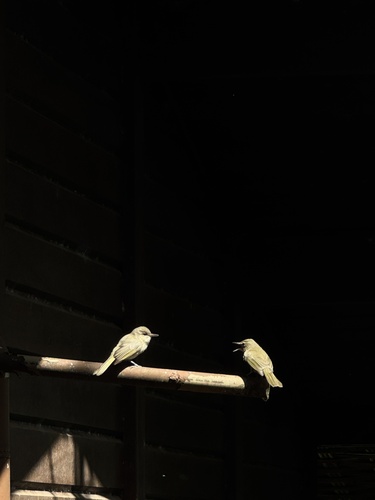
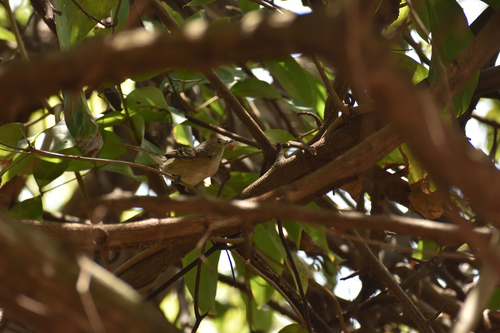
The Noronha vireo is 14 cm (5.5 in) long and weighs 11.5 to 25.1 g (0.41 to 0.89 oz). The sexes have the same plumage. Adults have a buffy supercilium and brownish lores. Their crown, nape, and upperparts are dingy grayish olive that becomes more greenish on the lower back, rump, and tail. Their primaries and secondaries are grayish olive with greenish edges on the outer webs. Their throat and underparts are dull buffy whitish. They have a brownish iris, a brownish horn bill with a paler base to the mandible, and pale bluish gray legs and feet. Juveniles have a rich rusty brown crown and back. Voice: The Noronha vireo's song is a "melodious weet a weet, chewegoo, whit, whit". Its alarm call is "tschrrr" and other calls include "a scolding harsh skeeur and a high thin whistle".
Text from Wikipedia, licensed CC BY-SA 4.0.
When to see the Noronha Vireo
One bar for each month. Filled bars are the 10 months with records; pale bars are months with none. The wide bar is October, the month with the most records.
Where to see the Noronha Vireo
The map shades 1 country with regular records. Everything unshaded has no records. Countries are listed below the map.
About the Noronha Vireo
The Noronha vireo is a Vulnerable species of bird in the family Vireonidae, the vireos, greenlets, and shrike-babblers. It is endemic to the island of Fernando de Noronha, Brazil.
Text adapted from Wikipedia, licensed CC BY-SA 4.0.
Easily confused with

Learn the Noronha Vireo in the BeakBrain App
Photo and call practice. Coming soon to iPhone and Android.
Play today's Daily BirdEvery photo and recording on this page is credited to its author under the licence shown. Spotted a problem with this page, or have a better photo? Contribute.