Learn what every symbol on the card means.Full credits and sources at beakbrain.com/symbols
 ForestCup nestSmall · 16 g


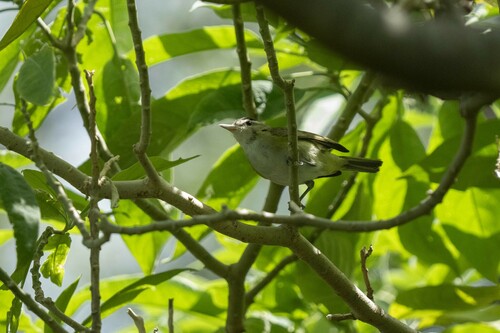
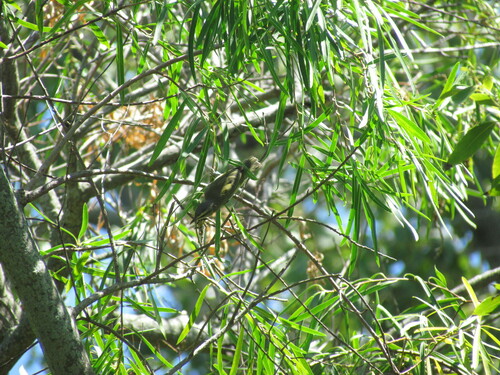
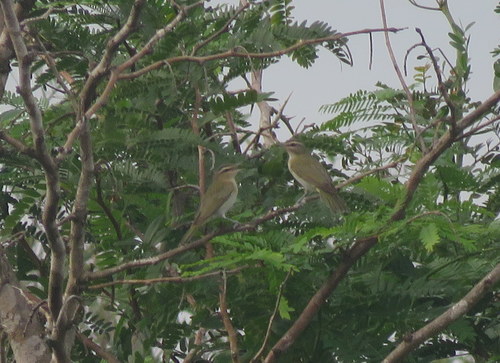
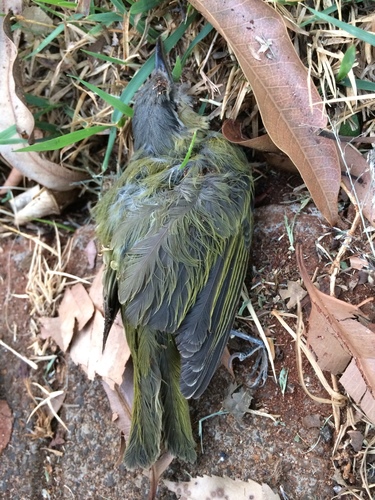
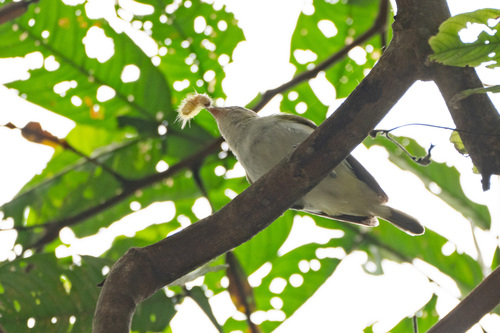
What the Chivi Vireo sounds like


ID tip
The species looks similar to the related red-eyed vireo and yellow-green vireo. It is 12–14 cm (4.7–5.5 in) in length, with the mass and length of the bill and wings varying in different subspecies. Hatchlings are born almost naked with yellow skin and sparse down. Juveniles have brownish or tawny (depending on subspecies) upperparts, with the greater and median coverts having brownish-green tips, and the head showing a less contrasting pattern than adults. The mouth lining is paler than adults up until 6 months of age. They may also show molt contrast on their wings. Voice: The calls of the species are typical of most of Vireo, but it has a very simple repertoire with only one song and one vocalization. Its song is a pattern of brief musical sound with pauses in between. The song of the South American subspecies is usually "chew-lee chew-lew wee-chee chew leee", while the song of griseobarbatus is a "tche-wit ...
Text from Wikipedia, licensed CC BY-SA 4.0.
When to see the Chivi Vireo
One bar for each month. Filled bars are the 11 months with records; pale bars are months with none. The wide bar is October, the month with the most records.
Where to see the Chivi Vireo
The map shades 15 countries with regular records, and 2 more in a lighter tone where the bird turns up only as a stray. Everything unshaded has no records. Countries are listed below the map.
About the Chivi Vireo
The chivi vireo is a small South American songbird in the family Vireonidae. It was formerly considered a subspecies of the red-eyed vireo. It is usually green to yellow-green in color with off-white underparts, and a gray crown. It has a whitish supercilium extending over its ear coverts, and its lores are dull gray in color. The chivi vireo has nine subspecies. It is found throughout most of northern, eastern and central South America, only being absent from southern Chile and southern Argentina. It inhabits multiple types of habitat across its range, and appears to adjust well to slightly disturbed habitat.
Text adapted from Wikipedia, licensed CC BY-SA 4.0.
Easily confused with
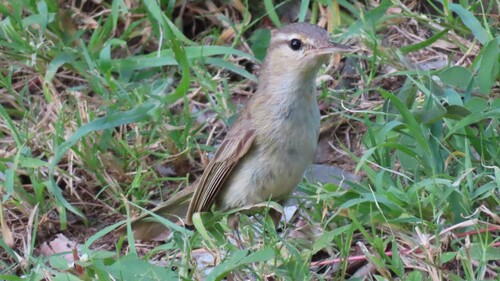
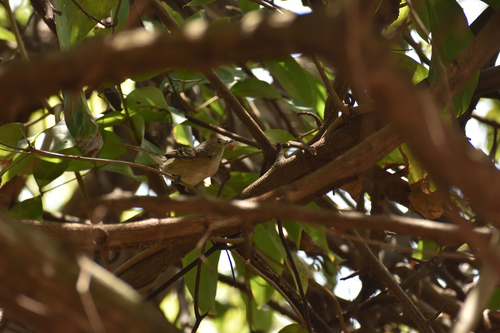
Learn the Chivi Vireo in the BeakBrain App
Photo and call practice. Coming soon to iPhone and Android.
Play today's Daily BirdEvery photo and recording on this page is credited to its author under the licence shown. Spotted a problem with this page, or have a better photo? Contribute.