Learn what every symbol on the card means.Full credits and sources at beakbrain.com/symbols
 ForestCavity nestMedium · 68 g



ID tip
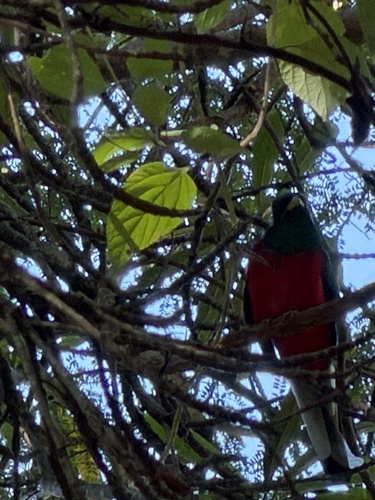
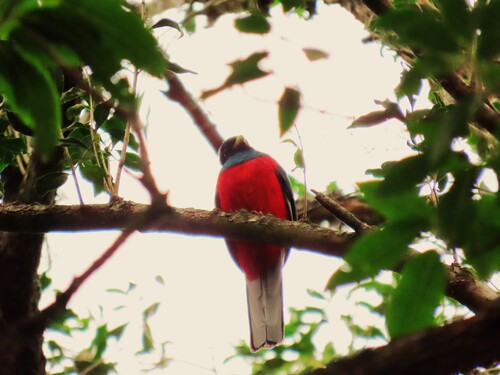
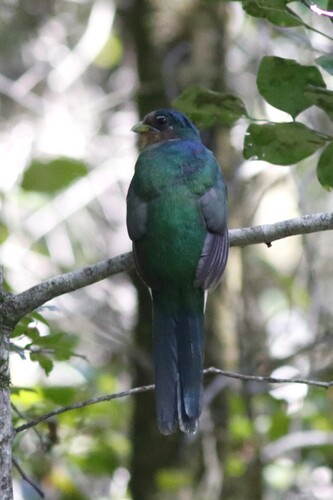
It is sexually dimorphic, with males more brightly coloured. Both sexes have vivid, gingery green upperpart plumage. The tail feathers have a metallic blue-green gloss. The outer three rectices on each side are tipped and fringed white, giving the undertail of perched birds a characteristic white appearance (compare bar-tailed trogon). The wing coverts are a grizzled grey, and remiges mostly colourless grey. The male especially, has bright red underside plumage and bare, green gape and eye flanges.
Text from Wikipedia, licensed CC BY-SA 4.0.
When to see the Narina Trogon
One bar for each month. Filled bars are the 10 months with records; pale bars are months with none. The wide bar is November, the month with the most records.
Where to see the Narina Trogon
The map shades 29 countries with regular records. Everything unshaded has no records. Countries are listed below the map.
About the Narina Trogon
The Narina trogon is a largely green and red, medium-sized bird in the family Trogonidae. It is native to forests and woodlands of the Afrotropics. Though it is the most widespread and diverse in habitat choice of the three Apaloderma species, its numbers are locally depleted due to deforestation. Some populations are sedentary while others undertake regular movements.
Text adapted from Wikipedia, licensed CC BY-SA 4.0.
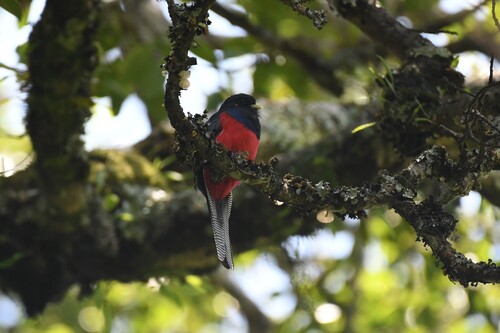
Easily confused with
Learn the Narina Trogon in the BeakBrain App
Photo and call practice. Coming soon to iPhone and Android.
Play today's Daily BirdEvery photo and recording on this page is credited to its author under the licence shown. Spotted a problem with this page, or have a better photo? Contribute.