Learn what every symbol on the card means.Full credits and sources at beakbrain.com/symbols
 ForestCavity nestSmall · 55 g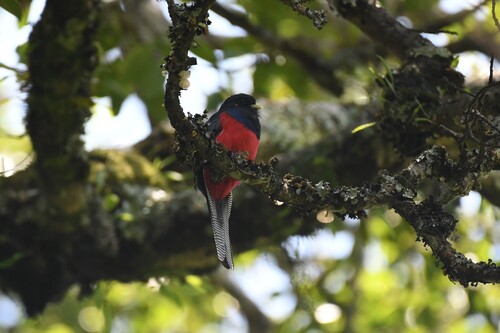

ID tip
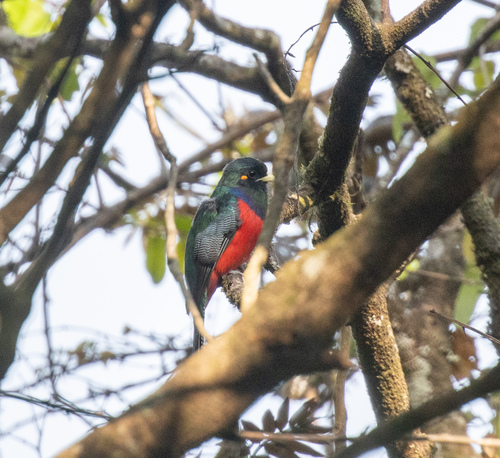
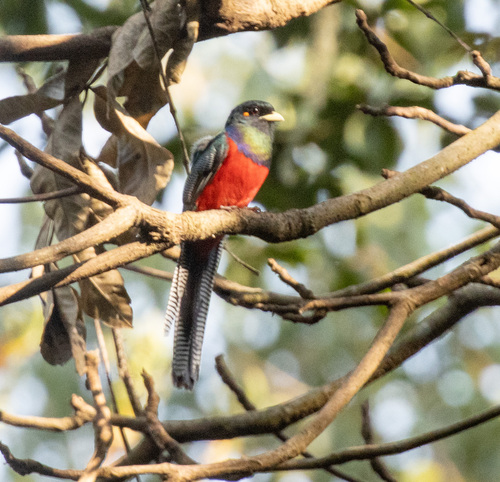
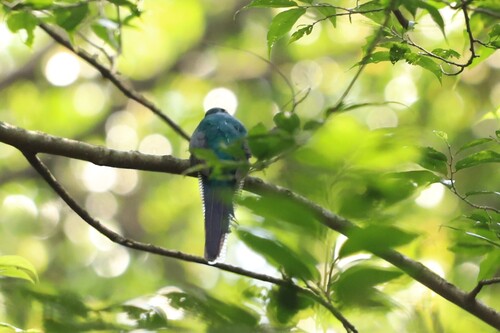
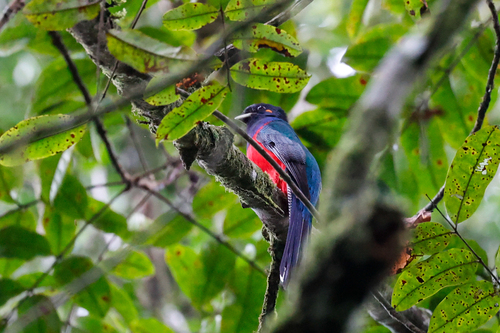
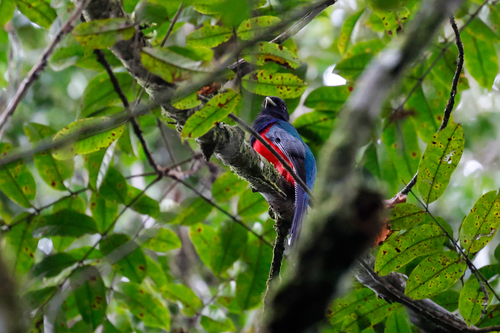
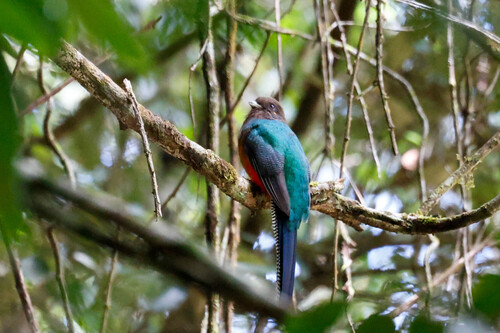
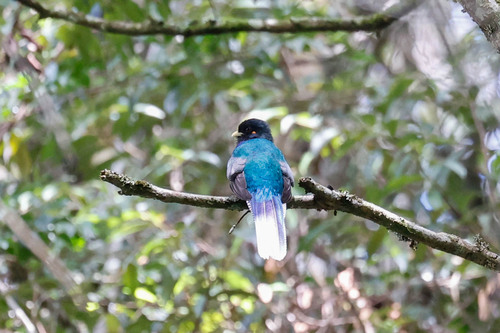
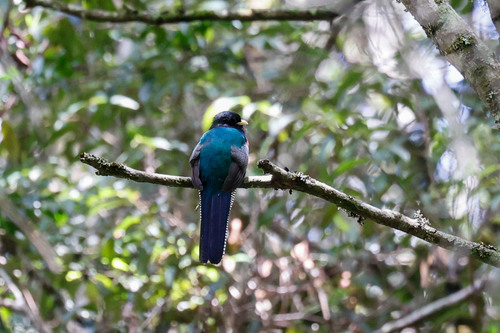
The bar-tailed trogon averages about 28 centimetres (11 in) long. The bill and feet are yellow, and the tail, long and broad as usual for trogons, has the underside narrowly barred with black and white. The male's head is blue-black with bronze iridescence. Below the eye are two yellow or orange patches of bare skin; above the eye is a yellow or grey patch. The upper breast is iridescent from violet to blue-green; the rest of the underparts are red. The back is green and the upper surface of the tail is blue-black or purple-black.
Text from Wikipedia, licensed CC BY-SA 4.0.
When to see the Bar-tailed Trogon
One bar for each month, and every month is filled: this bird is recorded here in all twelve. The wide bar is July, the month with the most records.
Where to see the Bar-tailed Trogon
The map shades 12 countries with regular records. Everything unshaded has no records. Countries are listed below the map.
About the Bar-tailed Trogon
The bar-tailed trogon is a species of bird in the family Trogonidae. It is a resident bird to central Africa that eats primarily insects and fruit.
Text adapted from Wikipedia, licensed CC BY-SA 4.0.
Easily confused with

Learn the Bar-tailed Trogon in the BeakBrain App
Photo and call practice. Coming soon to iPhone and Android.
Play today's Daily BirdEvery photo and recording on this page is credited to its author under the licence shown. Spotted a problem with this page, or have a better photo? Contribute.