Learn what every symbol on the card means.Full credits and sources at beakbrain.com/symbols
 WetlandCup nestHuge · 1.9 kg


What the Musk Duck sounds like

ID tip
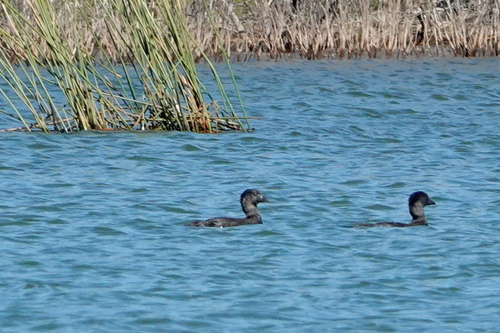
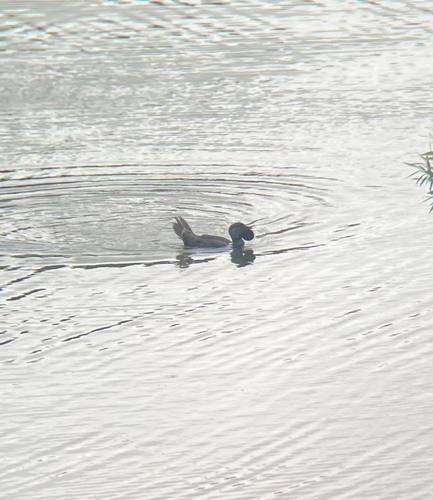
Adult males are 60 to 70 cm (24 to 28 in) long and have a distinctive large, leathery lobe underneath the bill; females are 47 to 55 cm (19 to 22 in) long and unadorned. Their drab dark grey-brown, slightly pin-striped plumage is inconspicuous and does not differ between the sexes. This species weighs an average of 2,398 g (5.287 lb) in males and 1,551 g (3.419 lb) in females, with the smallest females weighing only 993 g (2.189 lb) and the largest males weighing up to 3,170 g (6.99 lb).
Text from Wikipedia, licensed CC BY-SA 4.0.
When to see the Musk Duck
One bar for each month, and every month is filled: this bird is recorded here in all twelve. The wide bar is January, the month with the most records.
Where to see the Musk Duck
The map shades 1 country with regular records. Everything unshaded has no records. Countries are listed below the map.
About the Musk Duck
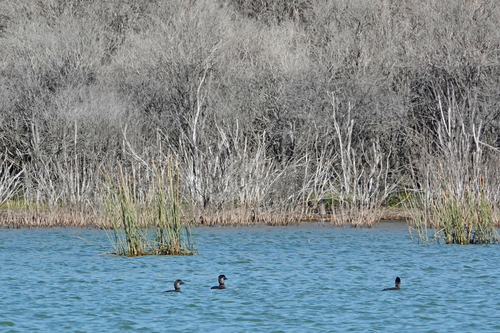
The musk duck is a highly aquatic, stiff-tailed duck native to southern Australia. It is the only living member of the genus Biziura. An extinct relative, the New Zealand musk duck or de Lautour's duck, once occurred on New Zealand, but is only known from prehistoric subfossil bones. It was about 8% longer than the living species, with a particularly large head.
Text adapted from Wikipedia, licensed CC BY-SA 4.0.
Easily confused with
 Coscoroba SwanCoscoroba coscorobaThe coscoroba swan is a medium-large sized waterfowl, but smaller than the true swans, at 90 to 115 cm (35 to 45 in) long with a wingspan of about 155 cm (61 in).
 Upland GooseChloephaga pictaUpland geese males are similar to other sheldgeese, notably the kelp goose (Chloephaga hybrida) due to their predominantly white plumage, while females resemble the ruddy-headed goose (C. rubidiceps) due to their similarly barred breast plumage.
 Bar-headed GooseAnser indicusThe bird is pale grey and is easily distinguished from any of the other grey geese of the genus Anser by the black bars on its otherwise white head.
Side by side: Coscoroba Swan vs Musk Duck · Musk Duck vs Upland Goose · Bar-headed Goose vs Musk Duck · Crested Duck vs Musk Duck
Learn the Musk Duck in the BeakBrain App
Photo and call practice. Coming soon to iPhone and Android.
Play today's Daily BirdEvery photo and recording on this page is credited to its author under the licence shown. Spotted a problem with this page, or have a better photo? Contribute.