Learn what every symbol on the card means.Full credits and sources at beakbrain.com/symbols
 GrasslandCavity nestSmall · 33 g

ID tip
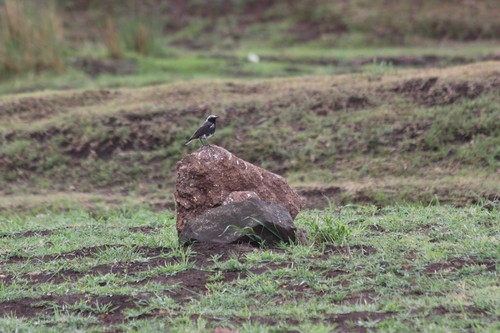
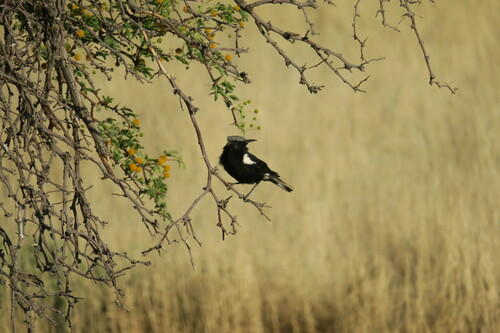
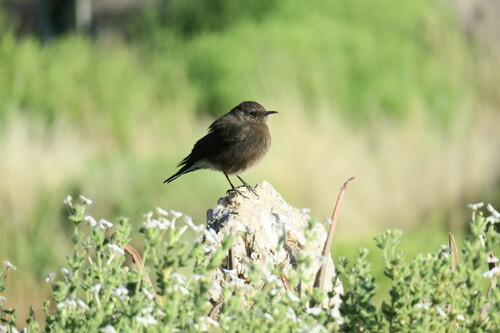
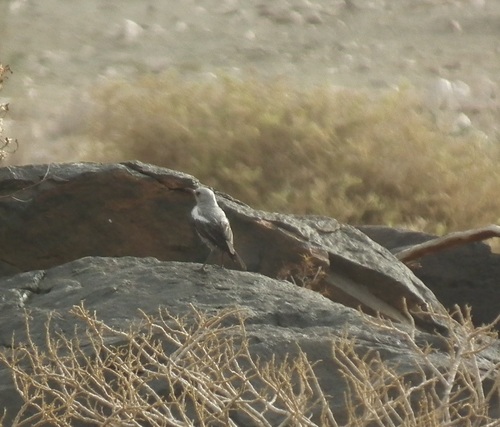
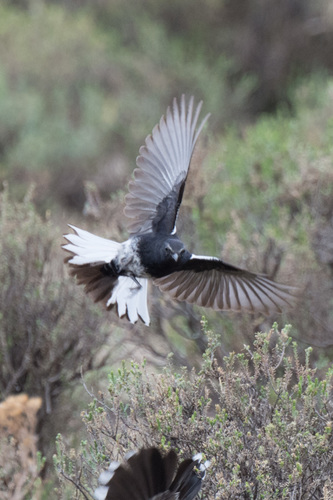
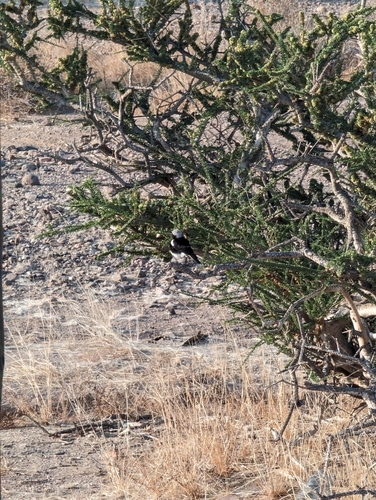
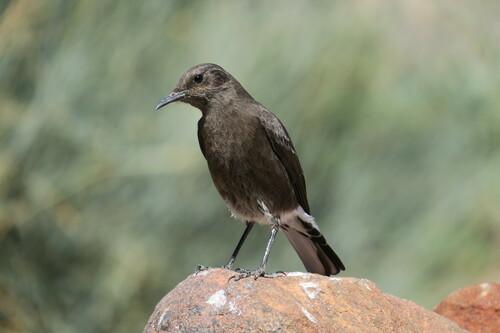
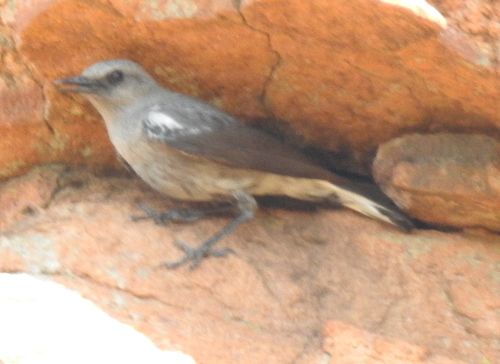
The mountain chat is 18–20 cm long, and like other chats, it has a distinctive tail pattern, with a white rump and outer tail feathers. Its legs and pointed bill are black. The male is very variable in plumage, although the tail pattern and a white shoulder patch are always present. A white and black bird. The body plumage varies from pale grey to almost black, and it may or may not have a white crown to the head. The female is entirely dark brown apart from the white rump and outer tail.
Text from Wikipedia, licensed CC BY-SA 4.0.
When to see the Mountain Chat
One bar for each month, and every month is filled: this bird is recorded here in all twelve. The wide bar is September, the month with the most records.
Where to see the Mountain Chat
The map shades 5 countries with regular records, and 1 more in a lighter tone where the bird turns up only as a stray. Everything unshaded has no records. Countries are listed below the map.
Recorded as a rare visitor in Botswana.
About the Mountain Chat
The mountain chat or mountain wheatear is a small insectivorous passerine bird that is endemic to southwestern Africa.
Text adapted from Wikipedia, licensed CC BY-SA 4.0.
Easily confused with
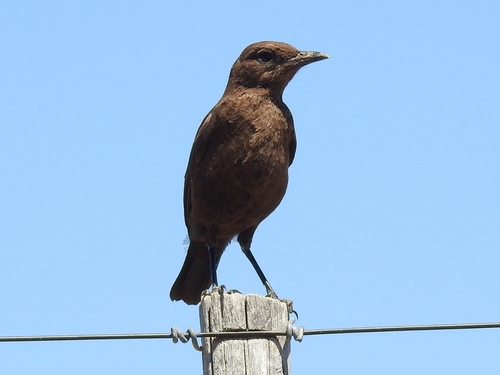 Ant-eating ChatMyrmecocichla formicivoraThe species is sexually dimorphic with the male almost entirely black and the female brown with a grey bill and legs.
 Sooty ChatMyrmecocichla nigraIt is 15 to 16 cm (6 to 6.25 inches) long, stocky and relatively short-tailed for a chat.
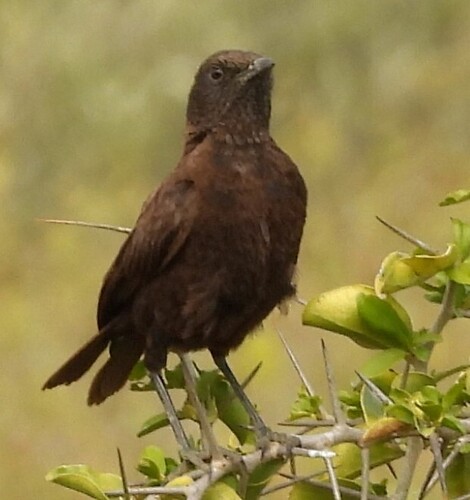 Anteater ChatMyrmecocichla aethiopsThe anteater chat or northern anteater-chat is a species of bird in the family Muscicapidae.
Side by side: Ant-eating Chat vs Mountain Chat · Mountain Chat vs Sooty Chat
Learn the Mountain Chat in the BeakBrain App
Photo and call practice. Coming soon to iPhone and Android.
Play today's Daily BirdEvery photo and recording on this page is credited to its author under the licence shown. Spotted a problem with this page, or have a better photo? Contribute.