Learn what every symbol on the card means.Full credits and sources at beakbrain.com/symbols
 GrasslandCavity nestSmall · 40 g


ID tip
It is 15 to 16 cm (6 to 6.25 inches) long, stocky and relatively short-tailed for a chat. The adult male's plumage is glossy black except for white patches on the upper wings that are usually visible or only partly concealed (as in the photograph at upper right) when the bird is at rest. The female and young are very dark brown. Voice: The song (in Kenya and northern Tanzania) is described as "prolonged, sweet and musical, sometimes given in flight, wee tewee tuweer, skwik-skueeeeer, cueee-eeeee-cuweeeeer, eee-euwee-tee, tseuwee-tew-skweeer-tsi-seet…." This species sometimes imitates other birds.
Text from Wikipedia, licensed CC BY-SA 4.0.
When to see the Sooty Chat
One bar for each month, and every month is filled: this bird is recorded here in all twelve. The wide bar is July, the month with the most records.
Where to see the Sooty Chat
The map shades 12 countries with regular records. Everything unshaded has no records. Countries are listed below the map.
About the Sooty Chat
The sooty chat is an African songbird of the chat subfamily.
Text adapted from Wikipedia, licensed CC BY-SA 4.0.
Easily confused with
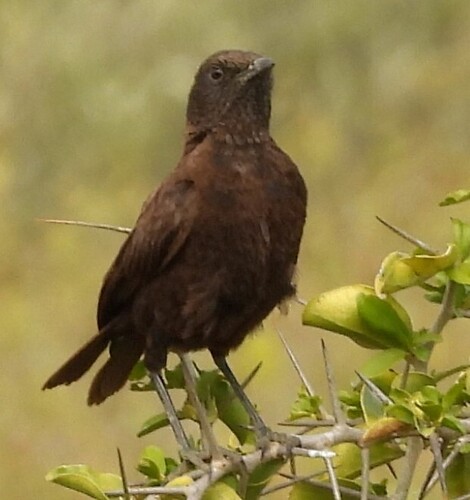 Anteater ChatMyrmecocichla aethiopsThe anteater chat or northern anteater-chat is a species of bird in the family Muscicapidae.
 Arnot's ChatMyrmecocichla arnottiArnot's chat ranges in size from 16 to 18 cm (6.3–7.1 in) and weighs around 35 g (1.2 oz).
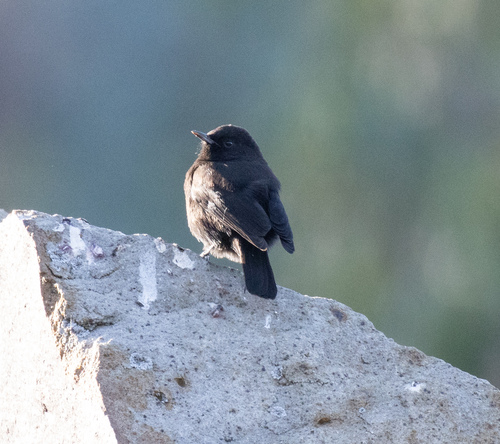 Rüppell's Black ChatMyrmecocichla melaenaRüppell's black chat is a species of bird in the family Muscicapidae.
Side by side: Ant-eating Chat vs Sooty Chat · Mountain Chat vs Sooty Chat · Sooty Chat vs White-starred Robin · Arnot's Chat vs Sooty Chat
Learn the Sooty Chat in the BeakBrain App
Photo and call practice. Coming soon to iPhone and Android.
Play today's Daily BirdEvery photo and recording on this page is credited to its author under the licence shown. Spotted a problem with this page, or have a better photo? Contribute.