Learn what every symbol on the card means.Full credits and sources at beakbrain.com/symbols
 WoodlandCavity nestLarge · 559 g
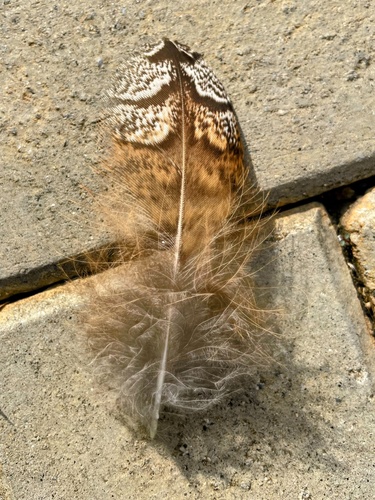
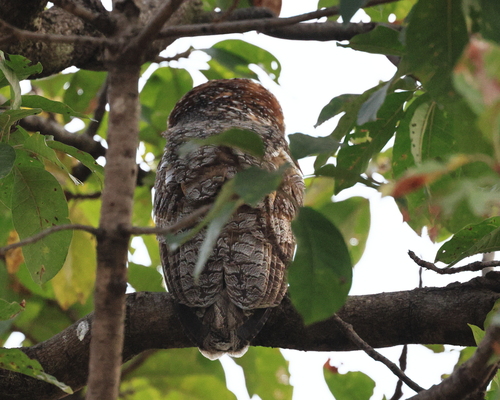
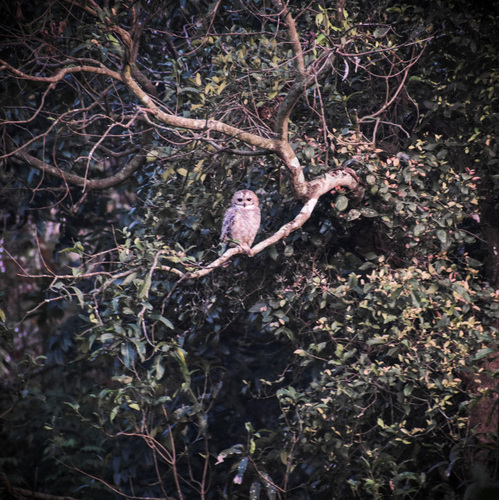
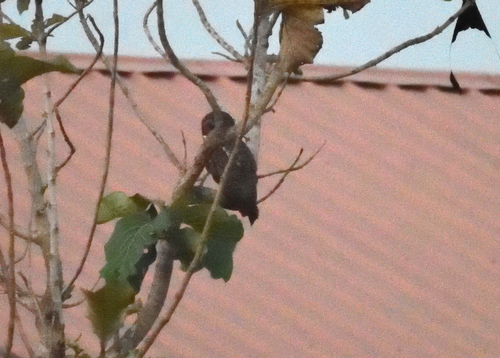
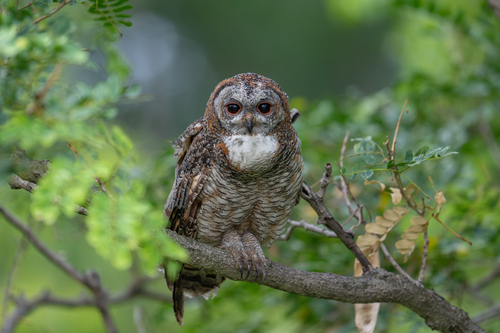
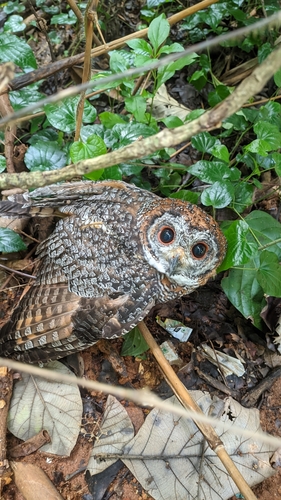
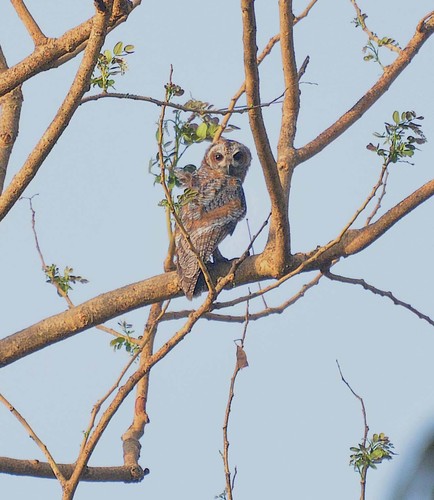
What the Mottled Wood Owl sounds like


ID tip
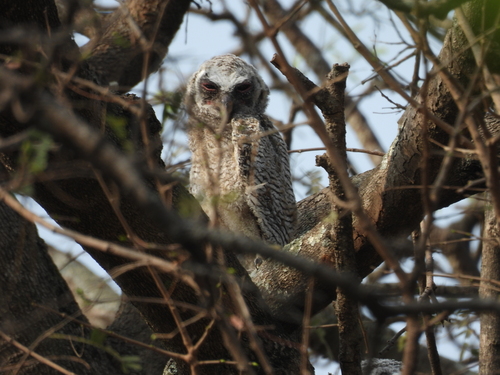
This large owl lacks ear tufts and is mottled and vermiculated in reddish brown and white. The face disc is marked with fine concentric black and white barring. The sexes are alike. The chin is white. The eyelid is orange, and the iris is dark brown. The tail is barred narrowly in brown and black. The concentric barring on the face and mottled crown separate it from the brown wood owl in southern India. There are three subspecies recognized and there are no sharp demarcations in their distributions. S. o.
Text from Wikipedia, licensed CC BY-SA 4.0.
When to see the Mottled Wood Owl
One bar for each month. Filled bars are the 11 months with records; pale bars are months with none. The wide bar is February, the month with the most records.
Where to see the Mottled Wood Owl
The map shades 2 countries with regular records. Everything unshaded has no records. Countries are listed below the map.
About the Mottled Wood Owl
The mottled wood owl is a species of large owl found in India and Nepal. They are found in gardens and thin deciduous forests adjacent to dry thorn forests or farmland. They are easily detected by their distinctive tremulous, eerie calls at dawn and dusk. The characteristic call is a duet of the male and female, while other notes include a low hoot and a screech. Their large size, lack of "ear" tufts and the concentric barring on the face make them easy to identify.
Text adapted from Wikipedia, licensed CC BY-SA 4.0.
Easily confused with
 Brown Wood OwlStrix leptogrammicaThe brown wood owl is found in India, Bangladesh, Sri Lanka, Indonesia, Taiwan, and south China.
 African Wood OwlStrix woodfordiiThe African wood owl is a medium-sized owl which has the typical rounded head of the genus Strix, similar to the Palearctic tawny owl or Holarctic great grey owl, with large dark eyes outlined by white eyebrows.
 Black-banded OwlStrix huhulaThe black-banded owl is medium-sized (30–36 cm (12–14 in)), blackish all over and densely striated with horizontal, wavy, white bars.
Side by side: Great Grey Owl vs Mottled Wood Owl · Black-and-white Owl vs Mottled Wood Owl · African Wood Owl vs Mottled Wood Owl · Flammulated Owl vs Mottled Wood Owl · Black-banded Owl vs Mottled Wood Owl
Learn the Mottled Wood Owl in the BeakBrain App
Photo and call practice. Coming soon to iPhone and Android.
Play today's Daily BirdEvery photo and recording on this page is credited to its author under the licence shown. Spotted a problem with this page, or have a better photo? Contribute.