Learn what every symbol on the card means.Full credits and sources at beakbrain.com/symbols
 WetlandDomed nestTiny · 11 g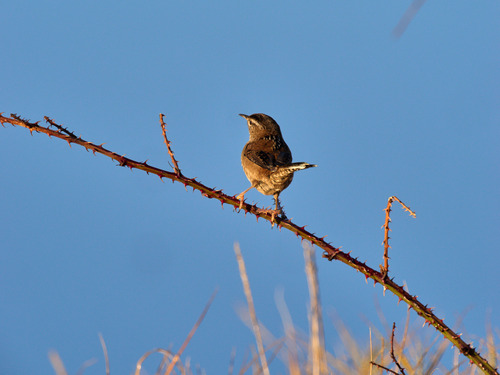


What the Marsh Wren sounds like


ID tip
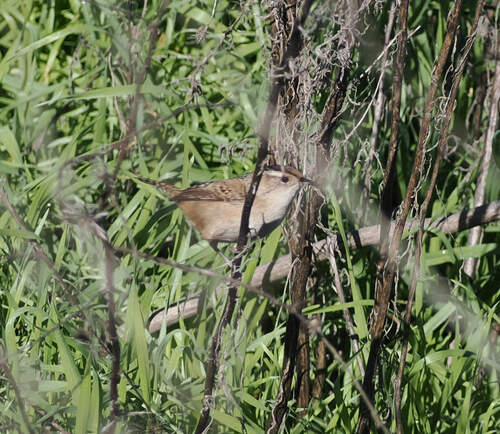
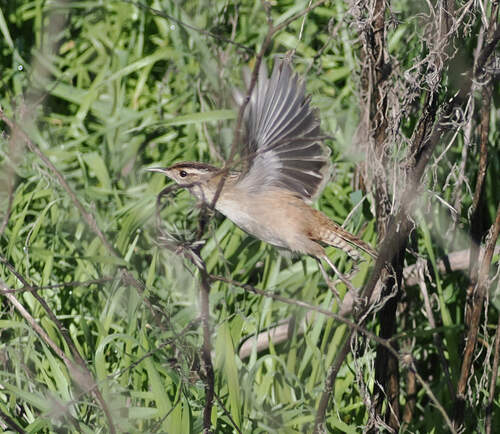
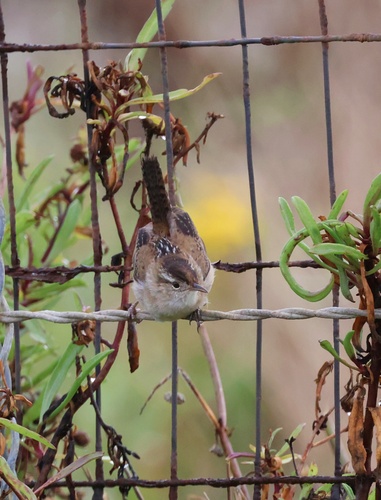
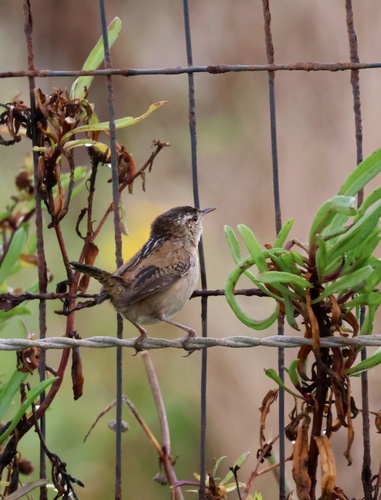
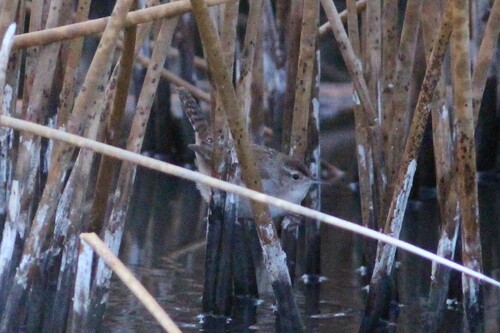
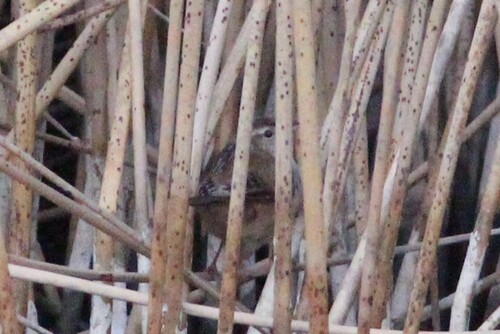
Adults have brown upperparts with a light brown belly and flanks and a white throat and breast. The back is black with white stripes. They have a dark cap with a white line over the eyes and a short thin bill. The male's song is a loud gurgle used to declare ownership of territory; western males have a more varied repertoire. This little bird is native to Canada, Mexico, and the United States. Their breeding habitat is marshes with tall vegetation such as cattails across North America. In the western United States, some birds are permanent residents.
Text from Wikipedia, licensed CC BY-SA 4.0.
When to see the Marsh Wren
One bar for each month, and every month is filled: this bird is recorded here in all twelve. The wide bar is May, the month with the most records.
Where to see the Marsh Wren
The map shades 4 countries with regular records. Everything unshaded has no records. Countries are listed below the map.
About the Marsh Wren
The marsh wren is a small North American songbird of the wren family. It was formerly called the long-billed marsh wren to distinguish it from the sedge wren, then known as the short-billed marsh wren.
Text adapted from Wikipedia, licensed CC BY-SA 4.0.
Easily confused with
 Grass WrenCistothorus platensisThe grass wren is 10 to 10.5 cm (3.9 to 4.1 in) long.
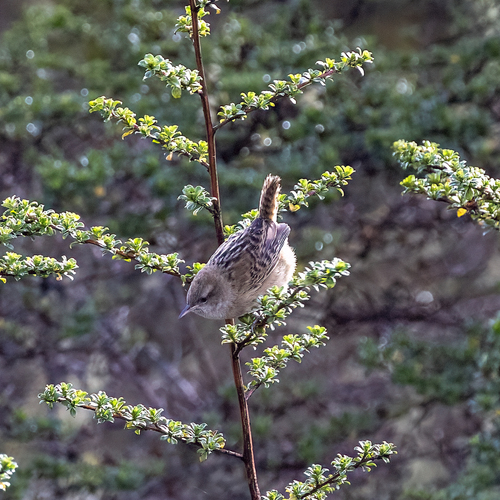 Apolinar's WrenCistothorus apolinariApolinar's wren is 12 cm (4.7 in) long.
Merida WrenCistothorus meridaeThe Mérida wren is 10 cm (3.9 in) long.
Apolinar's WrenCistothorus apolinariApolinar's wren is 12 cm (4.7 in) long.
Merida WrenCistothorus meridaeThe Mérida wren is 10 cm (3.9 in) long.
Side by side: Bewick's Wren vs Marsh Wren · Grass Wren vs Marsh Wren
Learn the Marsh Wren in the BeakBrain App
Photo and call practice. Coming soon to iPhone and Android.
Play today's Daily BirdEvery photo and recording on this page is credited to its author under the licence shown. Spotted a problem with this page, or have a better photo? Contribute.