Learn what every symbol on the card means.Full credits and sources at beakbrain.com/symbols
 GrasslandScrapeLarge · 334 g


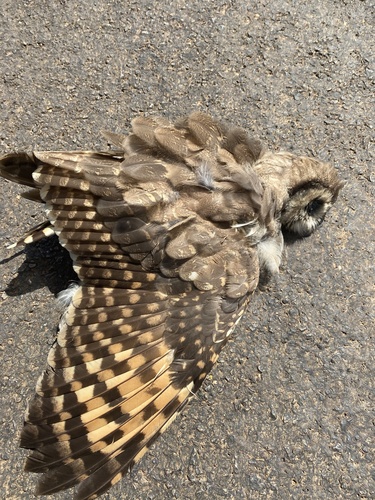
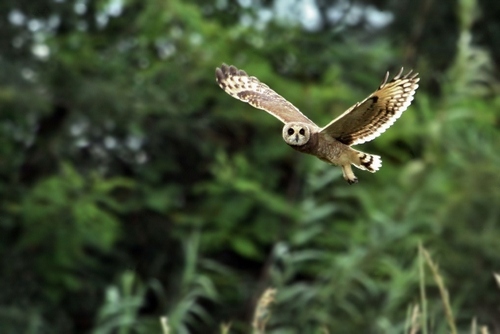
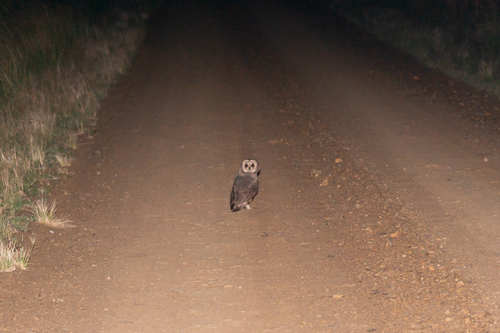
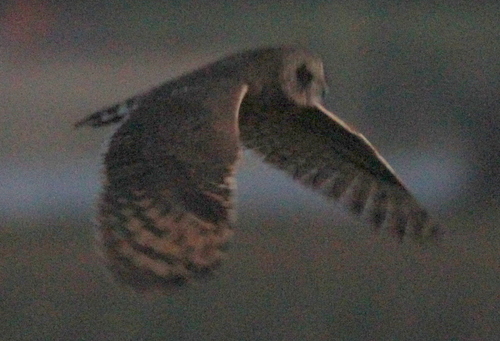
ID tip
Medium-sized, dark brown with a pumpkin-shaped head with small 'ear' tufts. The facial disc is pale buff, with a distinct dark brown rim with buff speckles. There is a dark brown area around the eyes, which are also dark brown. Its ear-tufts are earth-brown and quite small, often not visible, and set near the centre of the forehead. The tail is dark brown, barred pale buff with a whitish tip. Tarsi are feathered pale tawny-buff and toes are covered with pale buffish plumes, leaving the dark brown tips bare. Claws are blackish.
Text from Wikipedia, licensed CC BY-SA 4.0.
When to see the Marsh Owl
One bar for each month, and every month is filled: this bird is recorded here in all twelve. The wide bar is July, the month with the most records.
Where to see the Marsh Owl
The map shades 22 countries with regular records, and 2 more in a lighter tone where the bird turns up only as a stray. Everything unshaded has no records. Countries are listed below the map.
Recorded as a rare visitor in Congo - Kinshasa, Mali.
About the Marsh Owl
The marsh owl is a medium to large species of owl in the family Strigidae.
Text adapted from Wikipedia, licensed CC BY-SA 4.0.
Easily confused with
 Stygian OwlAsio stygiusThe Stygian owl is 38 to 46 cm (15 to 18 in) long and weighs about 400 to 675 g (14 to 24 oz).
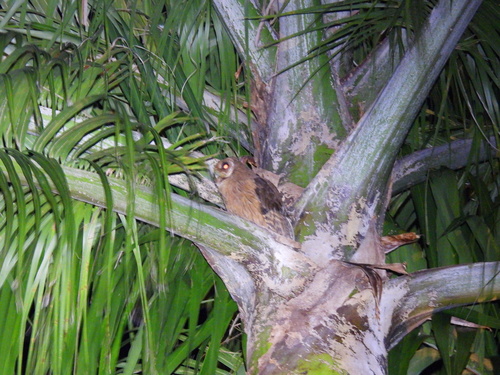 Jamaican OwlAsio grammicusThe Jamaican owl is 27 to 33 cm (11 to 13 in) long; one specimen of unstated sex weighed 335 g (11.8 oz).
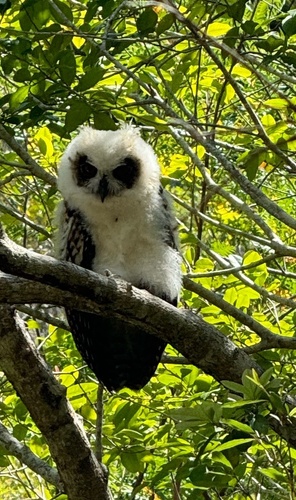 Madagascar OwlAsio madagascariensisThe Madagascar owl is similar in appearance to the Holarctic long-eared owl in that it sits tall and at rest shows prominent ear tufts.
Side by side: Marsh Owl vs Striped Owl · Marsh Owl vs Stygian Owl
Learn the Marsh Owl in the BeakBrain App
Photo and call practice. Coming soon to iPhone and Android.
Play today's Daily BirdEvery photo and recording on this page is credited to its author under the licence shown. Spotted a problem with this page, or have a better photo? Contribute.