Learn what every symbol on the card means.Full credits and sources at beakbrain.com/symbols
 WoodlandGround nestLarge · 1.5 kg

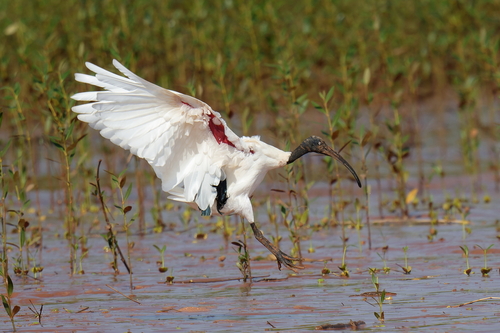
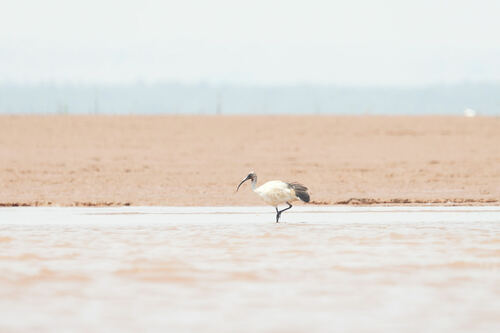
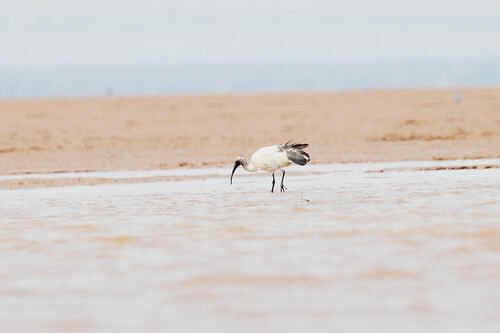
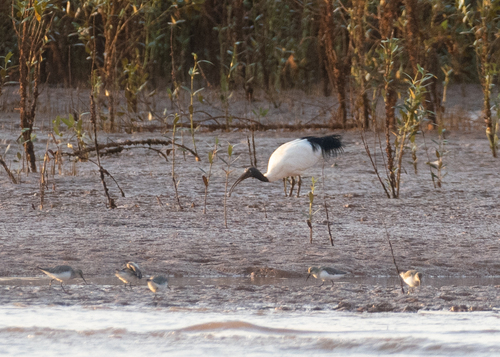
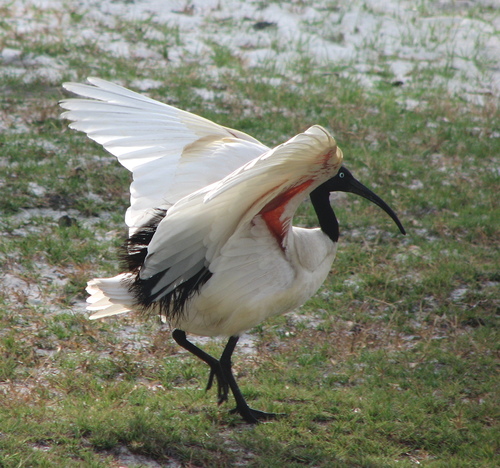
ID tip
The adult stands 65–89 cm (26–35 in) tall, with a wingspan of 112–124 cm (44–49 in). The plumage is predominantly white, often with brownish-yellow staining. There are also black ornamental plumes on the back with a blue or green gloss formed from the lower scapulars and tertials, which are most prominent in the breeding season. The bill, head, neck and legs are black.
Text from Wikipedia, licensed CC BY-SA 4.0.
When to see the Malagasy Sacred Ibis
One bar for each month. Filled bars are the 3 months with records; pale bars are months with none. The wide bar is November, the month with the most records.
Where to see the Malagasy Sacred Ibis
The map shades 2 countries with regular records, and 1 more in a lighter tone where the bird turns up only as a stray. Everything unshaded has no records. Countries are listed below the map.
Recorded as a rare visitor in Mayotte.
About the Malagasy Sacred Ibis
The Malagasy sacred ibis is a relatively large, heavily built ibis endemic to the west coast of Madagascar, and Aldabra on the Seychelles.
Text adapted from Wikipedia, licensed CC BY-SA 4.0.
Easily confused with
 Black-headed IbisThreskiornis melanocephalusThe black-headed ibis is one of several large waterbird species in south and south-east Asia, with adults measuring 65–76 cm in length.
 Straw-necked IbisThreskiornis spinicollisStraw-necked ibises are large birds, around 59–76 cm (23–30 in) long, with a bare black head and a long, downcurved black bill.
 African Sacred IbisThreskiornis aethiopicusAn adult individual is 68 cm (27 in) long with all-white body plumage apart from dark plumes on the rump.
Learn the Malagasy Sacred Ibis in the BeakBrain App
Photo and call practice. Coming soon to iPhone and Android.
Play today's Daily BirdEvery photo and recording on this page is credited to its author under the licence shown. Spotted a problem with this page, or have a better photo? Contribute.