Learn what every symbol on the card means.Full credits and sources at beakbrain.com/symbols
 WoodlandCup nestMedium · 82 g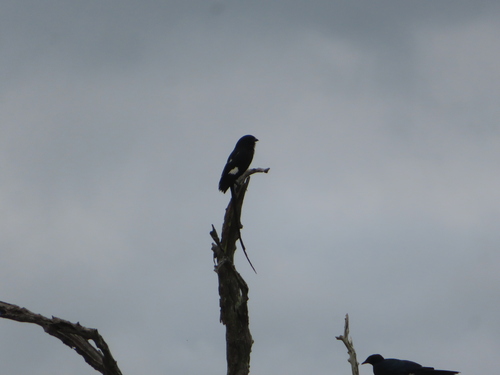


When to see the Magpie Shrike
One bar for each month, and every month is filled: this bird is recorded here in all twelve. The wide bar is November, the month with the most records.
Where to see the Magpie Shrike
The map shades 10 countries with regular records, and 1 more in a lighter tone where the bird turns up only as a stray. Everything unshaded has no records. Countries are listed below the map.
Recorded as a rare visitor in United States.
About the Magpie Shrike
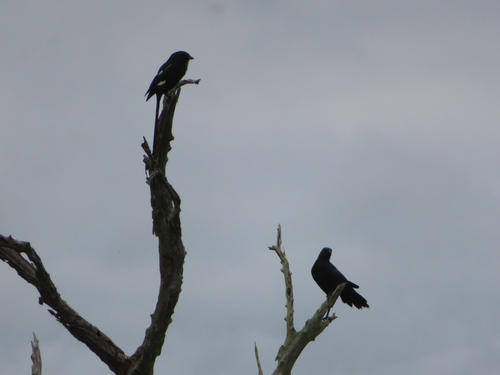
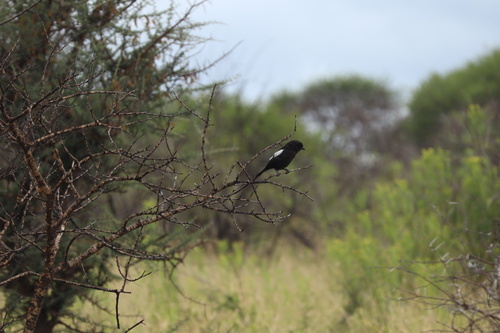
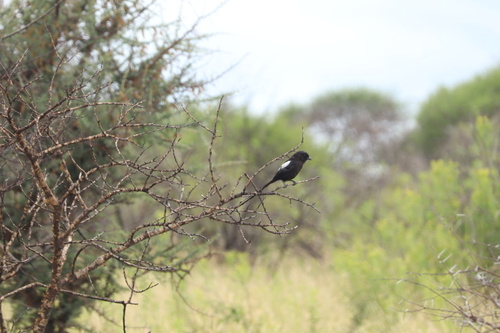
The magpie shrike, also known as the African long-tailed shrike, is a species of bird in the family Laniidae. It is the only species placed in the genus Urolestes. It is native to the grasslands of eastern and southeastern Africa, where its natural habitats are dry savannah, moist savannah, and subtropical or tropical dry shrubland. It has a very wide range and is common in places, and the International Union for Conservation of Nature has assessed its conservation status as being of "least concern".
Text adapted from Wikipedia, licensed CC BY-SA 4.0.
Easily confused with
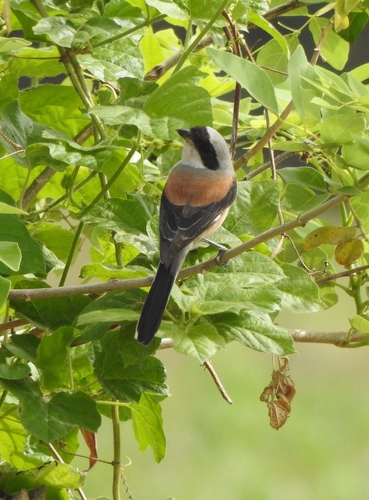 Bay-backed ShrikeLanius vittatusIt is smallish shrike at 17 cm, maroon-brown above with a pale rump and long black tail with white edges.
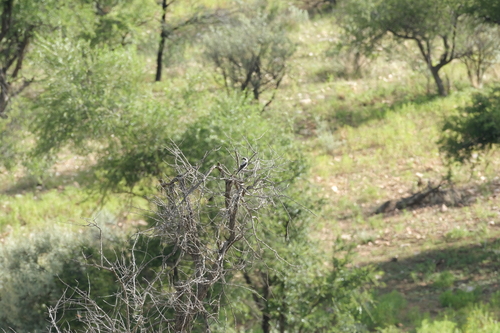 Lesser Grey ShrikeLanius minorThe adult male lesser grey shrike has its nape, cheeks, ear and eye coverts and front part of the crown black.
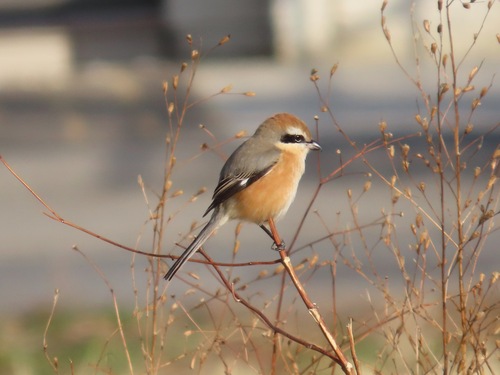 Bull-headed ShrikeLanius bucephalusThe bull-headed shrike is a passerine bird of eastern Asia belonging to the shrike family Laniidae.
Watch the Magpie Shrike on live cams
Browse all 118 bird cams worldwide, live and seasonal, by region and species.
Learn the Magpie Shrike in the BeakBrain App
Photo and call practice. Coming soon to iPhone and Android.
Play today's Daily BirdEvery photo and recording on this page is credited to its author under the licence shown. Spotted a problem with this page, or have a better photo? Contribute.