Learn what every symbol on the card means.Full credits and sources at beakbrain.com/symbols
 WetlandPlatform nestHuge · 2.4 kg




ID tip
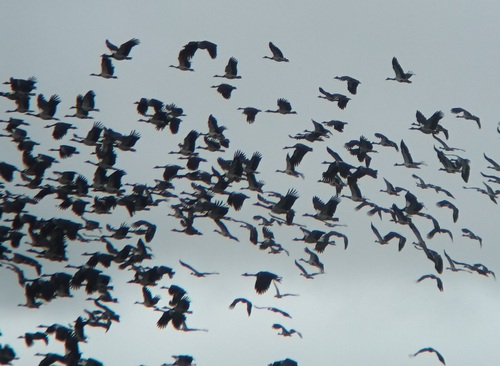
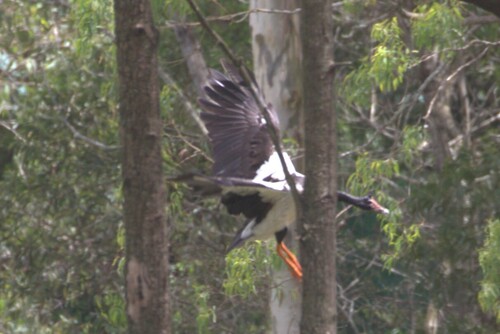
The magpie goose has black-and-white plumage in both sexes, with a long neck and legs and a long hooked bill. It is typically 75–90 cm (30–35 in) in length with an average weight of around 3 kg (6.5 lb). Magpie geese are unmistakable birds with their black and white plumage and yellowish legs. The feet are only partially webbed, and the magpie goose feeds on vegetable matter in the water, as well as on land. Males are larger than females. Unlike true geese, their molt is gradual, so no flightless periods result. Their voice is a loud honking.
Text from Wikipedia, licensed CC BY-SA 4.0.
When to see the Magpie Goose
One bar for each month. Filled bars are the 11 months with records; pale bars are months with none. The wide bar is April, the month with the most records.
Where to see the Magpie Goose
The map shades 4 countries with regular records, and 1 more in a lighter tone where the bird turns up only as a stray. Everything unshaded has no records. Countries are listed below the map.
Recorded as a rare visitor in United States.
About the Magpie Goose
The magpie goose is the sole living representative species of the family Anseranatidae. This waterbird is found in northern Australia and southern New Guinea. The species is not truly migratory but it sometimes travels large distances to find food and water, especially when not breeding, and is sometimes recorded outside its core range. The species was once also widespread in southern Australia but disappeared from there largely due to the drainage of the wetlands where the birds once bred.
Text adapted from Wikipedia, licensed CC BY-SA 4.0.
Learn the Magpie Goose in the BeakBrain App
Photo and call practice. Coming soon to iPhone and Android.
Play today's Daily BirdEvery photo and recording on this page is credited to its author under the licence shown. Spotted a problem with this page, or have a better photo? Contribute.