Learn what every symbol on the card means.Full credits and sources at beakbrain.com/symbols
 WetlandPlatform nestMedium · 184 g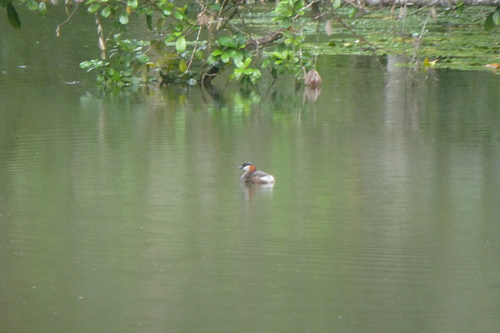



ID tip
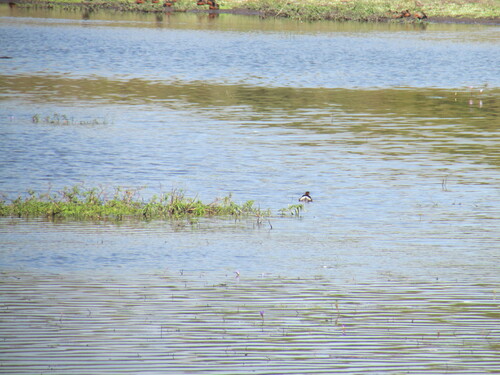
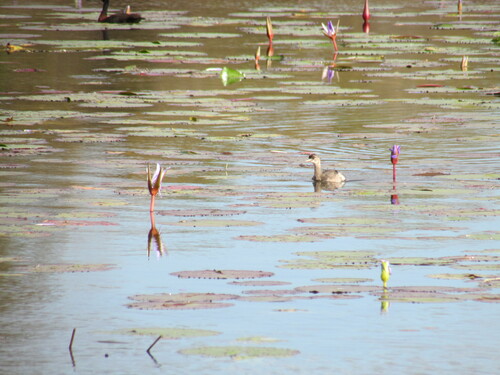
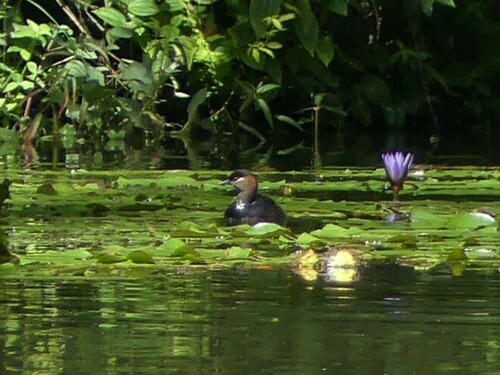
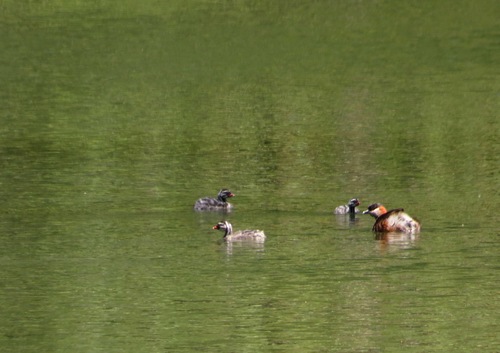
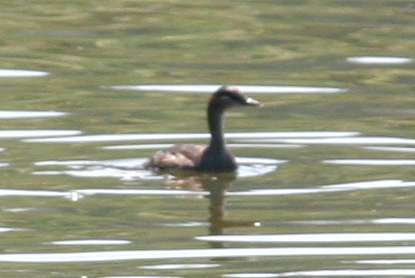
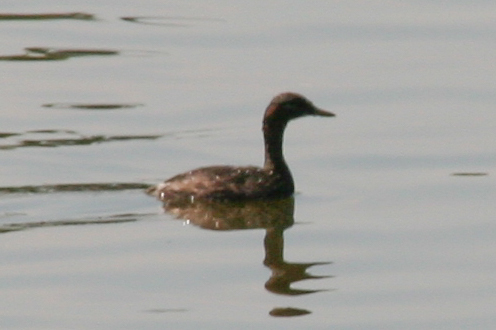
The Madagascar grebe is around 25 cm long. It can be identified in its breeding plumage, consisting of a blackish cap and line down the neck, often reddish rear ear-coverts and sides of the neck, pale grey cheeks, throat and foreneck. Some individuals have a narrow whitish line under the eye between the cap and ear-coverts.
Text from Wikipedia, licensed CC BY-SA 4.0.
When to see the Madagascar Grebe
One bar for each month. Filled bars are the 6 months with records; pale bars are months with none. The wide bar is November, the month with the most records.
Where to see the Madagascar Grebe
The map shades 1 country with regular records. Everything unshaded has no records. Countries are listed below the map.
About the Madagascar Grebe
The Madagascar grebe is a grebe found only in western and central Madagascar. The binomial name commemorates the Austrian ornithologist August von Pelzeln. It is classified as endangered by the IUCN, with a population of less than 5,000. It is threatened by habitat loss, predation by carnivorous fish, and competition with introduced species.
Text adapted from Wikipedia, licensed CC BY-SA 4.0.
Easily confused with
 Least GrebeTachybaptus dominicusThe least grebe ranges in length from 21–27 cm (8.3–10.6 in) (depending on the subspecies) and in weight from 112–180 g (4.0–6.3 oz).
 Australasian GrebeTachybaptus novaehollandiaeThe Australasian grebe is a small waterbird common on fresh water lakes and rivers in greater Australia, New Zealand and on nearby Pacific islands.
 Little GrebeTachybaptus ruficollisThe little grebe is a small water bird with a pointed bill.
Learn the Madagascar Grebe in the BeakBrain App
Photo and call practice. Coming soon to iPhone and Android.
Play today's Daily BirdEvery photo and recording on this page is credited to its author under the licence shown. Spotted a problem with this page, or have a better photo? Contribute.