Learn what every symbol on the card means.Full credits and sources at beakbrain.com/symbols
 WoodlandDomed nestTiny · 8 g
When to see the Lowland Masked Apalis
One bar for each month. Filled bars are the 11 months with records; pale bars are months with none. The wide bar is August, the month with the most records.
Where to see the Lowland Masked Apalis
The map shades 5 countries with regular records, and 1 more in a lighter tone where the bird turns up only as a stray. Everything unshaded has no records. Countries are listed below the map.
Recorded as a rare visitor in Gabon.
About the Lowland Masked Apalis
The lowland masked apalis, also known as the masked apalis, is a species of bird in the family Cisticolidae. It is found in Angola, Cameroon, Democratic Republic of the Congo, Equatorial Guinea, Gabon, Tanzania, and Uganda. Its natural habitats are subtropical or tropical dry forest and subtropical or tropical moist lowland forest.
Text adapted from Wikipedia, licensed CC BY-SA 4.0.
Easily confused with
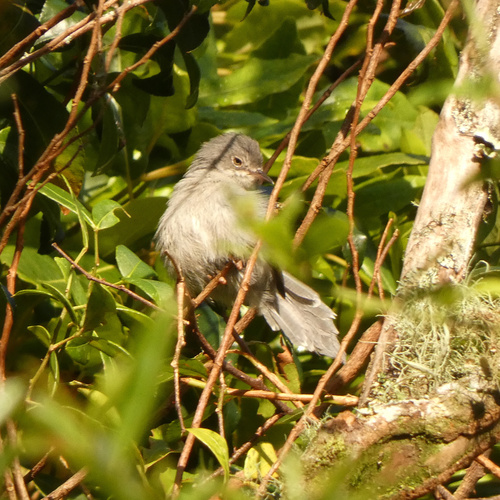 Chirinda ApalisApalis chirindensisThe Chirinda apalis has the typical slender, long tailed shape of apalises, with a slender bill.
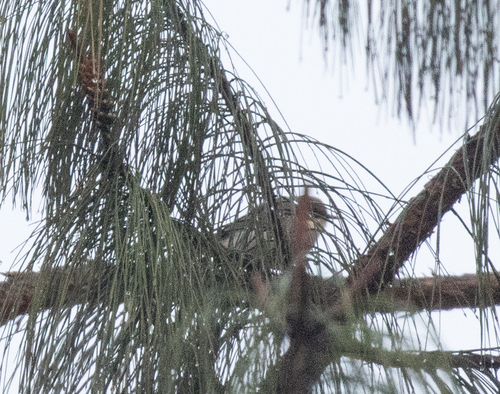 Brown-headed ApalisApalis alticolaIt is 12–13 cm long with a long tail and fairly long, slender bill.
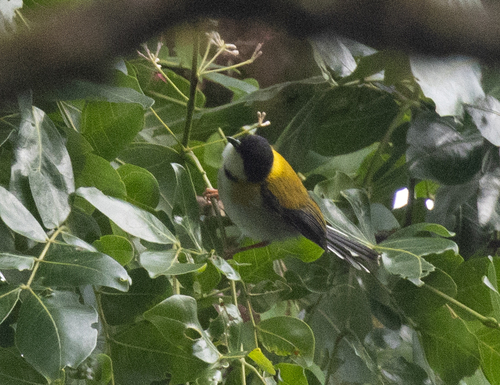 Black-capped ApalisApalis nigricepsThe black-capped apalis is a species of bird in the family Cisticolidae.
Learn the Lowland Masked Apalis in the BeakBrain App
Photo and call practice. Coming soon to iPhone and Android.
Play today's Daily BirdEvery photo and recording on this page is credited to its author under the licence shown. Spotted a problem with this page, or have a better photo? Contribute.