Learn what every symbol on the card means.Full credits and sources at beakbrain.com/symbols
 ForestTiny · 12 g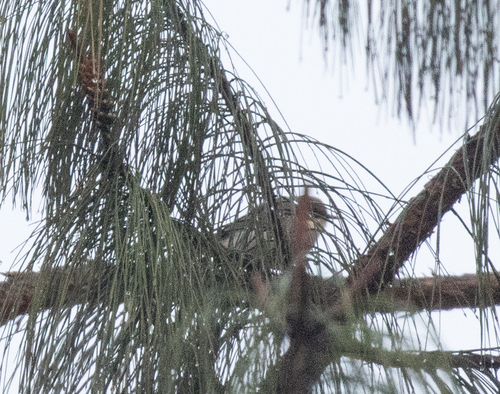
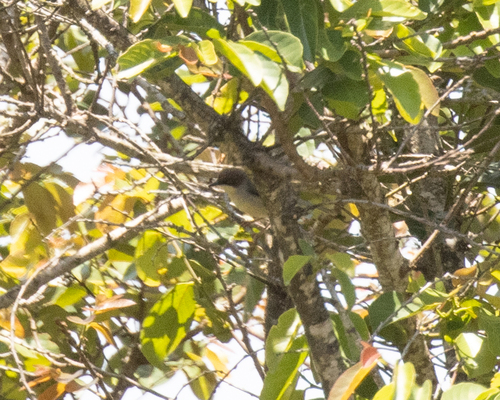
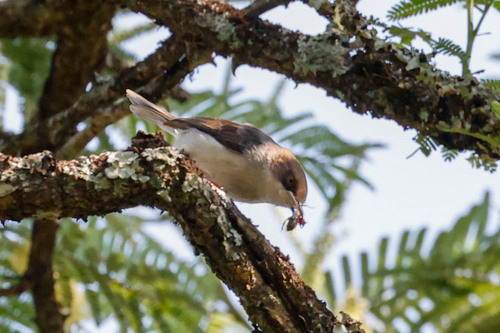
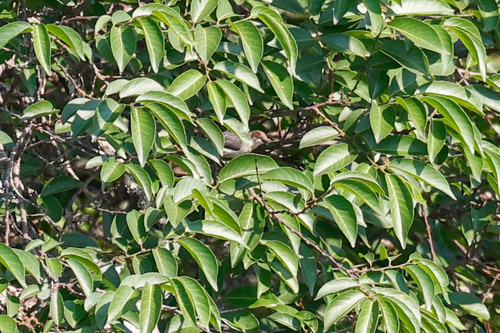

What the Brown-headed Apalis sounds like

ID tip
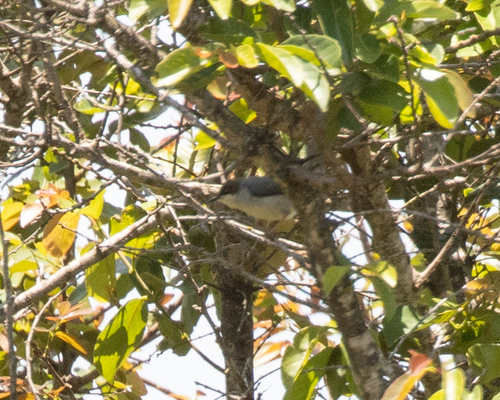
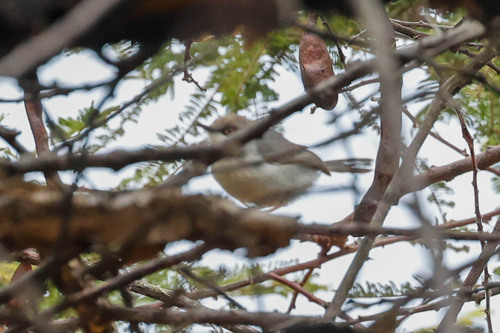
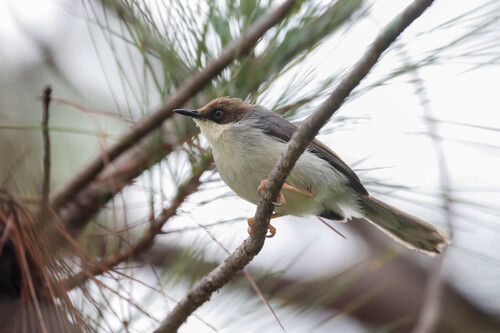
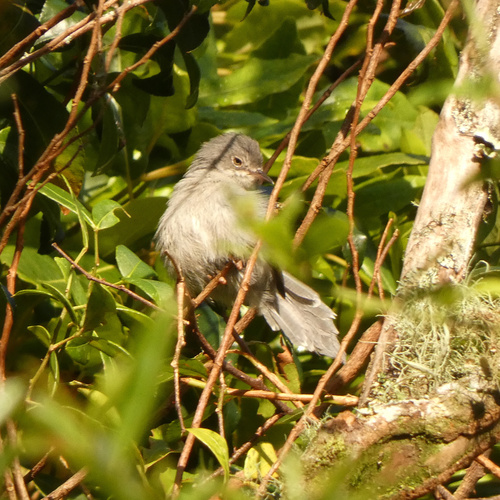
It is 12–13 cm long with a long tail and fairly long, slender bill. The legs and feet are pinkish and the eye is pale orange. The upperparts are grey-brown, becoming chocolate-brown on the crown and cheeks. The underparts are whitish. The adult male and female are alike; juvenile birds are more olive above and slightly yellowish below. In A. a. alticola, the outer tail-feathers have white tips and outer webs and the next three pairs of tail-feathers have small white tips. A. a. dowsetti has entirely white outer tail-feathers. The grey apalis is similar but has a grey-brown head and dark eye.
Text from Wikipedia, licensed CC BY-SA 4.0.
When to see the Brown-headed Apalis
One bar for each month, and every month is filled: this bird is recorded here in all twelve. The wide bar is October, the month with the most records.
Where to see the Brown-headed Apalis
The map shades 5 countries with regular records. Everything unshaded has no records. Countries are listed below the map.
About the Brown-headed Apalis
The brown-headed apalis is a small passerine bird belonging to the genus Apalis in the family Cisticolidae. Formerly included within the grey apalis but is now commonly considered to be a separate species. It has two subspecies: A. a. alticola and A. a. dowsetti.
Text adapted from Wikipedia, licensed CC BY-SA 4.0.
Easily confused with
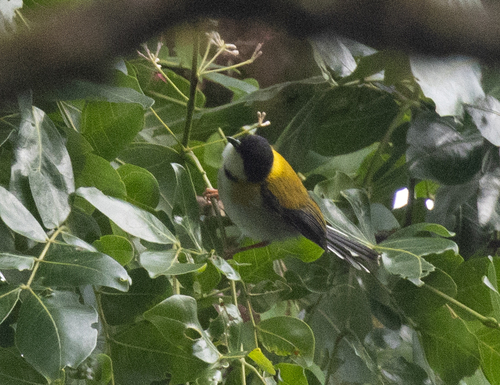 Black-capped ApalisApalis nigricepsThe black-capped apalis is a species of bird in the family Cisticolidae.
Lowland Masked ApalisApalis binotataThe lowland masked apalis, also known as the masked apalis, is a species of bird in the family Cisticolidae.
Black-capped ApalisApalis nigricepsThe black-capped apalis is a species of bird in the family Cisticolidae.
Lowland Masked ApalisApalis binotataThe lowland masked apalis, also known as the masked apalis, is a species of bird in the family Cisticolidae.
 Chirinda ApalisApalis chirindensisThe Chirinda apalis has the typical slender, long tailed shape of apalises, with a slender bill.
Learn the Brown-headed Apalis in the BeakBrain App
Photo and call practice. Coming soon to iPhone and Android.
Play today's Daily BirdEvery photo and recording on this page is credited to its author under the licence shown. Spotted a problem with this page, or have a better photo? Contribute.