Learn what every symbol on the card means.Full credits and sources at beakbrain.com/symbols
 ShrublandCup nestSmall · 52 g


What the Loggerhead Shrike sounds like

ID tip
The loggerhead shrike is a medium-sized passerine. "Loggerhead" refers to the relatively large size of the head as compared to the rest of the body. The wing and tail length are about 3.82 in (9.70 cm) and 3.87 in (9.83 cm) long, respectively. It weighs on average 1.8 oz (50 g), with a range of 1.6–2.1 oz (45–60 g) for a healthy adult shrike. Measurement ranges Length: 7.9–9.1 in (20–23 cm) Weight: 1.2–1.8 oz (34–51 g) Wingspan: 11.0–12.6 in (27.9–32.0 cm) The adult plumage of the loggerhead shrike is grey above with a white to pale grey breast and black tarsi and feet. Voice: Their vocal range is broad and varied, and has been described as harsh and jarring. The shrike's notes include squeaky whistles, shrill trills, and guttural warbles. The trills sung by males during breeding season vary in rhythm and pitch. When alarmed, a shrike will produce a "schgra-a-a" shriek while spreading out its tail feathers.
Text from Wikipedia, licensed CC BY-SA 4.0.
When to see the Loggerhead Shrike
One bar for each month, and every month is filled: this bird is recorded here in all twelve. The wide bar is January, the month with the most records.
Where to see the Loggerhead Shrike
The map shades 4 countries with regular records. Everything unshaded has no records. Countries are listed below the map.
About the Loggerhead Shrike
The loggerhead shrike is a passerine bird in the family Laniidae. It is the only member of the shrike family endemic to North America; the related northern shrike occurs north of its range; however, it is also found in Siberia. It is nicknamed the butcherbird after its carnivorous tendencies, as it consumes prey such as insects, amphibians, lizards, small mammals and small birds, and some prey end up displayed and stored at a site, for example in a tree. Due to its small size and weak talons, this predatory bird relies on impaling its prey upon thorns or barbed wire for facilitated consumption.
Text adapted from Wikipedia, licensed CC BY-SA 4.0.
Easily confused with
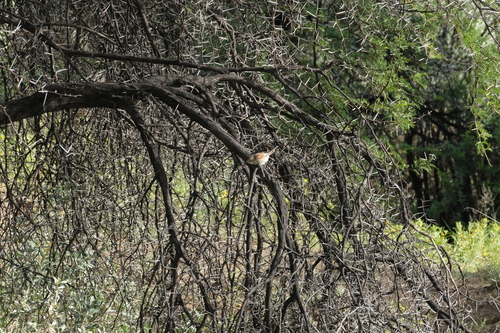 Red-backed ShrikeLanius collurioThis 16–18 cm-long (6.3–7.1 in) migratory bird eats large insects, small birds, frogs, rodents and lizards.
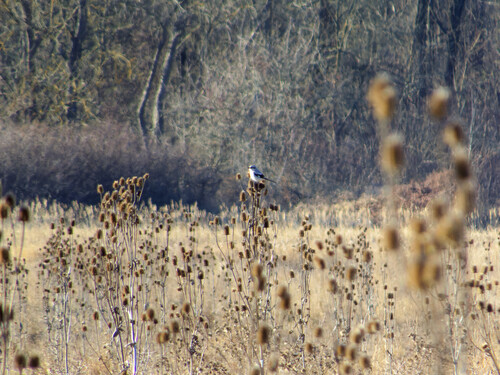 Great Grey ShrikeLanius excubitorAn adult great grey shrike is a medium-sized passerine about as large as a big thrush, measuring from 22 to 26 cm (8.7 to 10.2 in) long.
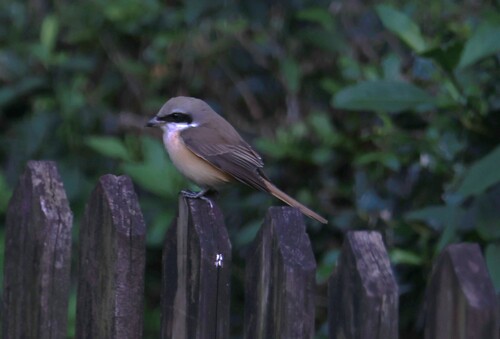 Brown ShrikeLanius cristatusThis shrike is mainly brown on the upper parts and the tail is rounded.
Side by side: Loggerhead Shrike vs Red-backed Shrike · Great Grey Shrike vs Loggerhead Shrike · Brown Shrike vs Loggerhead Shrike
Learn the Loggerhead Shrike in the BeakBrain App
Photo and call practice. Coming soon to iPhone and Android.
Play today's Daily BirdEvery photo and recording on this page is credited to its author under the licence shown. Spotted a problem with this page, or have a better photo? Contribute.