Learn what every symbol on the card means.Full credits and sources at beakbrain.com/symbols
 ForestCavity nestLarge · 1.2 kg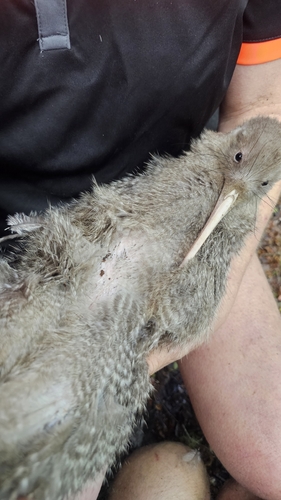
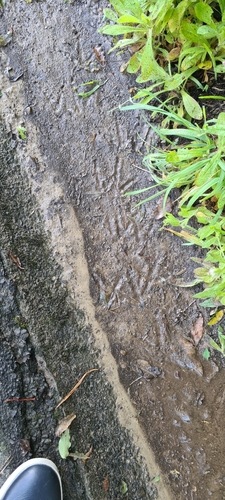
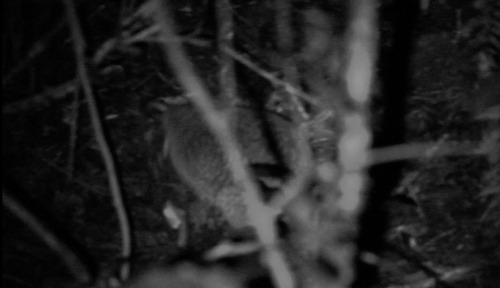

ID tip
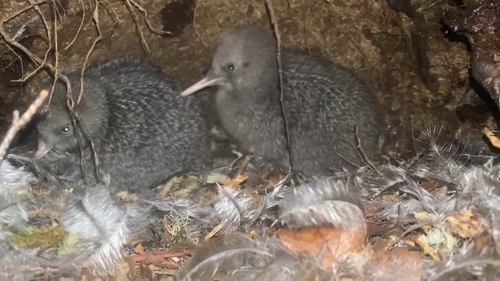
The little spotted kiwi has a length of 35 to 45 cm (14–18 in) and the weight of the male is 0.88 to 1.36 kg (1 lb 15 oz – 3 lb 0 oz) and the female weighs 1 to 1.95 kg (2+1⁄4–4+1⁄4 lb), making it the smallest species of kiwi. Their feathers are pale-mottled grey, with fine white mottling, and are shaggy looking. They lack aftershafts and barbules. They have large vibrissae feathers around the gape. They lack a tail, but have a small pygostyle. Their bill is ivory-coloured and long and their legs are pale. Albinism in this species has been recorded.
Text from Wikipedia, licensed CC BY-SA 4.0.
When to see the Little Spotted Kiwi
One bar for each month. Filled bars are the 10 months with records; pale bars are months with none. The wide bar is November, the month with the most records.
Where to see the Little Spotted Kiwi
The map shades 1 country with regular records. Everything unshaded has no records. Countries are listed below the map.
About the Little Spotted Kiwi
The little spotted kiwi, also known as little grey kiwi or kiwi pukupuku, is a small flightless bird in the kiwi family, Apterygidae. It is the smallest of the five kiwi species, at about 0.9 to 1.9 kg, about the size of a bantam. It is endemic to New Zealand, and in pre-European times occurred in both main islands, but is now mainly restricted to a number of small offshore islands and mainland reserves protected by pest-exclusion fences.
Text adapted from Wikipedia, licensed CC BY-SA 4.0.
Easily confused with
 Southern Brown KiwiApteryx australisIt has no preen gland, and its feathers have no aftershafts and no barbules.
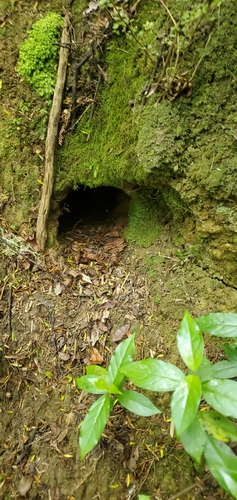 North Island Brown KiwiApteryx mantelliIt is a large brown kiwi, possessing spiky, streaked feathers.
 Okarito KiwiApteryx rowiThis species is a medium-sized kiwi measuring around 55 cm (22 in) in length.
Learn the Little Spotted Kiwi in the BeakBrain App
Photo and call practice. Coming soon to iPhone and Android.
Play today's Daily BirdEvery photo and recording on this page is credited to its author under the licence shown. Spotted a problem with this page, or have a better photo? Contribute.