Learn what every symbol on the card means.Full credits and sources at beakbrain.com/symbols
 ForestDomed nestTiny · 12 g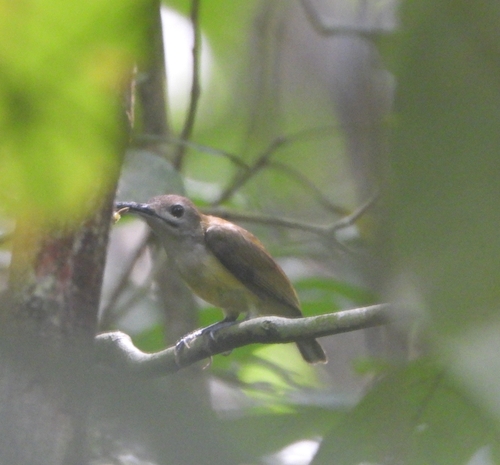
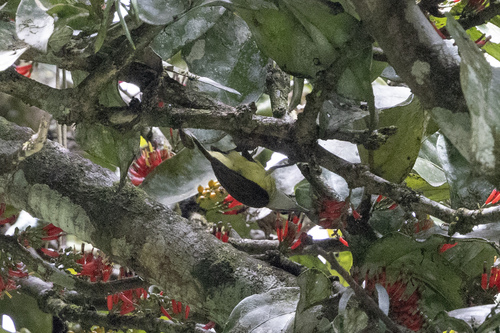
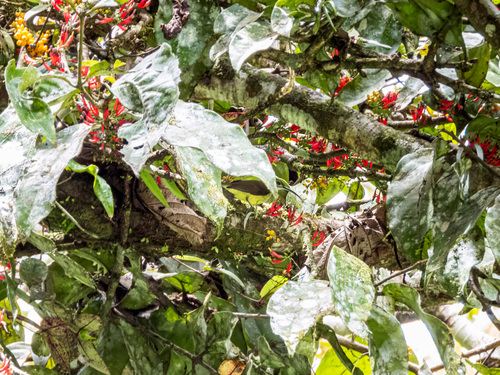
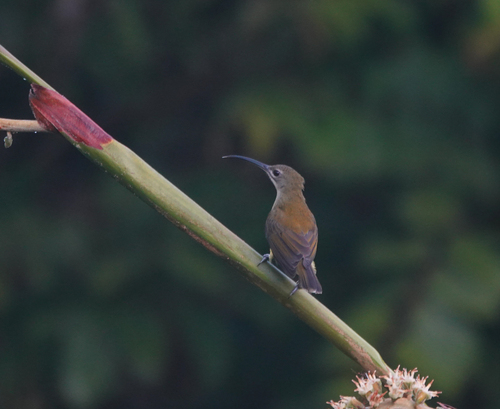
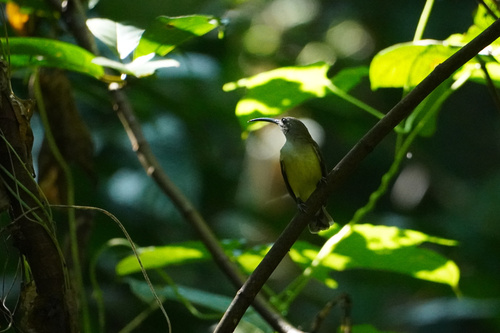
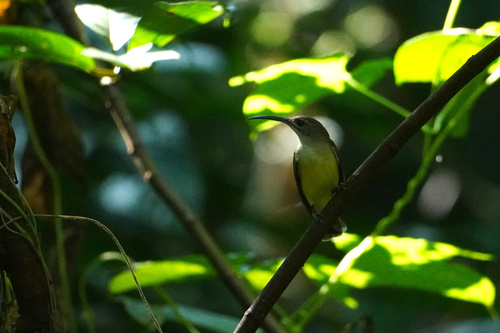

ID tip
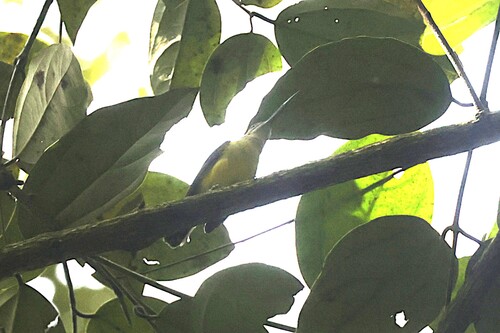
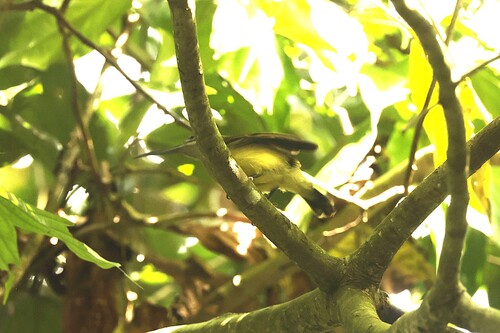
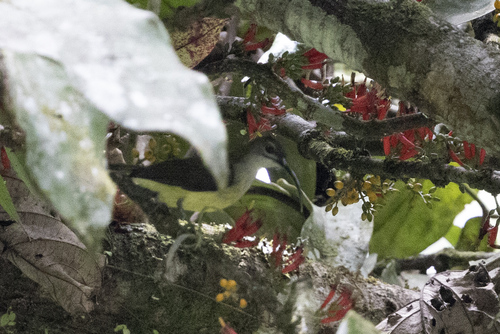
The distinctive long beak set it apart from other sunbirds. The sexes are similar, except that the female has a paler base on the lower mandible. Male has all black beak. They are found near their favourite nectar bearing trees, often species of wild Musaceae or flowers in gardens. They have a buzzy zick-zick call that is made regularly when disturbed or when foraging. Additionally, the song is series of rapid chipping notes and these can go on for long periods.
Text from Wikipedia, licensed CC BY-SA 4.0.
When to see the Little Spiderhunter
One bar for each month, and every month is filled: this bird is recorded here in all twelve. The wide bar is February, the month with the most records.
Where to see the Little Spiderhunter
The map shades 14 countries with regular records. Everything unshaded has no records. Countries are listed below the map.
About the Little Spiderhunter
The little spiderhunter is a species of long-billed nectar-feeding bird in the family Nectariniidae found in the moist forests of South and Southeast Asia. Unlike typical sunbirds, males and females are very similar in plumage. They are usually seen in ones or twos and frequently make a tzeck call. They are most often found near flowering plants where they obtain nectar.
Text adapted from Wikipedia, licensed CC BY-SA 4.0.
Easily confused with
 Streaked SpiderhunterArachnothera magnaIt is similar in size to a sparrow.
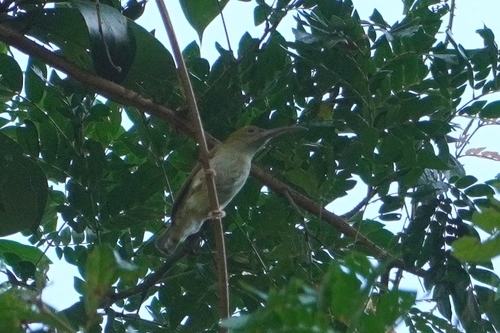 Grey-breasted SpiderhunterArachnothera modestaThe grey-breasted spiderhunter is a species of bird in the family Nectariniidae.
 Spectacled SpiderhunterArachnothera flavigasterThe spectacled spiderhunter is a species of bird in the family Nectariniidae.
Side by side: Little Spiderhunter vs Streaked Spiderhunter
Learn the Little Spiderhunter in the BeakBrain App
Photo and call practice. Coming soon to iPhone and Android.
Play today's Daily BirdEvery photo and recording on this page is credited to its author under the licence shown. Spotted a problem with this page, or have a better photo? Contribute.