Learn what every symbol on the card means.Full credits and sources at beakbrain.com/symbols
 ForestDomed nestSmall · 38 g
When to see the Spectacled Spiderhunter
One bar for each month, and every month is filled: this bird is recorded here in all twelve. The wide bar is March, the month with the most records.
Where to see the Spectacled Spiderhunter
The map shades 4 countries with regular records. Everything unshaded has no records. Countries are listed below the map.
About the Spectacled Spiderhunter
The spectacled spiderhunter is a species of bird in the family Nectariniidae. It is found in Brunei, Indonesia, Malaysia, Singapore, Thailand, and Vietnam. Its natural habitats are subtropical or tropical moist lowland forest and subtropical or tropical moist montane forest. This is both the largest spiderhunter and the largest representative of the entire sunbird family. The total length of this species is around 22 cm (8.7 in) and body mass is around 38.4 to 49 g.
Text adapted from Wikipedia, licensed CC BY-SA 4.0.
Easily confused with
 Yellow-eared SpiderhunterArachnothera chrysogenysThe yellow-eared spiderhunter is a species of bird in the family Nectariniidae.
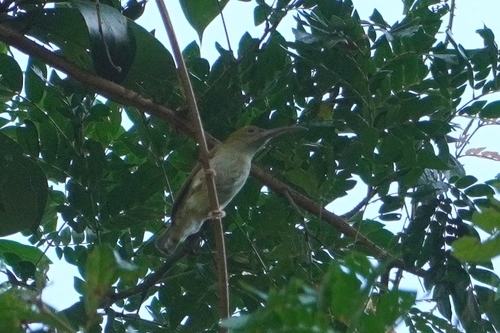 Grey-breasted SpiderhunterArachnothera modestaThe grey-breasted spiderhunter is a species of bird in the family Nectariniidae.
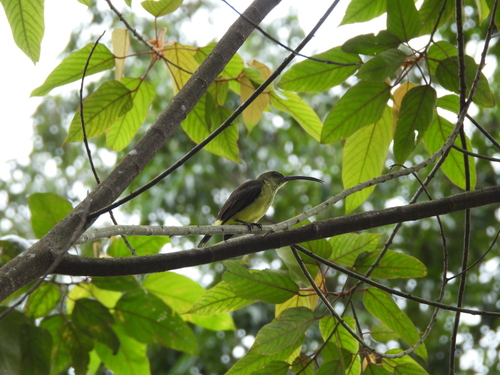 Long-billed SpiderhunterArachnothera robustaThe long-billed spiderhunter is a species of bird in the family Nectariniidae.
Learn the Spectacled Spiderhunter in the BeakBrain App
Photo and call practice. Coming soon to iPhone and Android.
Play today's Daily BirdEvery photo and recording on this page is credited to its author under the licence shown. Spotted a problem with this page, or have a better photo? Contribute.