Learn what every symbol on the card means.Full credits and sources at beakbrain.com/symbols
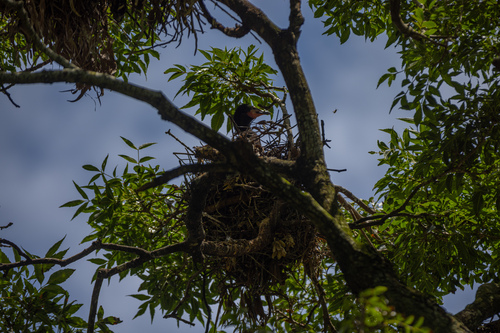
 WetlandPlatform nestLarge · 727 g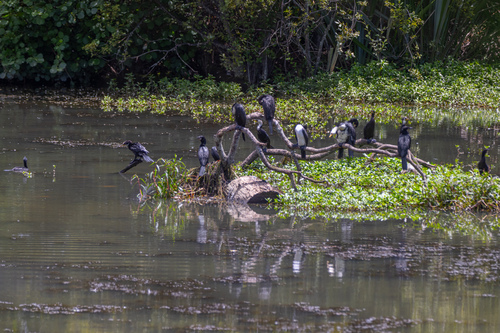



ID tip
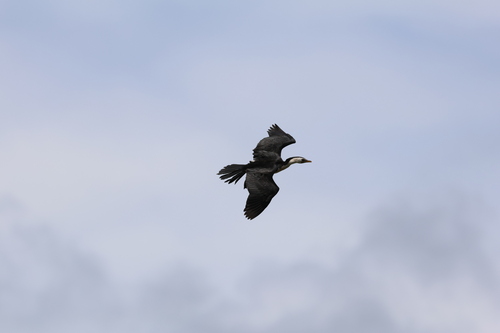
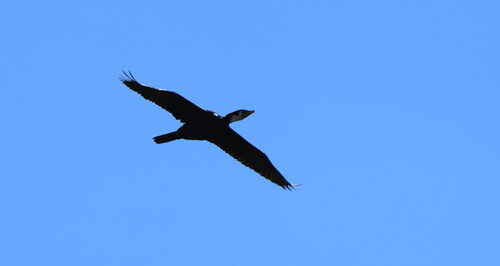
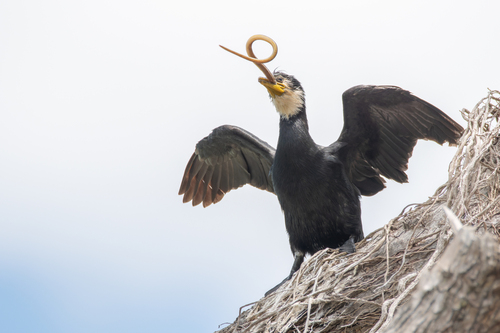
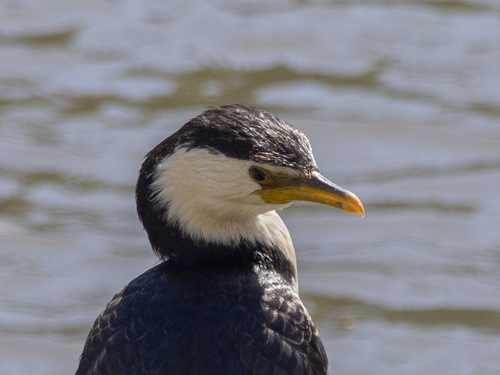
The little pied cormorant is a small cormorant measuring 56–58 cm (22–23 in) with a shorter 3 cm (1.2 in) bill and longer tail than the little black cormorant; it has a small black crest. It is found in two morphs in New Zealand. Subspecies melanoleucos and brevicauda are found only in a pied morph, black (with a slight green tinge) above and white beneath. This is also found in subspecies brevirostris, but in this form the melanistic morph is much more common.
Text from Wikipedia, licensed CC BY-SA 4.0.
When to see the Little Pied Cormorant
One bar for each month, and every month is filled: this bird is recorded here in all twelve. The wide bar is October, the month with the most records.
Where to see the Little Pied Cormorant
The map shades 9 countries with regular records. Everything unshaded has no records. Countries are listed below the map.
About the Little Pied Cormorant
The little pied cormorant, little shag or little pied shag is a common species of Australasian waterbird, found around the coasts, islands, estuaries, and inland waters of Australia, New Guinea, New Zealand, Timor-Leste and Indonesia, and around the islands of the south-western Pacific and the subantarctic. It is a small short-billed cormorant usually black above and white below with a yellow bill and small crest, although a mostly black white-throated form predominates in New Zealand. Three subspecies are recognised. Until recently, most authorities referred to this species as Phalacrocorax melanoleucos.
Text adapted from Wikipedia, licensed CC BY-SA 4.0.
Easily confused with
 Little CormorantMicrocarbo nigerThe little cormorant is about 50 centimetres (20 in) long and only slightly smaller than the Indian cormorant (Phalacrocorax fuscicollis).
 Reed CormorantMicrocarbo africanusThis is a small cormorant, 50–55 cm (20–22 in) in overall length with a wingspan of 80–90 cm (31–35 in).
 Pygmy CormorantMicrocarbo pygmaeusThe pygmy cormorant is a member of the Phalacrocoracidae (cormorant) family of seabirds.
Side by side: Little Cormorant vs Little Pied Cormorant · Little Pied Cormorant vs Reed Cormorant
Learn the Little Pied Cormorant in the BeakBrain App
Photo and call practice. Coming soon to iPhone and Android.
Play today's Daily BirdEvery photo and recording on this page is credited to its author under the licence shown. Spotted a problem with this page, or have a better photo? Contribute.