Learn what every symbol on the card means.Full credits and sources at beakbrain.com/symbols
 GrasslandDomed nestTiny · 13 g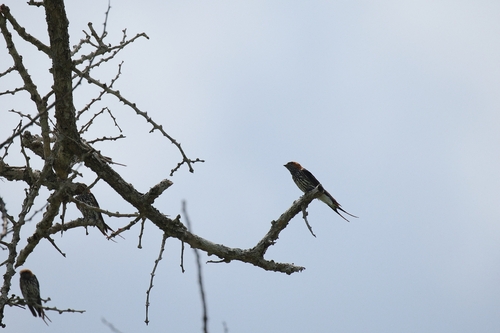


What the Lesser Striped Swallow sounds like


ID tip
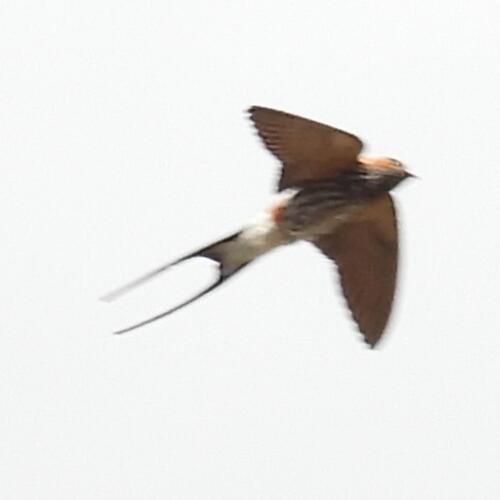
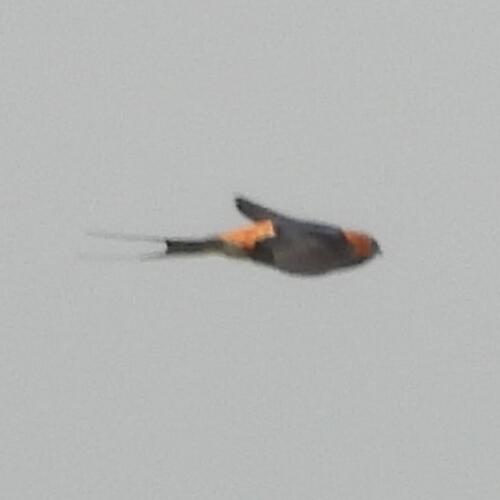
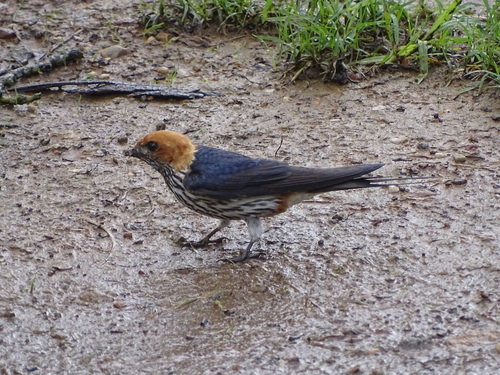
The lesser striped swallow is 15–10 cm long. It has dark blue upperparts with a red rump and a rufous-chestnut crown, nape and sides of the head. The underparts are white with dark streaking, and the upper wings and underwing flight feathers are blackish-brown. The underwing coverts are tawny. The blackish tail has very long outer feathers; these are slightly longer in the male than the female. Juveniles are duller and browner, with less contrast and shorter outer tail feathers. There are five or six subspecies differing in the extent of the underpart streaking.
Text from Wikipedia, licensed CC BY-SA 4.0.
When to see the Lesser Striped Swallow
One bar for each month. Filled bars are the 10 months with records; pale bars are months with none. The wide bar is November, the month with the most records.
Where to see the Lesser Striped Swallow
The map shades 34 countries with regular records, and 2 more in a lighter tone where the bird turns up only as a stray. Everything unshaded has no records. Countries are listed below the map.
Recorded as a rare visitor in Guinea-Bissau, Mali.
About the Lesser Striped Swallow
The lesser striped swallow is a large swallow. It breeds in Sub-Saharan Africa from Sierra Leone and southern Sudan south into eastern South Africa. It is partially migratory with South African birds wintering further north. West African birds leave the north of the breeding range in the dry season.
Text adapted from Wikipedia, licensed CC BY-SA 4.0.
Easily confused with
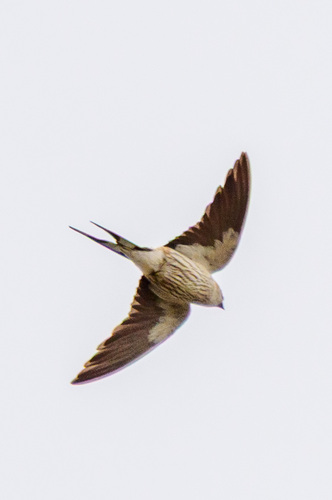 Greater Striped SwallowCecropis cucullataThe greater striped swallow is 18–20 cm (7.1–7.9 in) long.
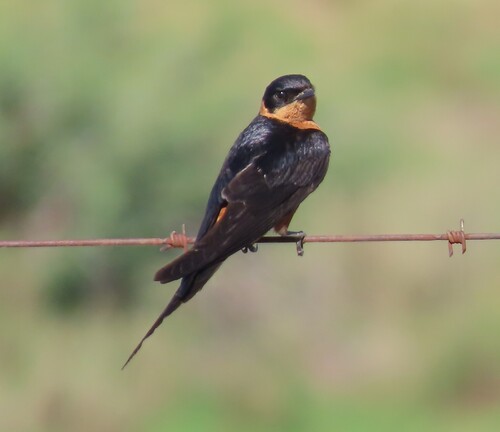 Red-breasted SwallowCecropis semirufaThe red-breasted swallow is similar to the mosque swallow but is slightly smaller and has longer tail streamers, both species having a blue crown and mantle contrasting with a rufous rump and underparts, In the red-breasted swallow the dark crown extends below the eye and there is no white on the underwing.
 Mosque SwallowCecropis senegalensisThe mosque swallow is the largest and heaviest species of African swallow, resembling a big red-rumped swallow Cecropis daurica.
Side by side: Eastern Red-rumped Swallow vs Lesser Striped Swallow · Greater Striped Swallow vs Lesser Striped Swallow · Lesser Striped Swallow vs Red-breasted Swallow · Lesser Striped Swallow vs Mosque Swallow
Learn the Lesser Striped Swallow in the BeakBrain App
Photo and call practice. Coming soon to iPhone and Android.
Play today's Daily BirdEvery photo and recording on this page is credited to its author under the licence shown. Spotted a problem with this page, or have a better photo? Contribute.