Learn what every symbol on the card means.Full credits and sources at beakbrain.com/symbols
 WetlandPlatform nestHuge · 4.7 kg


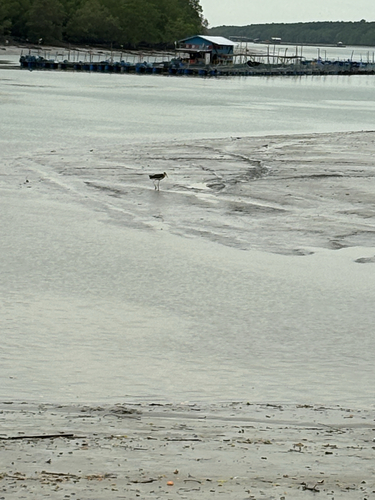
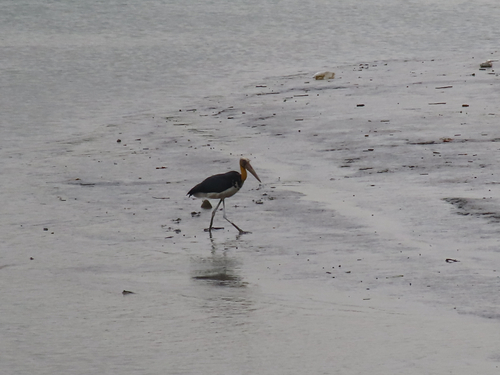
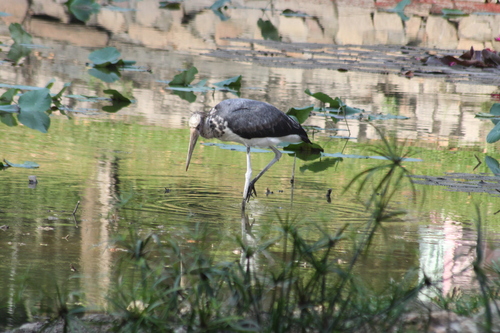
ID tip
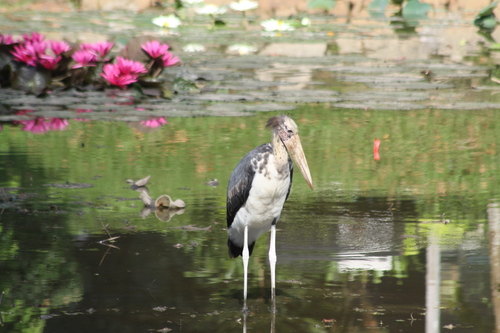
A large stork with an upright stance, a bare head and neck without a pendant pouch, it has a length of 87–93 cm (34–37 in) (outstretched from bill-to-tail measurement), weighs from 4 to 5.71 kg (8.8 to 12.6 lb) and stands about 110–120 cm (43–47 in) tall. The only confusable species is the greater adjutant, but this species is generally smaller and has a straight upper bill edge (culmen), measuring 25.8–30.8 cm (10.2–12.1 in) in length, with a paler base and appears slightly trimmer and less hunch-backed.
Text from Wikipedia, licensed CC BY-SA 4.0.
When to see the Lesser Adjutant
One bar for each month. Filled bars are the 9 months with records; pale bars are months with none. The wide bar is January, the month with the most records.
Where to see the Lesser Adjutant
The map shades 15 countries with regular records. Everything unshaded has no records. Countries are listed below the map.
About the Lesser Adjutant
The lesser adjutant is a large wading bird in the stork family Ciconiidae. Like other members of its genus, it has a bare neck and head. It is however more closely associated with wetland habitats where it is solitary and is less likely to scavenge than the related greater adjutant. It is a widespread species found from India through Southeast Asia.
Text adapted from Wikipedia, licensed CC BY-SA 4.0.
Easily confused with
 Marabou StorkLeptoptilos crumeniferThe marabou stork is a massive bird: large specimens are thought to reach a height of 152 centimetres (5 feet) and a weight of 9 kg (20 lb).
 Greater AdjutantLeptoptilos dubiusThe greater adjutant is a huge bird, standing tall at 145–150 cm (4 ft 9 in – 4 ft 11 in).
Side by side: Lesser Adjutant vs Marabou Stork · Greater Adjutant vs Lesser Adjutant
Learn the Lesser Adjutant in the BeakBrain App
Photo and call practice. Coming soon to iPhone and Android.
Play today's Daily BirdEvery photo and recording on this page is credited to its author under the licence shown. Spotted a problem with this page, or have a better photo? Contribute.