Learn what every symbol on the card means.Full credits and sources at beakbrain.com/symbols
 ForestCup nestMedium · 191 g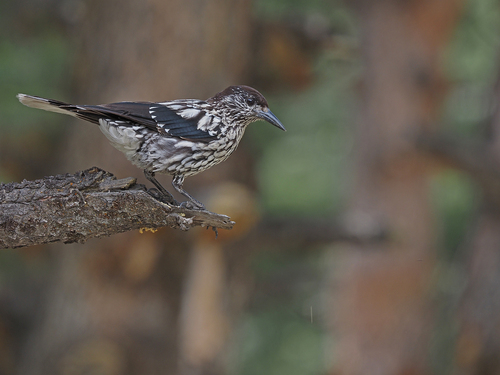
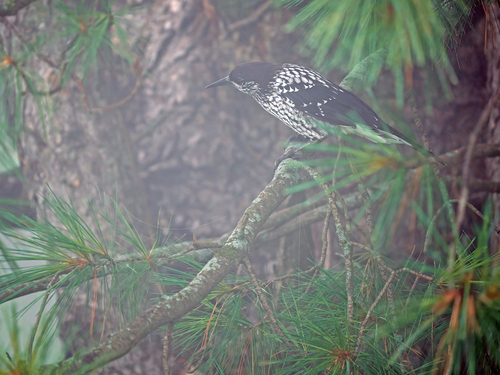
ID tip
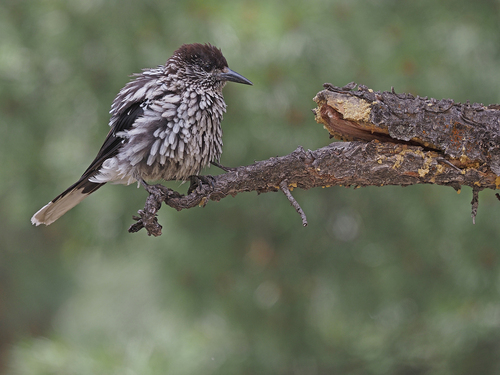
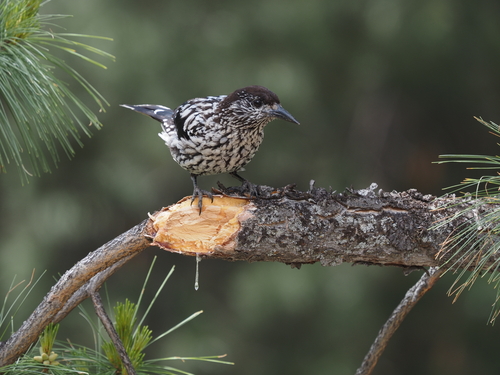
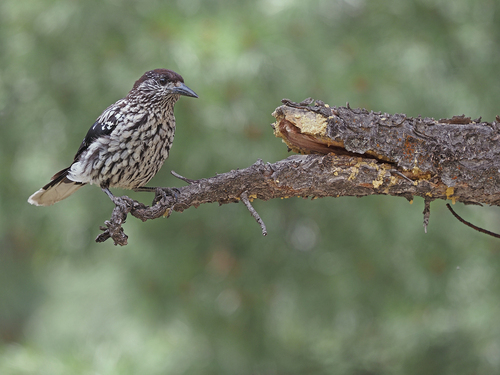
It is a distinctive corvid with heavily streaked and spotted plumage. They are usually 32–35 cm (13–14 in) in length. They have a wing length of 195–212 mm (7.7–8.3 in), with a weight of 155–173 g (5.5–6.1 oz) for females and 165–177 g (5.8–6.2 oz) for males. It has a blackish crown and nape, with the sides of the head and the body plumage being blackish grey-brown. The body has heavy white streaking, spotting, and striping. Although the bird looks whitish from a distance, the breast and flanks show more brown than the rest of the body, also having more bold spotting. Voice: Their vocalisations are poorly studied, but are described as being extremely similar to those of the Eurasian nutcracker. Begging juveniles make calls that have been described as "somewhat reminiscent of the squealing of little pigs". Other calls have been described as very variable, although it is not known if they are simply variations of a single call type, or are in fact individual calls.
Text from Wikipedia, licensed CC BY-SA 4.0.
When to see the Kashmir Nutcracker
One bar for each month. Filled bars are the 11 months with records; pale bars are months with none. The wide bar is August, the month with the most records.
Where to see the Kashmir Nutcracker
The map shades 2 countries with regular records. Everything unshaded has no records. Countries are listed below the map.
About the Kashmir Nutcracker
The Kashmir nutcracker or large-spotted nutcracker is a passerine bird related to the northern nutcracker and southern nutcracker. Until recently, it was considered a subspecies of the former. It is found in the western Himalayas.
Text adapted from Wikipedia, licensed CC BY-SA 4.0.
Easily confused with
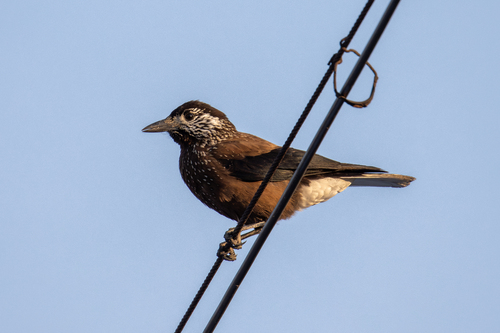 Southern NutcrackerNucifraga hemispilaThe southern nutcracker is similar in size to the northern nutcracker, about 33 cm long.
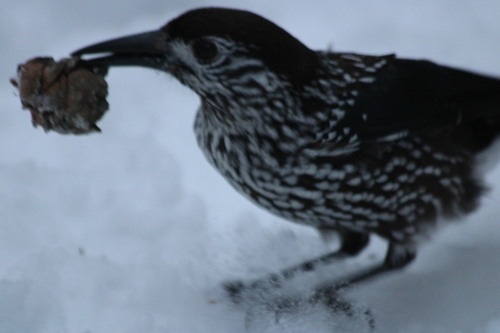 Northern NutcrackerNucifraga caryocatactesNorthern nutcracker ranges from 32–38 cm in length (from tip of beak to tip of tail) and has a wingspan ranging from 49–53 cm.
 Clark's NutcrackerNucifraga columbianaNucifraga columbiana is roughly the size of a jay, and slightly smaller than its Eurasian congenerics (northern, southern, and Kashmir nutcrackers).
Learn the Kashmir Nutcracker in the BeakBrain App
Photo and call practice. Coming soon to iPhone and Android.
Play today's Daily BirdEvery photo and recording on this page is credited to its author under the licence shown. Spotted a problem with this page, or have a better photo? Contribute.