Learn what every symbol on the card means.Full credits and sources at beakbrain.com/symbols
 ForestPlatform nestMedium · 130 g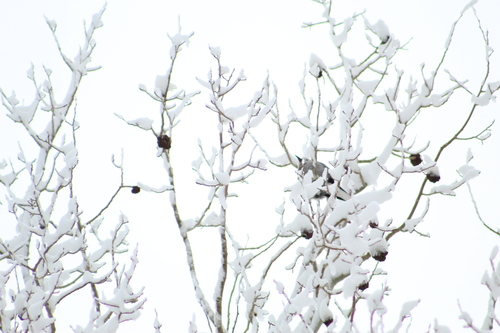


What the Clark's Nutcracker sounds like

ID tip
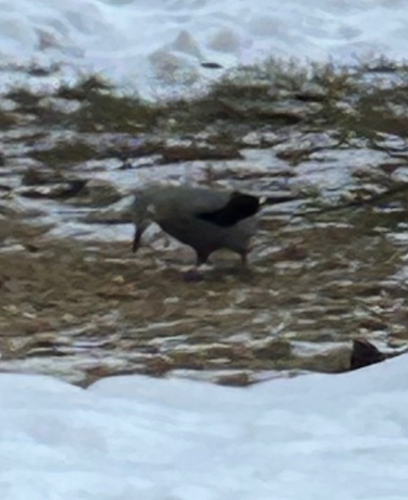
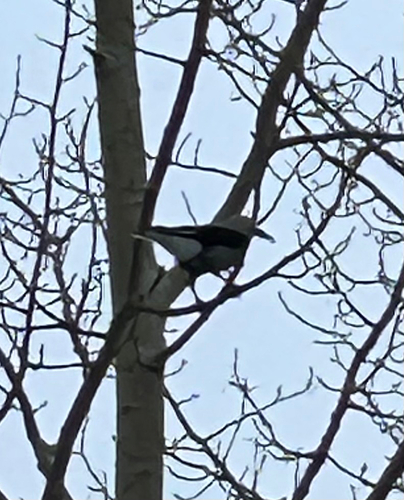
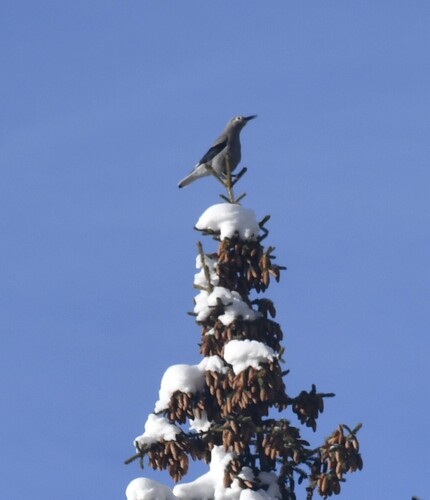
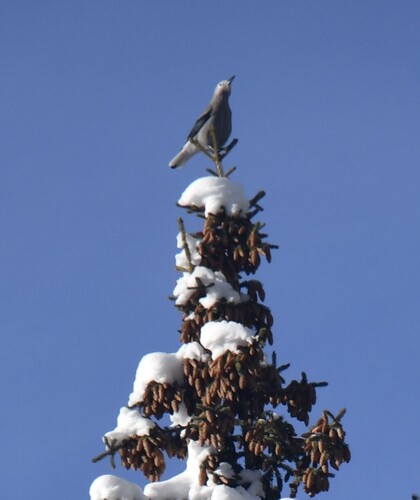
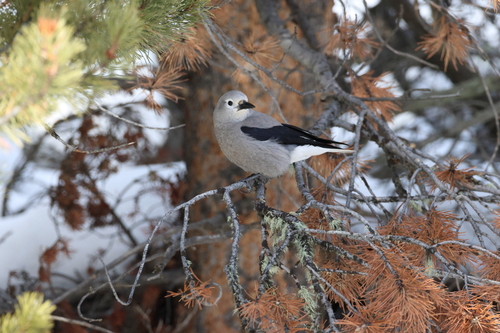
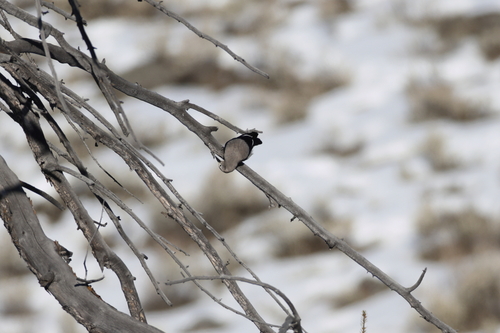
Nucifraga columbiana is roughly the size of a jay, and slightly smaller than its Eurasian congenerics (northern, southern, and Kashmir nutcrackers). Its head, back, belly, and ventrum are covered in gray feathers, and it sports black wings with white tips on secondary feathers. Its tail feathers are easily distinguishable in flight, with central black feathers bordered by white feathers on either side. It has a long, black, pointed bill whose shape is specialized for removing the scales of pinecones. Voice: Corvids, of which Clark's nutcracker is a member, do not typically have songs. However, they produce between eight and thirteen variable calls, generally phonetically described as "kraak" or "kraa". Additional clicking or crackling calls are made, likely used for pair bonding.
Text from Wikipedia, licensed CC BY-SA 4.0.
When to see the Clark's Nutcracker
One bar for each month. Filled bars are the 10 months with records; pale bars are months with none. The wide bar is August, the month with the most records.
Where to see the Clark's Nutcracker
The map shades 3 countries with regular records. Everything unshaded has no records. Countries are listed below the map.
About the Clark's Nutcracker
Clark's nutcracker, also known as Clark's crow, is a passerine bird in the family Corvidae, native to the mountains of western North America. The nutcracker is an omnivore, but subsists mainly on pine nuts, burying seeds in the ground in the summer and then retrieving them in the winter by memory. The bird was described by the Lewis and Clark Expedition, with William Clark first observing it in 1805 along the banks of the Salmon River, a tributary of the Columbia River.
Text adapted from Wikipedia, licensed CC BY-SA 4.0.
Easily confused with
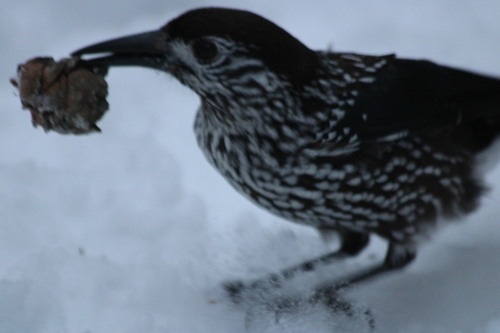 Northern NutcrackerNucifraga caryocatactesNorthern nutcracker ranges from 32–38 cm in length (from tip of beak to tip of tail) and has a wingspan ranging from 49–53 cm.
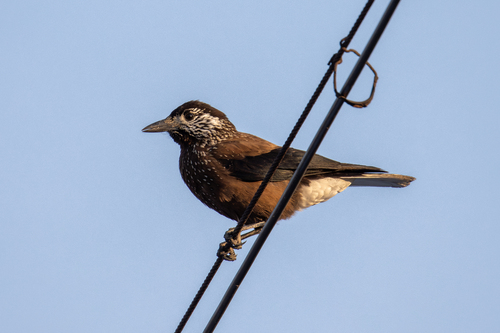 Southern NutcrackerNucifraga hemispilaThe southern nutcracker is similar in size to the northern nutcracker, about 33 cm long.
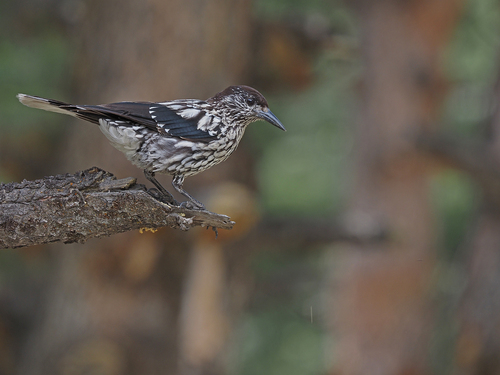 Kashmir NutcrackerNucifraga multipunctataIt is a distinctive corvid with heavily streaked and spotted plumage.
Side by side: Clark's Nutcracker vs Northern Nutcracker · Clark's Nutcracker vs Southern Nutcracker
Learn the Clark's Nutcracker in the BeakBrain App
Photo and call practice. Coming soon to iPhone and Android.
Play today's Daily BirdEvery photo and recording on this page is credited to its author under the licence shown. Spotted a problem with this page, or have a better photo? Contribute.